
The bouquet was stunning for exactly 24 hours. On the kitchen table, those coral roses stood tall, the lilies slowly opening, the eucalyptus smelling like a forest after rain. The next morning, you walked in with your coffee and froze. Petals on the table, stems bent, the whole thing looking strangely older, as if someone had pressed fast-forward on your flowers’ life. You checked the water. You’d trimmed the stems. You’d even picked the “good” vase. So why did they fade so fast?
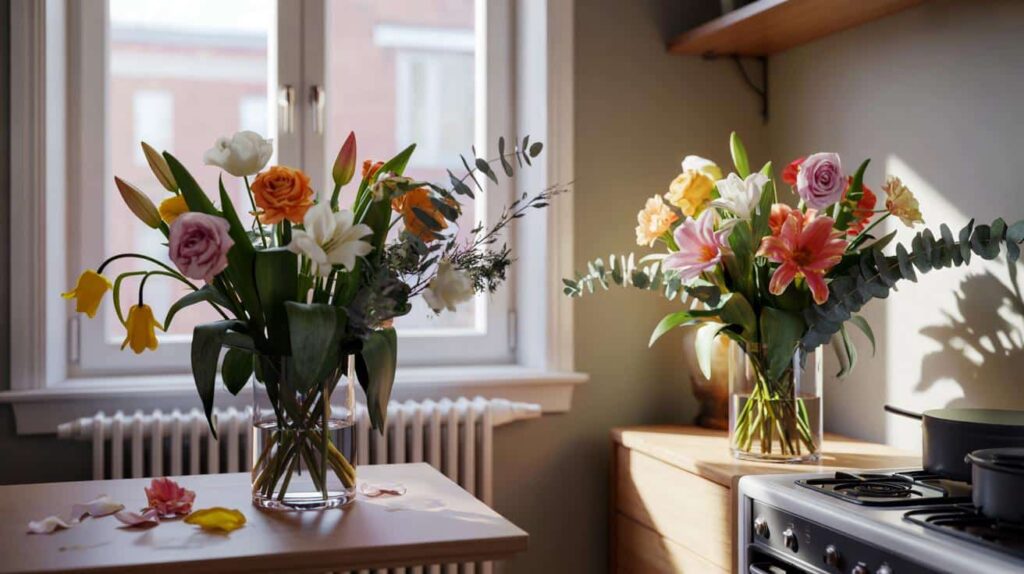
You might blame the florist, or the quality, or the water in your city.
What’s quietly sabotaging your flowers, most of the time, is temperature stress.
When your flowers live in a sauna or a fridge
Walk around your home and really look at where your flowers end up. On a sunny windowsill “for the light”. Right next to the heater “because it’s the only spot”. On the oven-side of the counter “so I can see them when I cook”. The intention is sweet. The effect on the bouquet is brutal.

Cut flowers are like athletes just after a marathon: they’re alive, but already at the edge of their reserves. Throw them into hot, dry, or wildly fluctuating air, and they crash fast. That crash looks like droopy stems, petals that crisp on the edges, colors that go dull far too soon.

Picture a vase of tulips on a winter windowsill. Outside, it’s two degrees. Inside, the radiator under the window is blasting. Every hour the sun swings round and hits the glass like a spotlight. The air on that sill goes from chilly to oven-hot and back again all day. The tulips stretch towards the light, lose water faster than they can drink, and by day two they’re limp, bowed over like they’re apologizing.
Now move that same vase to a stable corner of the living room, away from drafts and heaters. Suddenly they last four, five, even seven days. Same flowers. Same water. The only thing that changed is the temperature chaos around them.
What we call “quickly fading flowers” is often just plants reacting to stress. When the air is too warm, they respire and transpire faster, burning through their energy in record time. When it’s too cold, the cells get damaged, water uptake slows, and petals brown around the edges as if they’ve been bruised. Big swings between hot and cold confuse the stems entirely: they open too fast, then collapse.
*Temperature doesn’t just influence comfort, it sets the speed of your flowers’ whole metabolism.* And your living room can be a roller coaster they never survive.
How to give your bouquet a stable “climate” at home
Start by choosing the calmest microclimate in your home, not the prettiest one. Look for a spot away from direct sun, at least a meter from radiators, stoves, or fireplaces, and not right under the air conditioner. You want a place where the air feels almost boring: no obvious drafts, no sudden heat bursts, no icy blasts when a door opens.
Aim for a room that sits between 18°C and 22°C, day and night. That’s the sweet zone where most cut flowers breathe, drink, and open at a gentle pace instead of sprinting to their own funeral. Think of it as putting them in a quiet guest room, not next to the nightclub.
One small, low-tech trick: move your flowers at night. If your kitchen gets cold or your living room heats up under evening lights, shift the vase to a hallway or bedroom before you go to bed. It takes thirty seconds and can add a day of life.

We’ve all been there, that moment when you drop a bouquet on the first empty surface and think, “I’ll sort it later.” Then later never comes, and the flowers spend the weekend being slow-roasted by a lamp or chilled by a drafty window. Let’s be honest: nobody really does this every single day. Still, even doing it two nights in a row can change how long your bouquet stays photo-worthy.
Florist Léa Martin, who has been arranging wedding flowers for 15 years, puts it bluntly: “You can buy the most expensive bouquet in the shop. If you leave it next to a radiator or in full sun, you’re basically buying it a ticket to a two-day life.”
- Keep flowers away from heat sources
Radiators, ovens, fireplace mantels, and even hot electronics create dry, warm pockets of air that exhaust petals and leaves. - Protect them from cold drafts
Open windows, air conditioning units, and front doors in winter can shock the stems, leading to sudden drooping and browning. - Watch the hidden heat: light and lamps
Direct sun through glass and strong lamp bulbs can turn a “nice display spot” into a slow oven for delicate blooms. - Give them a night shelter
A cooler, shaded room at night helps them rest and reduces the constant stress of big temperature swings. - Pair the right flower with the right room
Tropical flowers handle warmer spaces better, while spring bulbs and roses prefer cooler, more stable temperatures.
Rethinking how we live with flowers at home
Once you start noticing temperature stress, you see it everywhere. The peonies dying on an office reception desk right under a blasting AC. The Valentine’s roses wilting in a steamy bathroom “because the mirror looked empty”. The hydrangeas in summer, placed on a sunlit terrace table for a lunch photo, then shriveling by sunset.
You begin to realize that keeping flowers longer is less about “good luck” and more about micro-decisions: where you set the vase, when you close the curtains, whether you slide them away from the laptop that runs hot all afternoon. Small, almost invisible habits that either protect or punish those stems.
There’s also a quiet shift in mindset when you see cut flowers as living beings in transition, not just decor. They’ve already left the plant that fed them. They’re running on stored reserves. Your room, your heating habits, even your love of open windows will decide how they spend their last days. That can feel like pressure, or it can feel like care.
You might start placing that Sunday market bouquet in the coolest room, visiting it like you’d visit a friend. Or you might decide that yes, you want them on the sunny table even if they only last two days, because the joy is worth the sacrifice. Both choices are valid. Both are conscious.
Temperature stress won’t disappear from your home. Seasons change, radiators click on, summers get hotter, and our lives keep moving. What you can do is get curious: notice which spots in your home feel stable, which flowers collapse faster in certain rooms, how the same bouquet behaves differently from May to January. That observation alone will probably give your next flowers one or two more days of beauty.

And if your bouquet still fades quicker than you hoped, you’ll at least know why. You’ll know it wasn’t “bad flowers” or your lack of talent. Just a simple clash between a fragile, temporary life and the climate we create indoors. That’s something worth talking about, and maybe even worth sharing with the next person who sighs over drooping roses on their table.

| Key point | Detail | Value for the reader |
|---|---|---|
| Stable temperature extends vase life | Keep flowers in rooms around 18–22°C, away from heat and cold sources | More days of fresh, vibrant blooms from the same bouquet |
| Location matters more than the vase | Windowsills, heaters, AC units and lamps create microclimates that stress stems | Simple room changes can rescue flowers without buying extra products |
| Small daily habits add up | Moving bouquets at night, closing curtains, avoiding direct sun and drafts | Turns “short-lived” flowers into reliable, longer-lasting home companions |
FAQ:
- Why do my flowers droop the day after I bring them home?Often they’ve gone from a cool florist’s shop to a warm, dry living room or kitchen. That sudden jump in temperature speeds up water loss and exhausts the stems, especially if they’re near radiators or under strong lights.
- Can flowers be damaged by cold from a window?Yes. In winter, the air right next to a pane of glass can be much colder than the rest of the room. Flowers placed there can suffer “cold burn”, with browned petals and soft, limp stems.
- Is direct sunlight really that bad for cut flowers?Direct sun through glass heats the air and the water in the vase quickly. Many flowers open too fast, dry at the edges and fade in a couple of days instead of lasting the week they could have had in indirect light.
- Should I put my bouquet in the fridge at night?Home fridges are usually too cold and too dry, and they often contain fruit that releases ethylene gas, which accelerates aging. A cool room or hallway is a safer option for most bouquets.
- Do some flowers handle temperature stress better than others?Yes. Tropical flowers like orchids, anthuriums and birds of paradise cope better with warmth, while roses, tulips and ranunculus prefer cooler, more stable environments with no big temperature swings.
