A woman in sweatpants lifts her laptop onto the kitchen table. A cup of lukewarm coffee sits nearby while the washing machine hums in the background. There is no commute, no packed train, no badge tapping at an office gate. It is just her, her screen, and a task list that suddenly feels less overwhelming.
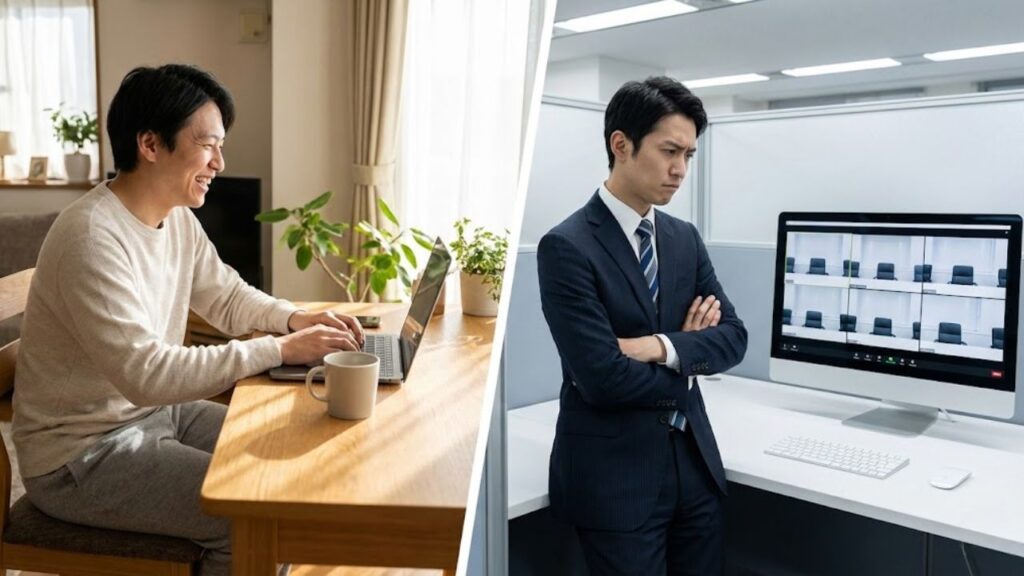
Across the city, her manager is already drafting the third email of the morning, filled with phrases like “team cohesion” and “office presence.” A meeting is scheduled to debate whether people are truly engaged if they are not sitting in their chairs. The unspoken message is clear: employees feel good at home, and that unsettles hierarchy.
After four years of remote trials, endless surveys, and academic research stacked as high as a standing desk, one conclusion keeps resurfacing. Working from home often makes people feel better. Stress drops. Control increases. People feel slightly more human.
And for many managers, that is deeply uncomfortable.
Four Years of Evidence: Why Home Feels Better Than the Office
When people describe what remote work truly gave them, they rarely mention faster internet. They talk about walking their child to school between meetings, preparing a meal that did not come from plastic packaging, or stepping away for ten minutes without feeling watched.
Researchers have spent the post-pandemic years measuring these experiences. Data from Gallup, Stanford, Eurofound, and national statistics agencies all point in the same direction. Employees who work from home at least part of the week report higher satisfaction, lower burnout, and fewer mornings filled with dread.
The irony is hard to miss. The more clearly this happiness appears in data, the more resistance it seems to provoke.
Why Companies Reversed Course on Remote Work
In 2020, many executives spoke of “remote forever” as if it were a permanent shift. By 2023, several of those same organizations began calling employees back to the office multiple days a week. A global Cisco survey found that 82% of workers felt happier in remote or hybrid roles. Around the same period, CEOs started blaming remote work for stalled innovation and so-called quiet quitting.
During an internal town hall at a European bank, one mid-level manager captured the tension plainly. “I don’t know what my team is doing when I can’t see them.” There was no scandal in the statement, just a candid admission many leaders quietly share.
For employees, home is where work and life finally stop colliding so aggressively. For many managers, home is where control begins to slip away.
The Real Psychological Divide Behind Remote Work
The conflict stems from a simple psychological shift. Remote work transfers power away from those who track hours and toward those who deliver results. If authority has long depended on watching people sit at desks, this change feels like an earthquake.
Traditional management relies on visibility: who arrives early, who stays late, who speaks in the meeting room. Remote work dismantles that scoreboard. Some leaders adapt, becoming coaches and facilitators. Others lean on surveillance software, constant check-ins, and endless pings. The tools change, but the anxiety stays the same.
Data shows people thrive with flexibility, yet hierarchy depends on predictability. That tension defines this era of work.
How to Protect Your Remote Wellbeing When Office Pressure Returns
There is often a gap between research and reality. Studies may praise remote work, yet calendar invites demanding in-person attendance keep arriving. The question becomes practical: how do you protect your wellbeing without damaging your career?
Start by documenting your performance. This is not about ego. It is about evidence. Keep a simple record of completed projects, resolved issues, and client feedback. When claims arise that remote work hurts productivity, you will have numbers that say otherwise.
Be clear about availability. Set defined working hours on your calendar and actually disconnect when the day ends. A brief note such as “I’ll respond tomorrow morning” may seem minor, but it gradually resets expectations.
Most teams learned remote work through urgency, not intention. Early on, cameras stayed on all day, messages never stopped, and meetings multiplied in the name of alignment. Many organizations never fully escaped that chaos.
One common pitfall is overcompensation. Remote employees often feel pressure to prove they are working, so they reply instantly, accept extra tasks, and attend every optional call. That is how flexibility quietly turns into work spilling into every corner of life.
No one manages this perfectly. Some days feel productive and balanced. Other days involve answering emails from the couch while questioning everything. That does not mean remote work fails. It simply means people are human.
What Managers Rarely Say Out Loud
When leaders resist remote work, the resistance often hides an unspoken fear. “I don’t know how to lead people I can’t see,” one manager admitted privately. “In the office I can read the room. On video calls, I stare at my own face and hope no one is scrolling elsewhere.”
This is where the discussion needs reframing. Instead of arguing about locations, focus on agreements. Define what good work looks like. Clarify response times. Decide which meetings truly require cameras.
These shared rules can reset expectations without turning flexibility into conflict.
- Define three measurable outcomes to deliver each week.
- Agree on core hours when everyone is reachable.
- Reduce recurring meetings and review them monthly.
- Use short weekly updates instead of constant check-ins.
- Treat office days as strategic, not symbolic.
The Quiet Shift Behind the Return-to-Office Debate
Years after the work-from-home experiment began, the debate is no longer just about location. It is about who controls time, energy, and attention.
People who have experienced real flexibility rarely want to return to five days under fluorescent lights. Not because they dislike colleagues, but because they have seen another way to live. A routine that allows daylight in winter, fewer hours in traffic, and small moments of calm between tasks.
For managers, this shift can feel like loss. For employees, resistance can feel like denial that wellbeing has real value.
The science is practical, not emotional. It points to lower stress hormones, fewer sick days, and modest improvements in sleep and mood. Behind those statistics are everyday moments: eating lunch away from a screen, handling school drop-off without rushing, taking a midday walk and returning less tense.
The real question is no longer office versus home. It is who gets to choose, and under what conditions.
This is why the topic sparks such strong reactions. It touches autonomy, dignity, and expectations of what work should feel like. It challenges managers to rethink leadership and employees to clearly articulate their needs.
The coming years will likely be uneven. Policies will shift, strategies will change, and teams will experiment. Somewhere between data on happiness and fears in boardrooms, a new balance will emerge.
And the person reading this between emails may help shape what work looks like for those who come next.
Key Takeaways
- Remote work and happiness: Research links working from home with higher satisfaction, less burnout, and improved balance, reinforcing the case for flexibility.
- Managerial resistance: Many leaders still rely on visible presence and struggle to manage by outcomes rather than hours.
- Negotiating clear rules: Defining expectations around outcomes, hours, and meetings helps protect wellbeing without harming career growth.