
The Tuesday morning walking group had just finished their usual loop around the park. Ten retirees, cheeks pink from the cold, stretching half-heartedly while comparing step counts. “Six thousand already,” one woman said proudly, tapping her watch. At the edge of the path, a man in his seventies wasn’t walking at all. He was picking up a sandbag, hugging it to his chest, and slowly getting down to the bench. Then standing. Then down again. The walkers looked over, half curious, half skeptical. He didn’t have the “fit old guy” look. Just normal. Slightly hunched. Careful. Focused.
Twenty minutes later, he was done. No fancy moves. No treadmill. Just controlled lowering, pushing, standing, pausing. When he walked past the group on his way out, his steps were oddly light.
There’s a kind of movement, after 70, that quietly rewrites the story of your healthspan.
Why the over-70 body needs a different kind of movement
Doctors praise daily walks. Family members cheer when you “keep moving”. Fitness posters show silver-haired couples in pristine gyms. Yet ask anyone over 70, and they’ll tell you: walking is good, but it doesn’t solve the tricky stuff. Getting out of a low chair. Lifting a suitcase into the trunk. Catching yourself when you trip on the carpet. Those moments are where aging really shows up.

Walking trains your heart and lungs. Weekly gym sessions tick the “I exercised” box. But the hidden decline happens somewhere else: in the power of your legs, your grip, your ability to move your own body through space. That’s the quiet erosion that turns “a bit slower than before” into “I’m afraid of falling”.
There’s another way to train that speaks directly to those fears.

Look at the research on longevity and independence after 70. The strongest predictor is not how far you can walk on a treadmill. It’s how fast you stand up from a chair, how firmly you can grip something, how confidently you can climb a few stairs. These are called “functional” abilities. They don’t look glamorous on social media. They don’t feel heroic. Yet they decide whether you can live on your own, travel, cook, shower safely, or garden without dreading the next day’s pain.
What your body really needs at this age isn’t more steps. It’s smarter resistance.
The movement pattern that quietly stretches your healthspan
The pattern that changes everything after 70 has a simple name: **sit-to-stand strength**, practiced in slow, controlled resistance movements. In plain language: training your body to lower, push, and lift against some kind of load, in everyday angles, at a pace you control. Not throwing weights around. Not chasing exhaustion. Just teaching your muscles and joints to do the basics… but better.
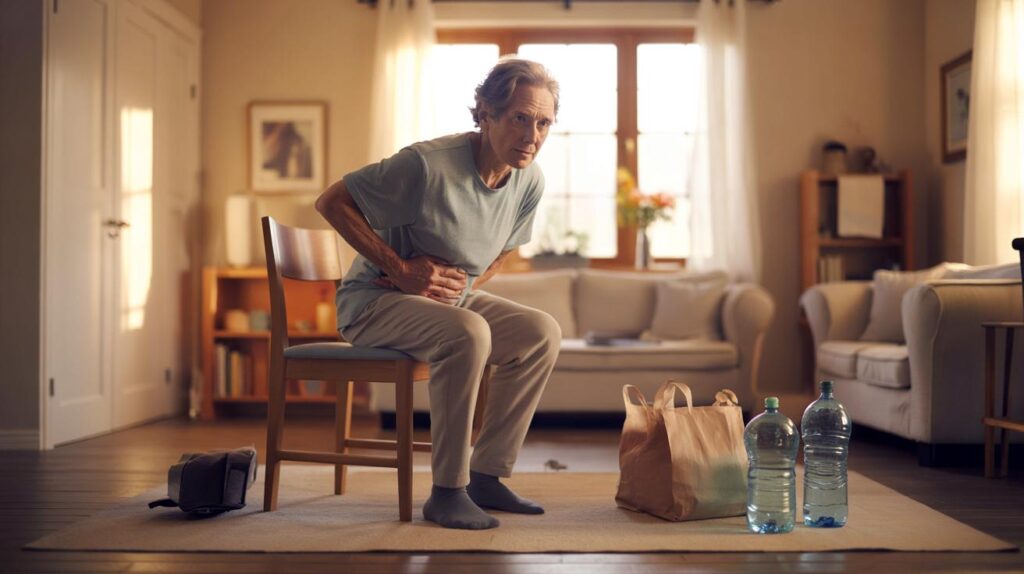
Picture this: you sit on a sturdy chair, feet flat on the floor, arms crossed or lightly on your thighs. You lean slightly forward and stand up, then slowly sit back down, counting to three on the way down. That’s one repetition. Do that 5–8 times, rest, and repeat. You can hold a light backpack or a shopping bag to add resistance. It looks almost too simple. Yet it trains legs, core, balance, and nervous system in one go. The pattern shows up in toilets, sofas, car seats, bus benches, and gardening stools.
We’ve all been there, that moment when you realize getting off the couch suddenly feels like a small project. A woman I interviewed in her late seventies told me she used to avoid low seating at family dinners because she wasn’t sure she’d get up gracefully. Her daughter, a physiotherapist, started her on a tiny routine: 3 sets of chair stands three times a week, plus one “loaded carry” around the kitchen holding two water bottles. No gym. No machines. Three months later, she didn’t just move more easily; her confidence came back. Her words: “I trust my legs again.”

This pattern works because it trains strength, not just movement. Muscles respond to resistance at any age, including after 80. When you repeatedly stand and sit with control, or pick up and carry a modest weight, your body learns three vital things: how to generate force, how to stabilize joints, and how to coordinate without panicking. That combination rewires the aging nervous system. It doesn’t make you “young again”. It makes you more capable in the body you actually have. That’s a quiet, radical win.
How to practice “healthspan strength” at home without fear
Start with two pillars: controlled sit-to-stands and gentle loaded carries. For sit-to-stands, choose a chair that doesn’t wobble, preferably with armrests nearby for safety. Sit tall, feet shoulder-width apart, knees over ankles. Lean your chest slightly forward, press your feet into the floor, and stand up. Pause for one second at the top, then slowly sit back down, taking three seconds to lower. If you need to, use your hands lightly on the chair or a table. Aim for 2–3 sets of 5–8 repetitions, two or three times per week.
For loaded carries, hold something you already own: two shopping bags with a few items, two water bottles, or a small backpack hugged to your chest. Stand tall, draw your ribs gently away from your hips, and walk around your home for 20–40 seconds. Keep your steps small and your gaze forward, not at the floor. Rest, then repeat once or twice. Let’s be honest: nobody really does this every single day. But twice a week? That’s realistic, and for many people over 70, more than enough to feel the shift.
The two biggest mistakes people describe are going too fast and going too heavy. There’s this old “no pain, no gain” echo in the background that does more harm than good. You don’t need sore muscles for this to work. Slight effort, mild warmth, a sense of “I’m working but I’m okay” is the sweet spot. If your knees complain, raise the chair height with a firm cushion. If balance is shaky, park the chair next to a counter you can grab. *The goal is never drama; it’s quiet repetition that your nervous system learns to trust.*
“After 75, I stopped telling patients to ‘exercise more’,” a geriatrician told me. “I started telling them to ‘train your getting up and your carrying’. The ones who do that, even twice a week, stay independent far longer than the ones who just rack up steps.”
- Start small – One round of 5 sit-to-stands and one 20-second carry still counts.
- Pair it with a habit – Right after brushing your teeth, or while the kettle boils.
- Use what you have – Chairs, bags, water bottles, a hallway, a kitchen counter.
- Stop on control, not collapse – The last rep should be slower, not desperate.
- Track function, not weight – Notice chairs feel easier, stairs less intimidating.
A different picture of aging: strong enough for your own life
There’s a quiet rebellion in refusing the script that says aging is just loss. When you deliberately train sit-to-stand strength and simple loaded carries, you’re not chasing youth. You’re fortifying the border between “I can” and “I can’t yet”. Over months, the changes don’t always show in the mirror. They show when you stand up from the floor after playing with a grandchild. When you carry your own suitcase onto the train. When a slip on wet tiles becomes a wobble you catch, not a fracture.

This movement pattern won’t headline fitness magazines. It’s too plain, too honest, too ordinary. Yet that’s exactly its power. You can do it in slippers. In a small apartment. On days when motivation is low but you still want to cast a vote for your future self. Imagine a generation that arrives at 80 or 90 not just walking, but standing up easily, carrying their own groceries, managing stairs without bargaining with every step.
The science calls it improved healthspan.
Most people simply call it keeping their life.

| Key point | Detail | Value for the reader |
|---|---|---|
| Sit-to-stand strength | Repeated, controlled standing up and sitting down from a chair | Directly trains the movement needed for toilets, sofas, cars, and beds |
| Gentle loaded carries | Walking short distances while holding light bags or bottles | Improves grip, posture, balance, and real-world confidence |
| Low frequency, high impact | 2–3 short sessions per week with moderate effort | Realistic routine that maintains independence without draining energy |
FAQ:
- Question 1Is it safe to start this kind of strength work after 70 if I’ve been mostly sedentary?
- Question 2How sore should I feel after doing sit-to-stands and carries?
- Question 3What if I have bad knees or joint replacements?
- Question 4Can this really replace my daily walks?
- Question 5How long before I notice a difference in daily life?
