
It’s late afternoon. The light is softer than it was an hour ago, and the day has slowed just enough for you to feel it. You’re walking down the street, maybe after a meal or on your way back home, and at some point your hands drift behind your back. Fingers interlace loosely. Your shoulders settle.
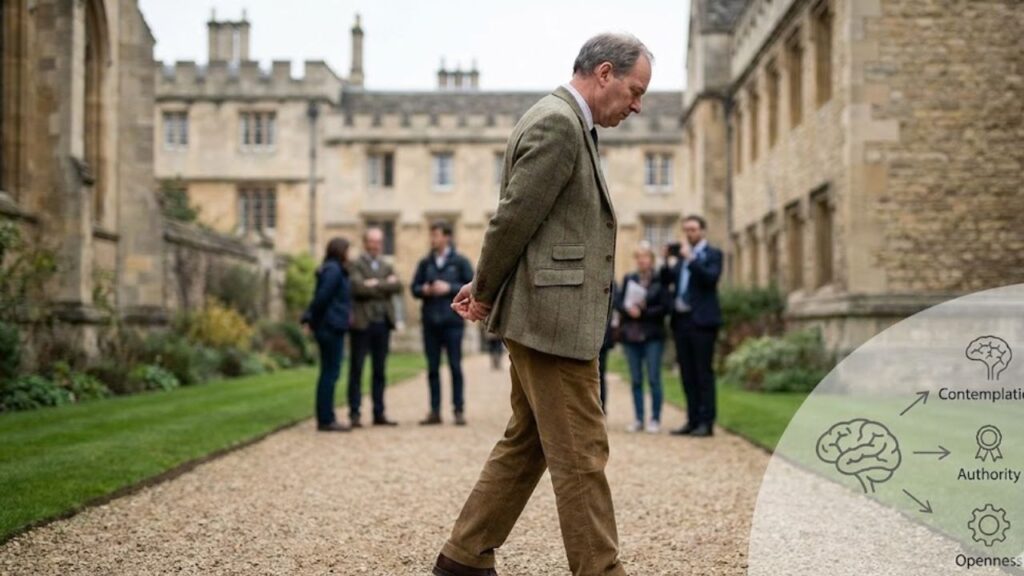
You don’t remember deciding to walk this way. It simply happens. It feels natural, almost invisible, like a posture your body remembers even if your mind doesn’t comment on it.
For many people over 50 or 60, this movement shows up quietly, without announcement. And yet, it often carries more meaning than we realise.

The Feeling of Being Slightly Out of Step
At this stage of life, you may notice small shifts that are hard to name. You’re not unhappy, exactly. But the world feels louder, faster, more impatient. Conversations rush. Expectations pile up. Even walking through familiar places can feel different than it used to.

There’s a subtle sense of standing half a step outside the current rhythm. Not disconnected, but not fully pulled along either. You observe more. You pause more. You take your time, even when everything else seems in a hurry.
That’s often when the body chooses its own language.
Why the Body Chooses This Posture
Walking with your hands behind your back is one of those gestures that appears simple on the surface but carries layers underneath. Psychologically, it’s often linked to a shift inward. Not withdrawal, but reflection.
This posture slightly closes the front of the body. It reduces outward reach. In plain terms, it signals that you’re not scanning for what’s next. You’re processing what already is.
Many people adopt it during moments of thought, calm appraisal, or quiet authority. It’s common in people who feel less need to perform, explain, or prove.
A Familiar Sight in Later Life
You may have noticed older relatives doing this years ago. At the time, it might have looked like stiffness or habit. But often, it’s something deeper.
There’s a natural psychological transition that happens with age. Attention slowly turns from expansion to integration. From building and striving to making sense of what has already been lived.
The body mirrors this shift long before we put words to it.
A Real Moment: Rajesh, 63
Rajesh is 63. He walks every evening around the same block near his apartment. He says he didn’t realise when his hands started moving behind his back.
“It just feels comfortable,” he explains. “Like I can think better this way.”
He’s not trying to appear confident or wise. He’s not copying anyone. For him, it’s simply the position his body takes when his thoughts slow down and settle.

What’s Happening Inside, In Simple Terms
As we age, the nervous system becomes more sensitive to overload. Loud environments, constant demands, and quick decisions take more energy than they once did.
Small physical adjustments help the body feel safer and more grounded. Walking with hands behind the back subtly reduces sensory input. It limits unnecessary movement. It signals calm to the brain.
It’s not about control. It’s about containment.
This posture also shifts your centre of balance slightly. That can bring a sense of steadiness, both physically and emotionally. You’re literally holding yourself together in a way that feels supportive.
The Meaning People Often Miss
Some interpretations frame this habit as seriousness, authority, or even emotional distance. But for many older adults, it’s none of those.
It’s often a sign of comfort with one’s inner world. A reduced need for external engagement every second. A quiet confidence that doesn’t need display.
It can also be a response to years of living in a forward-reaching posture—working, providing, fixing, carrying. At some point, the body chooses rest over reach.
Gentle Adjustments That Respect the Shift
Rather than correcting or questioning this habit, many people find it helpful to listen to what it’s asking for.
- Allow yourself unhurried walks where thinking is optional.
- Notice when your body naturally chooses stillness or simplicity.
- Reduce pressure to appear busy or productive while moving.
- Choose environments that support calm rather than stimulation.
- Let posture be a response, not a performance.
A Thought That Often Goes Unspoken
“I’m not slowing down because I’m weak. I’m slowing down because I don’t need to rush anymore.”
Reframing the Gesture
Walking with your hands behind your back isn’t something to analyse away or correct. It’s not a flaw or a signal that something is wrong.
It’s often a sign of internal alignment. Of moving through the world with less noise inside. Of allowing thought and feeling to share the same quiet space.
This posture doesn’t mean you’ve disengaged from life. It often means you’re finally walking at a pace that matches who you are now.
 When kindness becomes isolating: 7 reasons why kind women have fewer friends as they get older
There’s no need to change it. There’s only value in understanding it.

What This Gesture Offers You
| Key point | Detail | Value for the reader |
|---|---|---|
| Natural inward focus | The body reduces outward reach and stimulation | Supports calm thinking and emotional steadiness |
| Shift in life rhythm | Movement reflects reflection rather than urgency | Permission to move at a personal pace |
| Quiet self-containment | Posture signals safety to the nervous system | Greater sense of ease while walking |
