
The man at the Saturday market stared at the label like it was a bad joke. “Broccoli… cauliflower… cabbage… same price,” it said. Same producer, same stall, three neatly stacked crates of green, white and crinkled leaves — and one exhausted farmer trying to explain to yet another customer why they weren’t actually “completely different plants, monsieur”. The woman in front of me blinked, frowned, then pulled out her phone to fact-check him on the spot.
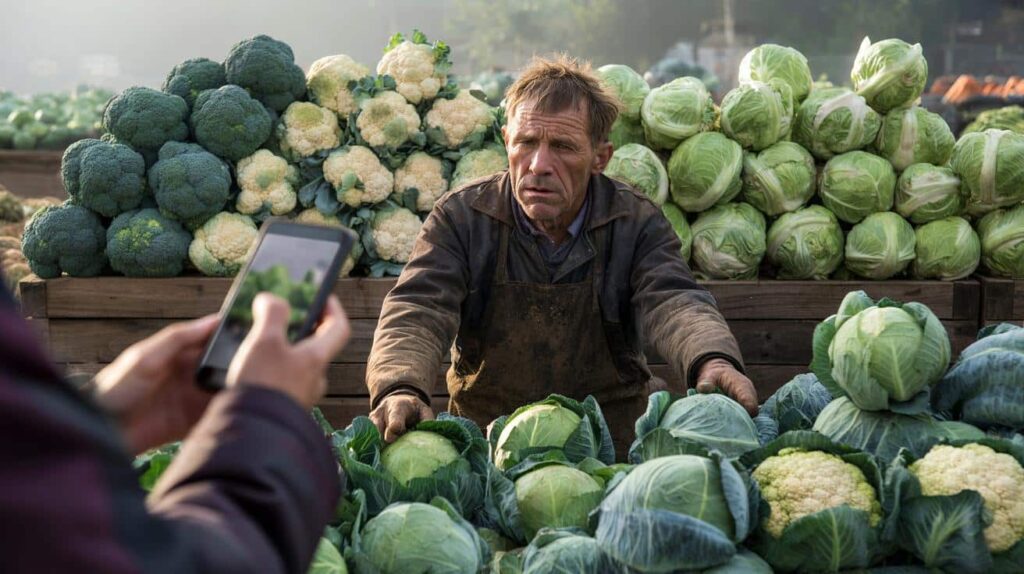
The farmer laughed, but his jaw was tight.
Because the wild truth is leaking out of labs and TikTok food accounts at the same time: those three stars of our dinner plates are basically the same species.

And the people who grow them are sick of the confusion.

So… broccoli, cauliflower and cabbage are cousins? No. They’re clones.
Walk through a winter field in western France or the English countryside and you’ll see it: endless rows of what look like different plants, but share the same wild ancestor. Broccoli with its tight green florets. Cauliflower, a pale brain of curd. Cabbage, a solid green cannonball that could dent your car.
On paper, though, they share a single name: *Brassica oleracea*. Same species, same starting point, different “body parts” pushed to extremes by centuries of human obsession. That’s the plot twist.
Take a closer look at the Brassica family and the story becomes almost surreal. Broccoli is just the flower part, bred to be fat and early. Cauliflower is the flower, too, but frozen in a kind of botanical arrested development. Cabbage? That’s basically a collection of super-tight leaves, selected by peasants who wanted something that could survive a brutal winter and still feed a family.
From that same wild seaside plant also came kale (leaves), kohlrabi (swollen stem), Brussels sprouts (mini buds on the stem), and more. One species, seven vegetables. Farmers didn’t just grow plants, they reshaped a genome with their bare, muddy hands.
Genetic studies in recent years have only confirmed what old farmers already suspected in their bones. Lab teams have mapped the Brassica genome and found that broccoli, cauliflower and cabbage are less like neighbors and more like twins in different outfits. Just a handful of genes control whether a plant makes a giant head, lots of side shoots or dense leaves.
So when a supermarket ad screams about “diversifying your veggies” with broccoli one night and cauliflower the next, growers roll their eyes. From a biodiversity point of view, that’s almost like swapping a green apple for a red one and calling it a revolution.
Why this makes farmers quietly angry
Small-scale producers will tell you the same story, whether you’re in Brittany, California or northern Italy. Customers arrive with Pinterest recipes in their heads and supermarket prices in their minds. They expect cheap cauliflower, cheap broccoli, cheap cabbage — because to them, they’re “just vegetables”.
Yet each of these so-called different crops needs precise timing, different harvesting gestures, and a mountain of risk. A heatwave at the wrong moment? Your cauliflower turns yellow and “ugly”. A week of rain? Your cabbage cracks open like a bomb. The label doesn’t show that.
One Normandy grower told me about a buyer who wanted 5,000 identical white cauliflowers. Not “good”. Not “tasty”. Identical. “They think we press a button,” he sighed, kicking mud off his boots. He’d just lost a third of his crop to an unexpected warm autumn that made the plants mature too fast.
He still delivered the order. But he also plowed under hundreds of heads that were slightly too big or too small for supermarket standards. Perfectly edible clones of the same plant, rejected because they didn’t fit into a box. That’s the kind of scene that makes a farmer furious in a quiet, grinding way.
Behind the frustration sits a plain economic truth: when people don’t realize these vegetables are the same species, they also don’t see that our diets are dangerously narrow. We act like we have endless choice, but in the cabbage family we basically push one plant to death.

For farmers, that dependency is scary. A new disease, a shift in climate, one policy change — and the entire Brassica empire could take a hit. When they try to explain the need for more real diversity, many consumers look puzzled. “But I already eat broccoli *and* cauliflower.” And the farmer, who has watched the same DNA grow, just bites their tongue.
How to eat “the same plant” without boring yourself to tears
If broccoli, cauliflower and cabbage are one big family clone, the trick is not to panic but to play. Think like a cook, not like a taxonomist. Roast, char, pickle, shred, mash — treat each form of Brassica like a different texture waiting to happen.
Take a humble cabbage. Slice it paper-thin, toss it with salt and vinegar, and it becomes a sharp, crunchy slaw. Cut it into quarters, brush with oil and roast at high heat, and you get caramelized, nutty wedges that have nothing in common with the limp boiled stuff from childhood nightmares.
The same thing goes for broccoli and cauliflower. Instead of steaming them to sadness, throw florets onto a blazing-hot tray with olive oil, garlic and a squeeze of lemon. Add chili flakes if you’re feeling brave. The edges crisp up, the flavor deepens, and suddenly that “same old” plant tastes like a whole new ingredient.
We’ve all been there, that moment when you open the fridge and stare at a head of cabbage like it’s a punishment. The trick is to stop treating these veggies as boring side dishes and start seeing them as the main character.
Farmers often say the real respect you can show their work starts in your kitchen. Not by memorizing Latin names, but by wasting less and daring more. One grower told me, half-joking, half-tired:
“People want perfect organic vegetables, cheap, available all year, and cooked in five minutes. That mix doesn’t exist in real life.”
Let’s be honest: nobody really does this every single day.
Still, you can steal a few simple habits:
- Buy “ugly” broccoli or cauliflower when you see it. The plant doesn’t care about its modeling career.
- Use the stems and outer leaves for soups and stir-fries instead of binning them.
- Alternate raw, roasted and fermented versions during the week to trick your brain.
- Ask your market farmer which Brassica is truly in season; taste changes with the cold.
- Freeze blanched florets when prices are low, so you’re not hostage to winter markups.
One plant, many futures
Once you know that broccoli, cauliflower and cabbage are basically costume changes of the same character, it’s hard to unsee it. The supermarket aisle looks different. The farmers’ market sounds different. The word “variety” feels thinner.
That knowledge can be depressing for a second — another illusion gone. Then, strangely, it becomes empowering. Because if our ancestors could sculpt a single wild plant into this many shapes with patience and selection, what else could we transform if we actually cared about flavor, resilience, and fairness for growers?
Next time you hold a head of cauliflower, you might picture the coastline where its ancestor grew, battered by salt spray and wind. You might think of the hands that harvested it at dawn and the cold that sweetened its core. Or you might just roast it with paprika and call it dinner.

Either way, you’ll know this isn’t “just another vegetable”. It’s a reminder that our plates are full of stories we’ve almost forgotten — and a quiet nudge to ask better questions, both at the market and at the table.

| Key point | Detail | Value for the reader |
|---|---|---|
| Same species shock | Broccoli, cauliflower and cabbage are all Brassica oleracea | Changes how you see “variety” and food choices |
| Farmer frustration | High demands, low prices, little awareness of real work and risk | Encourages more conscious buying and support for growers |
| Kitchen freedom | Playing with textures, cooking methods and “ugly” produce | More flavor, less waste, better connection to what you eat |
FAQ:
- Question 1Are broccoli, cauliflower and cabbage really the same plant?
- Question 2Do they have different nutrients or are they identical?
- Question 3Why are farmers upset about this “same species” revelation?
- Question 4Does this mean we lack real biodiversity in our diet?
- Question 5What can I concretely do as a consumer to help farmers and eat better Brassicas?
