
It’s 9:17 in the evening. The house is quiet in that particular way that only happens later in life. Not the silence of loneliness exactly, but the kind where nothing is demanding you anymore. You notice it while rinsing a single cup in the sink, or while turning off a lamp you didn’t really need on.
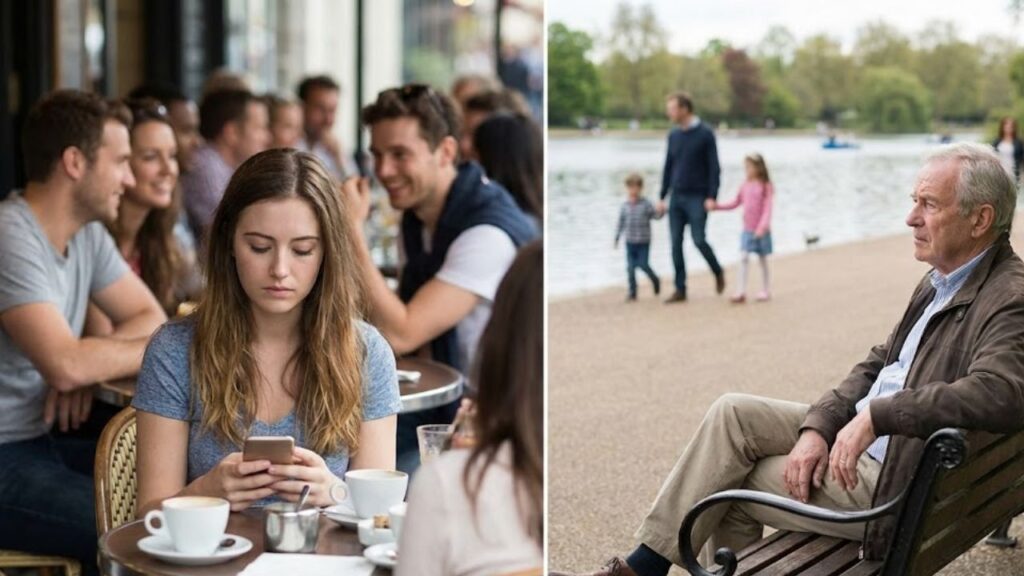
You sit down, phone nearby but untouched. Somewhere in the background, a familiar thought drifts through — not sharp, not painful — just present. It sounds like this: Why did love feel easier before… or does it only feel that way now?
It’s not a dramatic question. It doesn’t arrive with panic. It arrives quietly, the way many realizations do after 50, when life has slowed enough for you to finally hear yourself think.
 I’m a psychologist and this is the typical phrase from someone repressing a childhood trauma
That Subtle Feeling of Being Out of Step
At certain points in life, it can feel like the world is moving to a rhythm you didn’t rehearse. Conversations feel faster. Expectations feel different. Even the language of relationships seems to have shifted slightly while you weren’t looking.

You might notice it at a family gathering, when someone asks — gently, casually — about your “situation.” Or when a friend talks about dating with a tone that feels unfamiliar, almost like they’re describing a different culture.
It’s not that you don’t want connection. It’s that the way connection happens now doesn’t quite match the way you learned it.
The First Age: When Life Is Too Full to Hold Love Gently
The first age when love often becomes hard to find is earlier than people expect. It’s usually somewhere in the late 20s to late 30s — not because love disappears, but because life becomes loud.
During this time, everything is under construction. Careers are unstable. Finances feel provisional. Identities are still being tested. Love, instead of being a place to rest, can start to feel like another responsibility to manage.
You may remember that period as one where people were constantly busy but strangely lonely. Relationships started quickly and ended just as fast, often not because of lack of care, but because there was no space to stay.
Looking back, it’s easier to see how love struggled to breathe then.
The Second Age: When Experience Changes the Shape of Wanting
The second age arrives much later, often after 55 or 60. It comes quietly, without announcement.
By this time, you know yourself better. You also know what didn’t work before. You’ve learned where you compromise too much, where you disappear, where you stay longer than you should.
This knowledge is a gift — and sometimes a barrier.
Because love now has to pass through memory, history, and discernment. It’s no longer just about chemistry. It’s about safety, respect, emotional ease, and whether someone fits into a life that is already shaped.
A Real-Life Moment
Maria, 62, described it simply. She said she didn’t feel lonely most days. She enjoyed her routines. Her mornings were calm. Her evenings were hers.

But she noticed that when she did meet someone new, there was a hesitation she hadn’t felt before. Not fear — awareness. She said, “I don’t want to start over, but I also don’t want to close the door.”
That in-between space is where many people find themselves now.
What’s Actually Happening Inside You
This shift isn’t about becoming less capable of love. It’s about your nervous system and expectations changing with time.
Earlier in life, novelty feels energizing. Uncertainty feels exciting. The body tolerates emotional risk more easily.
Later on, the body prefers steadiness. The mind seeks coherence. Emotional chaos feels heavier because you’ve lived long enough to recognize its cost.
So when love doesn’t arrive easily, it’s not because something is wrong with you. It’s because your system is wiser — and more selective.
Gentle Adjustments That Often Help
Not changes. Not rules. Just small shifts that many people find soften the experience.
- Let connection grow slowly, without needing clarity too soon.
- Stay curious rather than evaluative in early conversations.
- Allow companionship to count, even if it doesn’t fit old definitions.
- Notice where comfort has become protection, not peace.
- Give yourself permission to want what fits now, not what once did.
A Lived-In Truth
“Love didn’t get harder because I aged. It got quieter. And I had to learn how to listen differently.”
Reframing What This Means
There’s a common story that says love has a timeline. That if it doesn’t happen by a certain age, something has gone wrong.
But another story exists — one that many people only discover later. It says that love changes form across a lifetime. It becomes less about urgency and more about alignment.
At both of these ages — when life is too full, and when life is finally spacious — love is harder to find for different reasons. Not because it’s gone, but because it asks something new of you.

And perhaps that’s not a failure. Perhaps it’s an invitation to recognize that love, like you, has matured.
 Psychology warns: emotional numbness is not the absence of feelings, but a protective response
| Key point | Detail | Value for the reader |
|---|---|---|
| Two difficult ages | Late 20s–30s and post-55 | Normalizes the experience |
| Shift in desire | From intensity to ease | Reduces self-blame |
| Reframed love | Alignment over urgency | Offers quiet permission |
