Across large parts of the UK, Europe, and the US, warmer temperatures and longer warm seasons are leading to more mosquitoes, unfamiliar species, and a growing interest in natural ways to keep them away without filling indoor spaces with chemical products.
The springtime surge for a fragrant mosquito-repelling plant
Step into a garden centre in April and you’ll likely notice stacks of the same tall, grassy plant placed right near the entrance. They sell quickly every year. This plant is citronella, often marketed as “mosquito grass” or “lemongrass”, and it has become a popular choice for households that want a fresh-smelling home while avoiding mosquito bites.
The scent of citronella is instantly familiar—sharp, lemony, and clean. While pleasant to people, this aroma disrupts how mosquitoes locate their targets.

Citronella emits aromatic compounds that interfere with mosquitoes’ ability to detect human scent, making it harder for them to find exposed skin.

As climate change allows invasive insects like the Asian tiger mosquito to move further north, interest in plant-based mosquito deterrents has increased. Even those with balconies, small gardens, or sunny windowsills are turning to greenery as a first layer of protection.
How citronella affects mosquitoes
The reputation of citronella is based on science rather than tradition. Its leaves and stems contain essential oils rich in citronellal, geraniol, and limonene. Mosquitoes rely on specialised receptors in their antennae to sense carbon dioxide and body odours, and these compounds interfere with that detection process.
When a leaf is crushed or a stalk snapped, small droplets of essential oil are released into the air. This creates a short-lived scented zone around the plant that makes humans more difficult for mosquitoes to locate.
A healthy citronella plant on a sunny patio won’t eliminate insects entirely, but it can reduce bites in the immediate area when the leaves are disturbed regularly.
Researchers note that citronella’s effect is temporary. The oils evaporate quickly, which explains why candles and sprays need frequent renewal. Potted plants behave the same way: brushing past them strengthens the scent briefly, but the effect fades within a couple of hours.
Growing citronella in containers: practical guidance
Citronella is a tropical grass with rhizomatous roots, meaning it grows from thick underground stems that spread and can be divided. This growth habit makes it easy to multiply—one plant can become several by the end of the season.
Light, warmth, and watering requirements
- Sunlight: at least 5–6 hours of direct sun daily
- Temperature: sensitive to temperatures below 10°C (50°F)
- Soil: light, well-draining compost enriched with organic matter
- Water: consistent watering, allowing the top layer to dry slightly between sessions
In cooler regions such as the UK or northern US, citronella behaves as a tender perennial. It thrives outdoors from late spring through early autumn, then needs to be moved indoors to avoid frost, which usually kills the plant.
The rhizome structure allows gardeners to lift and divide the plant at summer’s end. Each section with roots attached can be replanted and grown on the following year.
Best placement around the home
For mosquito deterrence, location matters more than size. Citronella works best when placed exactly where mosquitoes gather or enter.
- Beside doors and patio entrances: helps create a scented barrier
- On windowsills and balcony rails: targets insects drawn to indoor light and warmth
- Around outdoor seating: forms a localised protective area during meals or drinks
Gently rubbing a few leaves before sitting outside releases more aroma. Some people place crushed leaves in small bowls on tables to enhance the short-term effect.
Other fragrant plants that deter mosquitoes
Citronella may be the most well-known option, but several other plants also release mosquito-unfriendly scents while remaining pleasant to people.
Citrus geranium and lemon verbena
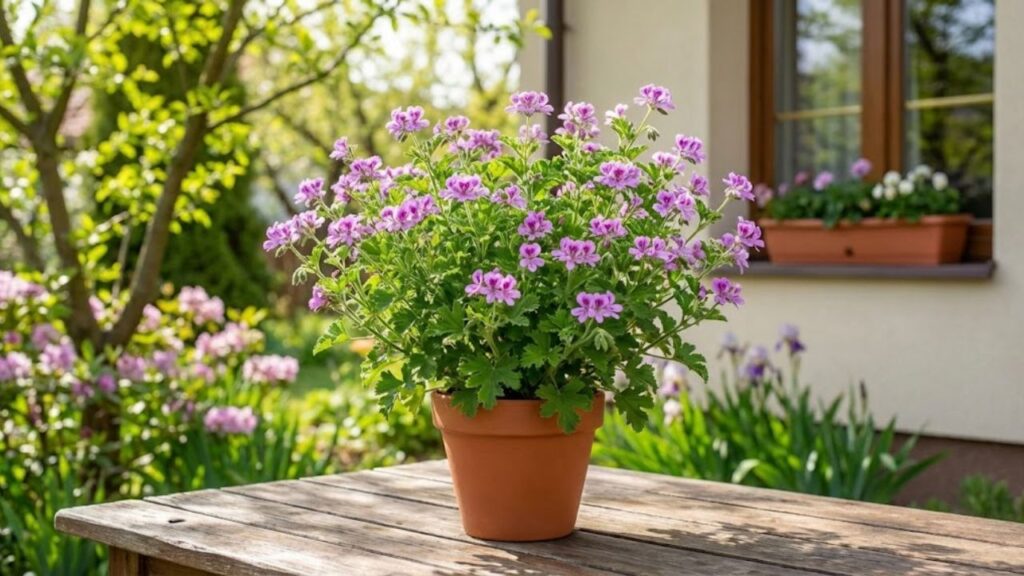
The so-called mosquito geranium (Pelargonium citrosum) is a decorative hybrid bred for its citrus fragrance. Its deeply cut leaves emit a sharp lemon scent when touched, which can discourage mosquitoes at close range.
Lemon verbena (Aloysia citriodora) produces an even brighter lemon aroma. Its narrow leaves are rich in essential oils. The plant prefers full sun and frost-free conditions, making it ideal for pots that can be moved indoors. In many homes, it also serves as an ingredient for herbal tea.
Lavender, basil, and mint
Traditional garden favourites also contribute to a less attractive environment for biting insects.
- Lavender (Lavandula angustifolia): its floral, slightly camphorous scent can deter mosquitoes, flies, and some moths
- Basil (Ocimum basilicum): lemon- and cinnamon-scented varieties are particularly disliked by insects
- Mint (Mentha species): its strong menthol aroma can disturb mosquitoes and ants but spreads aggressively unless grown in pots
Combining several aromatic plants creates a complex scent environment, which may make it harder for mosquitoes to focus on human odour.
Understanding the real level of protection plants provide
Specialists emphasise that mosquito-repelling plants do not form an invisible shield. Their effect is local, moderate, and temporary, working best when you are close to the foliage and the air is still.
Even so, citronella and similar plants can change the immediate surroundings. The mix of scents, subtle air movement, and shaded microclimates around leaves can reduce bites, particularly in small gardens, balconies, and courtyards.
In regions affected by dengue, West Nile virus, or other mosquito-borne illnesses, plants should support—not replace—other measures. Window screens, eliminating standing water, and selective use of repellents remain essential.
Everyday ways to use citronella at home
On a compact city balcony
A small south-facing balcony can hold several large pots: two with citronella, one with lavender, and one with basil, arranged around a table. Lightly crushing a few leaves before sitting down and placing them in a shallow dish can help reduce bites during an evening outdoors.
In a family garden
In a suburban setting, citronella can line the edge of a deck, with mint in containers near cooking areas and lavender along pathways. As children brush past the plants while playing, the scent is released, offering additional protection. Parents may still apply repellent at dusk but often notice fewer bites overall.
Benefits, limits, and smart combinations
Aromatic plants offer several additional advantages. They perfume outdoor spaces, attract pollinators like bees and butterflies, and provide ingredients for cooking or herbal infusions. Regular watering also draws attention to standing water that might otherwise become mosquito breeding sites.
There are limits to consider. Strong fragrances can irritate sensitive individuals, and concentrated essential oils may cause allergic reactions if applied directly to skin. Pets that chew large amounts of aromatic leaves may experience digestive upset.
The most effective approach combines methods. Removing breeding sites, using fans to move air, applying repellent to exposed skin, and surrounding seating with citronella and lavender creates a layered defence. Each step adds a small barrier, and together they can make outdoor spaces far more comfortable during warm evenings.