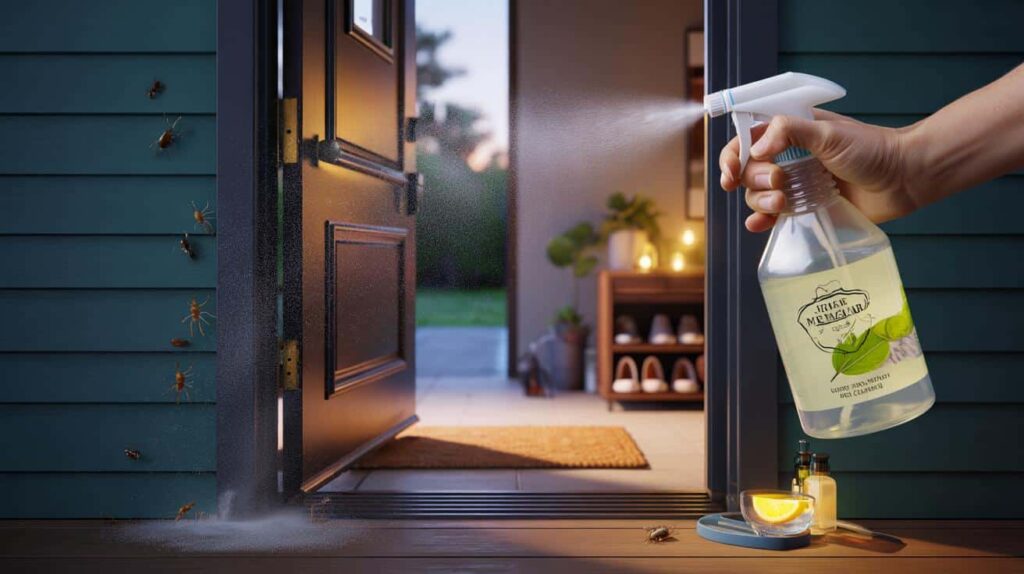
What started as a simple housekeeping hack has grown into a hybrid habit: part insect control, part odour buster, and, for some, a small ritual for “resetting” the mood at home. The idea is almost disarmingly basic: spray diluted white vinegar around the entrance of your house and let it work.
Why vinegar is suddenly turning up at the front door
White vinegar has long been a multipurpose staple for limescale, windows and laundry. Lately, though, it’s stepping outside the kitchen. Household forums, TikTok clips and German cleaning blogs have all highlighted one specific trick: using it at the threshold of the home.
The thinking is twofold. On the one hand, vinegar acts as a mild disinfectant and deodoriser. On the other, its pungent scent creates a sort of invisible fence for certain household pests.

Spraying a vinegar solution at the entrance creates a low-cost barrier that many insects prefer not to cross.

In parallel, a growing group of “home energy” enthusiasts say they spray vinegar on door frames to shift heavy moods and refresh the atmosphere. Whether you buy into the energetic angle or not, the practice is spreading because it is cheap, simple and largely safe when used with common sense.
How vinegar repels insects around the entrance
Ants, spiders and even cockroaches use scent trails and chemical cues to navigate. The strong, acidic odour of vinegar disrupts those signals. It does not poison the insects; it simply makes the space uncomfortable and confusing for them.
A regular misting of vinegar around the front door can help reduce the number of tiny intruders that venture inside.
Pests most likely to stay away
- Ants: Vinegar can blur the pheromone trails they follow, making your doorway less attractive as a route.
- Spiders: Many spiders avoid strongly scented, acidic surfaces and will relocate their webs.
- Cockroaches: While tougher to deter long term, they often sidestep strongly scented areas when given the choice.
- Flying insects: Some people report fewer fruit flies and small gnats near the door after regular spraying.
None of this replaces serious pest control in the case of an infestation. But as a daily or weekly habit, it can reduce the casual traffic of insects that slip through gaps and cracks by the threshold.
How to prepare and use a front-door vinegar spray
The basic recipe is simple, and you probably own everything you need already.
| Ingredient | Typical ratio | Purpose |
|---|---|---|
| White vinegar | 1 part | Provides acidity, smell and mild disinfecting power |
| Water | 1–2 parts | Dilutes the solution to protect surfaces and reduce harshness |
| (Optional) a few drops of essential oil | Very small amount | Softens the smell and adds a pleasant note |
Where to spray for the best effect
Pour the mixture into a spray bottle and aim for areas where insects tend to pass or hide:
- Around the door frame, especially along joints and seals
- On the floor just inside and just outside the entrance (if the material tolerates vinegar)
- Into small cracks or gaps at the base of the door where light or air seeps through
- Along skirting boards and corners that connect directly to outside walls
Let the surface air-dry. The vinegar smell fades for humans within minutes to an hour, depending on ventilation, but the microscopic residue and altered scent pattern can last longer for insects.
Odour control and disinfection at the threshold
Front doors collect smells: wet shoes, pet fur, cigarette smoke from the street, even leftover cooking odours that drift down a hallway. Vinegar helps neutralise many of these by chemically interacting with volatile molecules rather than simply masking them with perfume.
Vinegar does not just hide smells; it can actually reduce the intensity of lingering odours in cramped entrances.
Because it is mildly acidic, white vinegar also disrupts the growth of some bacteria and fungi on hard surfaces. Spraying and wiping a door handle or letterbox flap with a diluted mixture adds a quick layer of hygiene, especially in flats where multiple people use the same corridor or handrail.

The “energy cleaning” angle: superstition or subtle reset?
Alongside its very practical uses, vinegar has taken on a more symbolic role in many households. Fans of feng shui, space clearing and similar traditions often speak of “dense” or “heavy” energy gathering near entry points.
For them, spraying the door frame with vinegar is less about science and more about ritual. The act stands for loosening what feels stuck and inviting in a fresher mood.
Some households treat a quick vinegar mist at the door as a way of leaving the day’s stress outside.
Psychologists would describe this in different terms: a small, controllable action that signals transition. Wiping the handle, airing the hall, spraying vinegar – these steps carve a boundary between public life and private time, which can genuinely influence how relaxed you feel once you step inside.
When vinegar is a smart choice – and when it is not
Benefits that keep people using it
- Low cost: A bottle of white vinegar is far cheaper than most specialised sprays.
- Simple ingredients: Many households prefer something they recognise over long chemical lists.
- Less environmental strain: It breaks down easily and avoids some of the residue issues of harsher products.
- Multiple uses: The same bottle works for laundry, limescale, windows and the front door.
Surfaces and situations that call for caution
Vinegar is not suitable for every front entrance. The acid can dull or damage certain materials over time.
- Natural stone (like marble or travertine) can etch and lose its shine.
- Waxed or delicate wooden floors may suffer from repeated acidic contact.
- Unsealed grout or cement can slowly weaken with frequent, strong applications.
For these surfaces, test on a tiny, hidden spot first, and use a weaker solution. If any clouding or roughness appears after drying, stop using vinegar there.
Practical scenarios: when a vinegar spray really helps
Consider a typical city flat with a narrow hallway. Shoes pile by the door, a dog shakes off rainwater on the mat, and delivery drivers touch the handle all day. A daily quick spray of diluted vinegar on the mat area and the handle can noticeably freshen the air and add a simple hygiene routine.
In a ground-floor house near a garden, ants often march straight to the kitchen via microscopic gaps under the front door. In that case, rinsing the area, drying it, then misting vinegar along the threshold every few days can disrupt their route and push them to find another path outside.
Combining vinegar with other small habits
Used alone, vinegar sets a basic line of defence at the door. Combined with a few other habits, its effect grows:
- Seal visible gaps with weatherstripping or silicone after cleaning them with vinegar.
- Wash or replace door mats regularly to keep them from holding odours.
- Open the door or a nearby window for a short burst of fresh air after spraying.
- Pair the ritual with taking off outdoor shoes, which further reduces dirt and germs indoors.
For those interested in the more symbolic side, some people time their “vinegar at the door” ritual with weekly cleaning, a new month, or after stressful visitors have left. The science does not change, but the action can carry personal meaning.

Understanding the basic chemistry also helps. Vinegar is essentially acetic acid diluted in water, usually around five per cent strength in household bottles. That mild acidity is enough to disrupt odours, make life awkward for some microbes and insects, and give your entrance a cleaner, sharper feel – without turning your hallway into a chemical lab.