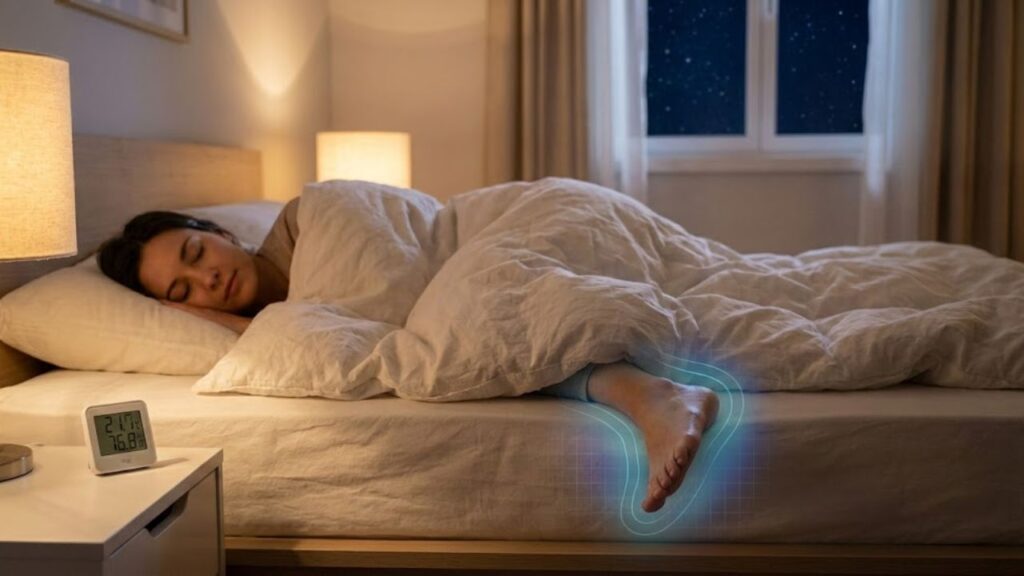
Ever find yourself sticking a foot outside the duvet, even though you’re snug under the covers? It might seem like a small act, but sleep experts say it’s actually your body’s way of helping you cool down before sleep. As your body prepares to drift off, it undergoes several natural processes, including a slight decrease in core temperature—usually around 0.5 to 1°C. This drop signals to the brain that it’s time to sleep, linking directly to your circadian rhythm, which governs changes in hormones, heart rate, and body temperature throughout the day.
The Role of Your Foot in Cooling
Your body uses your extremities—especially your hands and feet—as cooling channels. Feet, in particular, are packed with blood vessels close to the skin, allowing them to release heat efficiently. When you let a foot escape the warmth of your duvet, blood flow to that area loses heat quickly, helping your overall body temperature to drop. This slight cooling supports the natural drop in temperature that your brain is trying to initiate, making it easier for you to fall asleep, especially in warmer rooms.
How to Tackle Overheating While Sleeping
If you often wake up feeling hot and sticky, it’s a sign that your bedroom temperature might be disrupting your sleep. Experts suggest keeping the room between 16–19°C (60–67°F) for optimal rest. If you find yourself too warm, trying to adjust your duvet or bedding, or even sticking a foot outside, can help. This small, instinctive gesture allows your body to release excess heat, but if it’s not enough, you might want to consider adjusting the room temperature or trying lighter bedding for a cooler, more restful night.
Summary: Balancing Comfort and Temperature for Better Sleep
When it comes to sleep temperature, finding the right balance is crucial. Some people prefer sleeping fully covered, while others find relief from a foot sticking out. The key is to ensure that your body is cooling naturally while still feeling comfortable enough to sleep soundly. Adjusting the room temperature, choosing breathable fabrics, or allowing your body to release heat through your extremities are all effective strategies for better sleep. The ultimate goal is to wake up feeling rested, not overheated or restless.
| Sign of Poor Sleep Temperature | What It Might Mean |
|---|---|
| Difficulty falling asleep | Your room may be too hot or too cold |
| Waking up sweaty | The temperature is too high, affecting your thermoregulation |
| Constantly adjusting covers | You’re trying to find the right balance between warmth and cooling |
| Waking up groggy | Uncomfortable temperature changes during sleep are affecting your rest |