Many home gardeners swear by baking soda as a low-cost ally for houseplants, and science backs up at least part of the legend. Used carefully, it can tweak moisture levels, slow fungal diseases and keep pots fresher for longer.
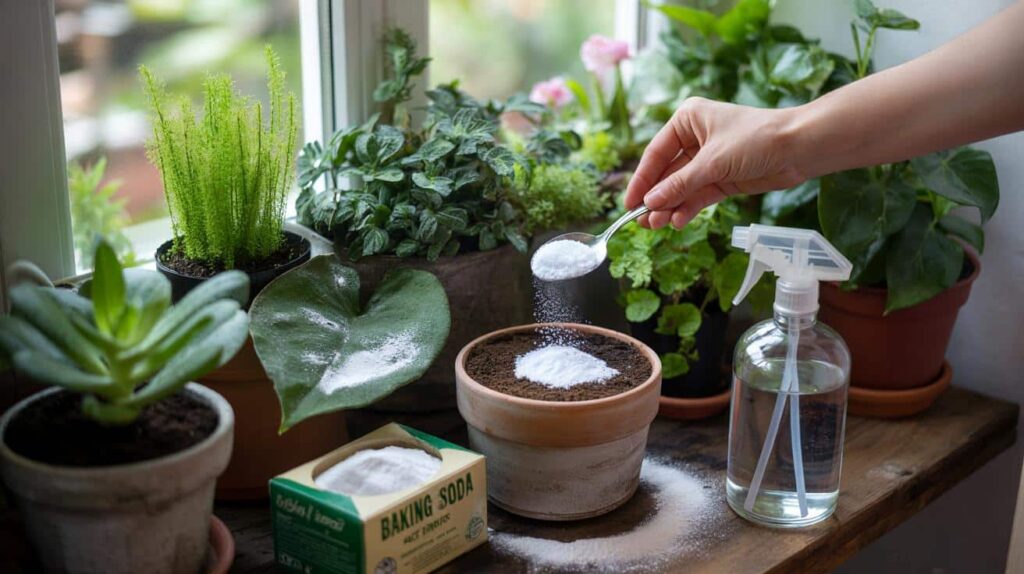
Why baking soda has a place next to your watering can
Baking soda, or sodium bicarbonate, is mildly alkaline. That small detail matters a lot in a cramped plant pot where humidity, microbes and fertiliser all jostle for control.
Indoors, soil often dries on the surface while staying wet deeper down. That creates perfect conditions for mould and fungus gnats. A light, well-judged use of baking soda can tilt the balance against fungi and certain bacteria.
 Goodbye footprint marks on your sandals: the trick to erase them and make them look new again
Baking soda does not feed plants. It acts on the environment around the roots and leaves, mainly affecting fungi, bacteria and moisture behaviour.

Garden trials show that sodium bicarbonate can slow the growth of common powdery mildews and some leaf spots when applied correctly. That makes it a useful tool for crowded houseplant shelves where air circulation is poor and problems spread fast.
How baking soda affects indoor plants
Managing moisture and surface mould
Overwatering remains the number one reason houseplants collapse. When pots stay damp, a fine white or grey mould often appears on the surface. That mould is not always dangerous, but it signals that conditions lean too wet.
A light dusting of baking soda on the potting mix surface can help by creating a slightly less friendly environment for those mould spores. It does not replace good watering habits, but it can reduce how quickly mould returns after scraping it off.
Think of baking soda as a supporting actor: it helps when you already water less, improve drainage and give plants enough light.
Discouraging unwanted guests
Damp soil attracts fungus gnats, springtails and a whole cast of microscopic life. While baking soda is not a full insecticide, a drier, less fungal surface makes pots less attractive to pests that depend on decaying organic matter.
Some indoor gardeners sprinkle a thin ring of baking soda at the edge of the pot after watering. The aim is not to create a white crust, but a faint dusting that alters conditions where pests tend to gather.
Slowing fungi on leaves
Leaves of roses, geraniums, begonias and herbs grown indoors frequently develop powdery mildew: those chalky white patches that creep along stems and foliage.
A diluted baking soda spray can reduce its spread. The alkaline film it leaves on the leaf surface makes life harder for fungal spores that prefer slightly acidic conditions.
A mild bicarbonate spray shifts the leaf’s surface pH just enough to bother fungi, without drastically affecting the plant when used sparingly.
Practical ways to use baking soda on houseplants
1. A simple antifungal spray for leaves
For most indoor plants, gardeners use a very weak mix. A common recipe is:
- 1 litre (about 1 quart) of room-temperature water
- 1 teaspoon of baking soda
- A few drops of gentle liquid soap as a surfactant
Shake well and use a clean spray bottle. Lightly mist the affected leaves once a week, preferably in the morning when the plant is in bright, indirect light rather than direct sun.
The soap helps the solution cling to the leaf surface, while the baking soda alters the pH film on the leaf. Wipe away heavy mildew first with a damp cloth so the spray reaches more of the leaf.
2. A surface dusting for potting mix
For pots that repeatedly develop a fuzzy layer of mould, a very thin layer of dry baking soda can be scattered across the surface after watering and aerating the soil with a small fork or chopstick.
Use just enough to be visible, not a thick blanket. Excess powder can interfere with soil structure and salt balance. The goal is to nudge conditions, not carpet the compost.
3. Deep-cleaning old pots with bicarbonate
Mineral deposits and invisible pathogens often linger inside used pots. Before repotting, wash empty containers in warm water with a spoonful or two of baking soda. Scrub any white crust or algae, rinse carefully and let pots dry completely.

Cleaning containers with baking soda reduces lingering bacteria and fungal spores, lowering the risk of new plants picking up old problems.
Rules that keep baking soda from harming your plants
Know when to stop
Sodium builds up over time. Heavy or frequent applications can burn leaves and disrupt the delicate chemistry of potting mixes, especially those with added fertiliser.
For sprays, most specialists advise using the solution no more than once a week during an active problem, then pausing. For soil dusting, use only when mould appears, not at every watering.
| Use | Recommended frequency | Risk if overused |
|---|---|---|
| Leaf spray | Once weekly, short term | Leaf burn, spotting, stress |
| Soil dusting | Only when mould appears | Soil imbalance, root stress |
| Pot cleaning | At repotting | Low risk if thoroughly rinsed |
Always test on a single leaf first
Plants react differently. Soft-leaved species like African violets, ferns or calatheas can mark easily. Before spraying a whole plant, treat one small leaf or a lower stem and watch it for 48 hours.
If you notice browning edges, translucent spots or curling, rinse the leaf with plain water and skip baking soda on that species. Hardy, waxy plants tend to tolerate the spray better than delicate foliage.
Keep direct contact with roots limited
Pouring a strong baking soda solution directly into the soil repeatedly can damage roots. It shifts the pH of the potting mix, which many indoor plants dislike, especially those that prefer slightly acidic conditions like peace lilies or philodendrons.
Use bicarbonate as a light treatment on surfaces and leaves, not as a routine soil drench or fertiliser substitute.
When baking soda makes sense – and when it does not
Baking soda works best as part of a broader care strategy. If a plant is grey with mould because it sits in a dark bathroom and never dries out, no amount of white powder will save it without changing its environment.
On the other hand, in a bright room where watering is already under control, bicarbonate can slow the first signs of fungal spots long enough for you to prune affected leaves and improve airflow.
Pairing baking soda with better habits
Used alongside a few simple adjustments, baking soda can have a much stronger effect:
- Let the top few centimetres of soil dry before watering again
- Use pots with drainage holes and empty saucers after 20 minutes
- Space plants so leaves do not constantly touch
- Trim dead or yellowing foliage promptly
- Run a small fan on low in very crowded plant corners
This combination reduces the humidity peaks and stagnant air that fungi love, meaning you rely less on any treatment, homemade or commercial.
Further context: baking soda, pH and plant health
Many people hear “baking soda” and assume they are giving plants a nutritional boost. In reality, the main nutrient plants take from soil is not sodium but elements like nitrogen, phosphorus, potassium, magnesium and trace metals.
Baking soda slightly raises pH. Most common houseplants are happiest in potting mixes that range from mildly acidic to almost neutral. Push that pH too high and they struggle to take up iron and other micronutrients, leading to pale leaves and weak growth.
That is why gardeners stress moderation. A faint alkaline film on a leaf will bother mildew. A heavily alkaline pot will starve roots.
Real-world scenarios where it helps
Imagine a collection of herbs growing on a small kitchen shelf: basil, mint, thyme. A few weeks into summer, powdery mildew speckles the basil. Instead of throwing the pot away, the gardener trims the worst leaves, opens the window more often and applies a mild baking soda spray once a week. The spread slows, and new leaves emerge clean.
In another flat, a monstera sits over a radiator, watered a bit too generously. A grey fuzz appears on the compost. The owner scrapes the top layer off, repots into a slightly larger container with fresh mix, waters less often and finishes with a tiny dusting of baking soda. The mould does not return, not because of the powder alone, but because the overall setup changed.

Used like this – as a smart, cautious tool alongside basic plant care – that cheap kitchen staple earns a permanent spot on the houseplant shelf, somewhere between the watering can and the pruning shears.