The tiles beneath your feet carry more history than you may notice at first. Over the years, they absorb wet footprints, muddy paw prints, rushed meal spills, and settled dust. One day, you pause and realize the floor that once felt bright now looks tired. The grout lines that used to appear clean and light have turned into dark outlines, making the room feel dull. When you run a finger along the grout, it leaves a gray trace behind. It is not a serious issue, but it subtly affects how welcoming your home feels. The idea of harsh chemical cleaners, rubber gloves, and strong fumes can feel just as exhausting as the mess itself. Fortunately, restoring brightness does not have to involve heavy chemicals or complicated routines. With a few natural ingredients and a little care, you can revive your tiles without much effort.
The First Moment the Shine Disappears
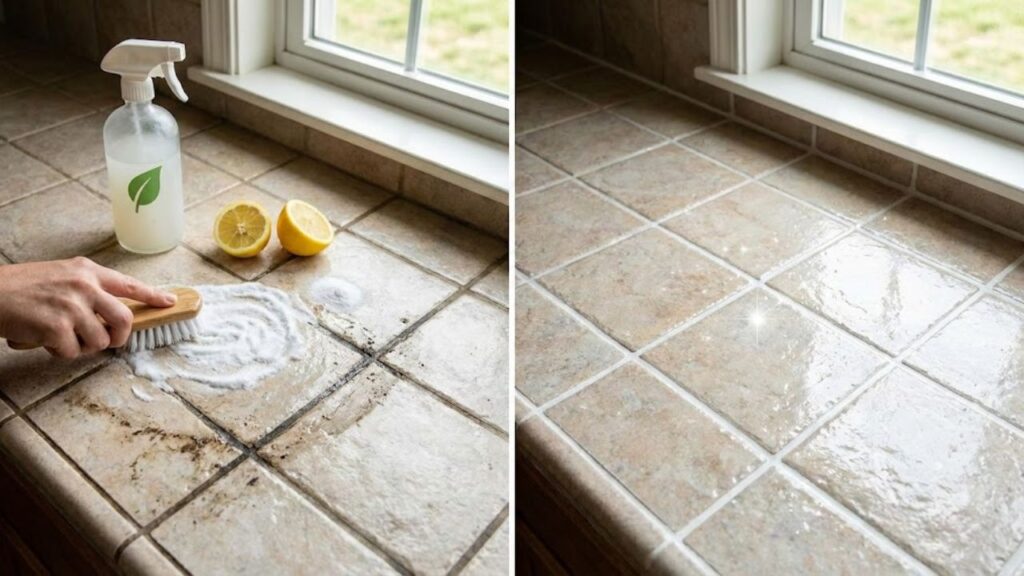
It usually begins with light. An afternoon sunbeam stretches across the kitchen floor and suddenly reveals every streak and dull patch. Areas that once reflected light now look flat. The grout between tiles appears darker, almost absorbing brightness instead of reflecting it. You kneel for a closer look and notice a faint ring from an old spill near the stove or a gritty trail by the door from rainy-day shoes. The change happened gradually, layer by layer, until the shine quietly faded. There is an immediate urge to scrub everything clean, but hesitation follows. Memories of strong chemical smells and stinging eyes come back. You would rather open a window, wear comfortable clothes, and reach for something gentler that can be mixed right on your kitchen counter.
The Gentle Effectiveness of Natural Cleaners
Natural cleaning methods can be just as effective as commercial products when used correctly. The secret lies in pairing the right ingredients with warm water, soft tools, and patience. Most of these items are already in your home, waiting in the pantry or under the sink. Their power comes from how they interact with dirt and buildup. While they may work a little slower than harsh chemicals, they clean thoroughly without releasing fumes or leaving harmful residue. This makes them safer for families, pets, and everyday living, while still delivering noticeable results.

Baking Soda as a Gentle Scrubbing Partner
Baking soda feels soft and powdery in your hands, with just enough grit to be effective. When applied to tile and grout, it acts as a mild abrasive that lifts dirt without damaging the surface. Instead of stripping material away, it loosens grime and allows it to be wiped clean, making it ideal for restoring grout lines.

Vinegar for Clear and Lasting Brightness
Vinegar has a sharp scent and a straightforward cleaning action. Mixed with warm water, it helps remove soap residue, water spots, and daily buildup that cause tiles to lose their shine. It works especially well on ceramic and porcelain surfaces with a cloudy appearance. When paired with baking soda on grout, it creates a fizzing reaction that helps pull dirt from tiny spaces. The process feels almost magical, but it is simply basic chemistry using familiar household items.
Lemon, Soap, and Salt as Helpful Additions
Lemon juice brings a fresh, bright scent while its natural acids break down stains and mineral deposits. A gentle soap, such as castile or mild dish soap, helps the mixture spread evenly and tackle greasy spots. For stubborn marks, a small pinch of fine salt adds extra scrubbing power. These elements work together to clean effectively while keeping the process pleasant.
A Simple Routine to Bring Back Tile Shine
Imagine open windows, soft daylight, and a bowl of warm water on the counter. Restoring tile does not need to feel like a chore. It can feel like caring for a surface that has quietly supported your daily life for years.
Step One: Clear and Prepare the Space
Start by clearing the floor. Move chairs, lift rugs, and set small items aside. As the space opens, each tile and grout line becomes visible. Sweep slowly, gathering dust and crumbs, then finish with a dry mop if needed. Even this step alone makes the room feel lighter and more organized.

Step Two: Mix a Simple Tile-Cleaning Solution
- Warm water: About 2 liters to dissolve dirt and distribute the cleaner evenly
- White vinegar: Half a cup to cut residue and restore shine
- Mild liquid soap: One to two teaspoons to lift grease and everyday grime
- Optional essential oil: A few drops for a soft, pleasant scent
Step Three: Refresh Grout with Care
Fast results do not require aggressive methods. Natural solutions can deliver visible improvement in a single afternoon. The key is knowing what your tiles need and what they should avoid. Many people assume harsh chemicals are the only option, but gentle methods often work just as well.
Choosing the Right Method for Each Tile Type
Different tiles require different care. Ceramic and porcelain surfaces handle vinegar solutions, baking soda paste, and mild soap well. Natural stone tiles such as marble, slate, travertine, and limestone need more caution. Acidic cleaners can damage them and leave dull marks. For these surfaces, stick to warm water and a pH-neutral soap, using microfiber tools. Glazed tiles have a protective finish, while unglazed tiles are more porous and need gentler handling. When unsure, always test a cleaning method on a hidden area first.
Maintaining Brightness with Simple Habits
Once tiles regain their shine and grout looks clean, the entire room feels different. Light reflects more easily, colors appear clearer, and the space feels more open. This change affects more than appearance. A clean floor creates a sense of order that influences how the whole room is experienced.
Easy Daily and Weekly Care
Maintaining clean floors does not require constant scrubbing. Place doormats at entrances to reduce dirt. Sweep or dry mop regularly to keep dust from settling into grout. Wipe spills as soon as they happen to prevent stains. A light weekly mop with warm water and mild soap is usually enough. Use vinegar only when buildup appears, and let fresh air in while cleaning to help floors dry quickly.
The Final Touch: Gentle Hand Buffing
After cleaning, take a dry microfiber cloth or flat mop and glide it lightly across the floor. This removes remaining moisture and faint streaks. The surface shifts from simply clean to softly gleaming. Light travels across the tiles, and subtle reflections appear. These small details quietly transform how the room feels.

When Cleaning Feels Like Caring for Home
Restoring shine to dull tiles goes beyond appearance. It reconnects you with the spaces that support everyday life. There are no harsh fumes or uncomfortable chemicals, only warm water, baking soda, vinegar, and bright citrus. The process is gentle on your skin, safe for pets, and effective in a short time. As sunlight crosses the floor again, it reflects back with ease. You are left with a quiet satisfaction, knowing you did more than clean. You returned a sense of light and care to your home.