A few months after birth, the reflection in the mirror can feel unfamiliar. Hair that once sat sleek and predictable now shows unexpected waves, a soft puff at the crown, and baby hairs rebelling around the temples. This shift isn’t just a rough wash day or rushed styling. It’s hair behaving differently at its core, as if it picked up a new rhythm while you were focused on keeping a newborn alive. Friends may shrug it off as normal, but the change feels personal. The question lingers quietly: what exactly changed, and why does it look like your hair rewrote its own rules?
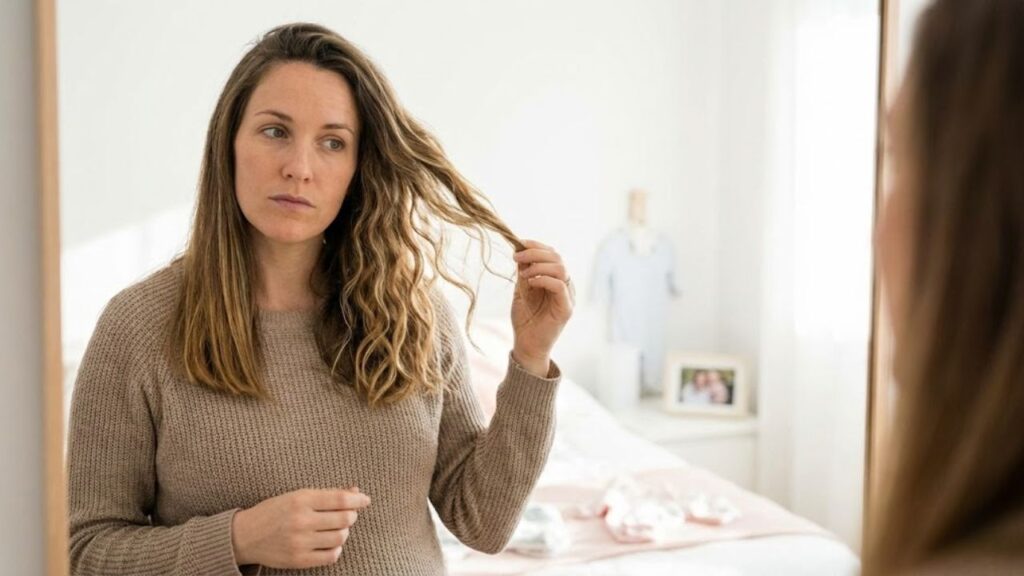
The process begins during pregnancy itself. Rising estrogen and progesterone levels slow natural shedding, keeping hair in its growth phase longer than usual. The result is that well-known pregnancy fullness—thicker, glossier strands that seem stronger overnight. No extra follicles appear; instead, hair you would normally lose simply stays put. That added weight can already influence texture, making straight hair fall differently or letting hidden bends show through. It’s a subtle shift that sets the stage for what happens next.
Three to six months after delivery, those hormone levels drop. Hair that was held back enters shedding together, leading to the postpartum hair shed. Clumps in the shower and strands on pillows feel alarming, but this is the body catching up. What surprises many people is the regrowth: short fuzzy strands, new cowlicks, or sections drying into soft S-shaped waves. Hormonal changes can slightly alter the hair shaft’s shape, and across thousands of strands, those small shifts become visible.

Adjusting to new waves, curls, and postpartum frizz
Once texture changes, old routines often stop delivering the same results. The familiar brush, dryer, and shampoo may now produce more volume than shine. Treating this hair like a different material helps. Think of it as moving from silk to linen—similar, but with its own needs. Moisture becomes essential. A gentle cleanser, richer conditioner, and a single leave-in product designed for waves can dramatically change how hair settles.
 At-Home Brow Lamination Methods That Create Fuller Thicker Brows Without Salon Appointments
Letting hair air-dry occasionally reveals what texture is truly there. Applying product to very wet hair and gently scrunching can highlight natural movement you didn’t know existed. It’s not always practical on hectic mornings, but even weekly experiments can reset expectations. Many postpartum hair shifts aren’t discovered in salons, but late at night, in quiet bathrooms, when there’s time to try something new.
Stories like Anna’s are common. She had straight hair her entire life, until after her second child, when the front sections refused to lie flat. By changing how she handled her hair—detangling gently when wet and using a small amount of curl cream—she uncovered soft beachy waves. Her routine simplified: wash, condition, scrunch, and let it dry. The texture wasn’t entirely new, but hormonal changes made it visible in a way it never had been before.
Working with the hair you have now, not before
The most effective way to manage postpartum texture is observation. On a calm evening, wash and condition your hair, skip styling tools, and let it air-dry after gently squeezing out water with a T-shirt. This reveals your natural pattern—loose bends, tighter waves near the neck, or volume underneath. That baseline becomes a map for choosing products and techniques that support what’s already there.

Small changes make a difference. A wide-tooth comb in the shower reduces breakage. A light leave-in conditioner or curl cream applied to wet hair adds control. Techniques like gentle scrunching or brief T-shirt wrapping respect the new structure of your strands without demanding extra time. These adjustments work with your hair rather than forcing it back into old habits.
The emotional side matters too. On a body that already feels changed, hair can feel like the final adjustment. On exhausting days, embracing texture feels unrealistic. That’s why low-effort habits matter: a trim to clean up ends, a satin pillowcase to limit frizz, and one reliable updo that cooperates with your texture. The goal isn’t perfection. It’s hair that doesn’t add stress to already full mornings.
Why postpartum hair changes happen
From a biological perspective, hair follicles are responsive mini-organs. They react to hormones much like skin responds to temperature. During pregnancy, elevated estrogen keeps follicles in the growth phase. After birth, falling hormone levels push many follicles into shedding at once. Subtle hormonal or immune shifts can also change how follicles shape the hair fiber, nudging strands toward more wave or curl. Genetics still define the range, but hormones can shift where you land within it.
- Pregnancy hormones extend the growth phase, creating fuller-looking hair.
- Postpartum shedding is a delayed, synchronized hair fall that is usually temporary.
- Texture changes come from small follicle shifts that alter the hair shaft shape.
Seeing yourself differently in the mirror
Hair changes after pregnancy are rarely just cosmetic. They’re tied to identity and memory. The hair you had before may represent a different season of life. New waves appearing during late-night feeds feel like a visible marker of change. For some, that’s freeing—a chance to reset and try something softer or more aligned with who they are now. For others, there’s quiet grief for what feels lost.

Hormones usually stabilize between nine and eighteen months postpartum. Some people see their hair drift back toward its old pattern. Others find the new texture stays. Neither outcome is wrong. It’s simply biology reflecting a transformation that has already happened. Sharing these stories—the shedding, the cowlicks, the surprise waves—turns a private worry into a shared experience. Hair that changes after pregnancy isn’t a flaw. It’s a visible reminder that this phase, like everything else, is still evolving.