Outside, passersby moved through the cold wrapped in scarves and thick coats, their cheeks flushed from winter air. Inside, beneath unforgiving yellow lighting, her hair told a different story. The roots looked sleek and shiny, while the ends appeared dry and brittle, almost as if two textures had been fused together. The contrast was impossible to ignore, especially under indoor lights that seemed to exaggerate every detail.
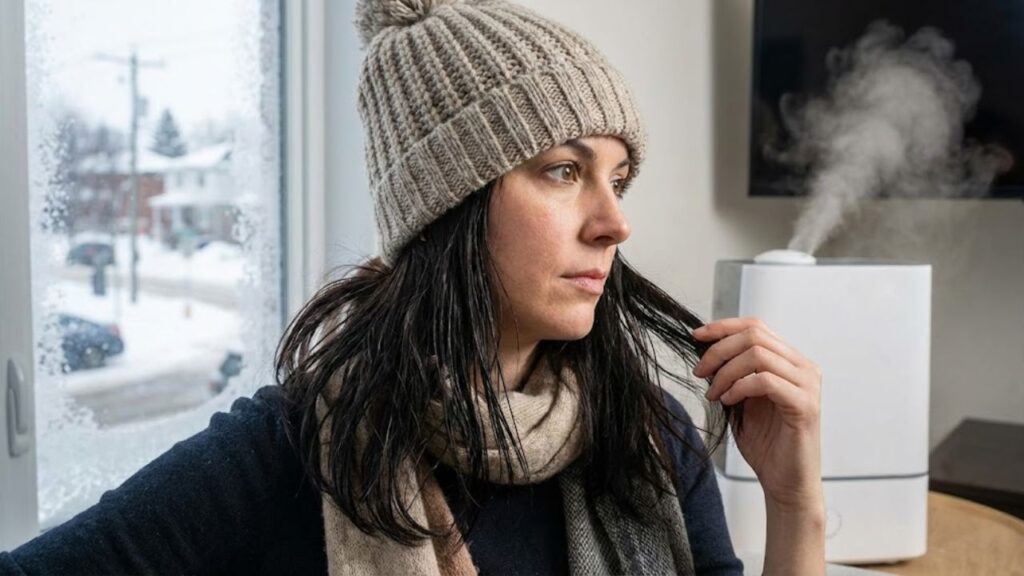
Her friend leaned closer and whispered a comment. She laughed softly, then pulled out a compact mirror, tilting her head with a quiet sigh. “I washed it yesterday,” she murmured, mostly to herself. The word yesterday carried weight, as though it were a small accusation rather than a simple statement.
Winter is meant to dry everything out, from skin to lips to the very air you breathe. Yet many people notice the opposite when it comes to hair. Roots seem to turn oily faster as temperatures drop. The explanation isn’t as obvious as it seems, and it has less to do with shampoo choices and more to do with how the scalp reacts to seasonal change.

Why Hair Feels Oilier Faster in Cold Weather
The realisation often comes on a weekday morning. You shuffle into the bathroom, glance in the mirror under harsh winter lighting, and notice it immediately. Your skin looks dull, your lips feel tight, and your scalp appears shiny and flat, almost oily, as if several wash days were skipped. It feels confusing because everything else feels dry.

This contradiction leads many people to blame products or hormones, or even their pillowcase. Winter, after all, is associated with dryness, not excess oil. But what shows up as greasiness is often the scalp reacting to stress. Rapid changes between cold outdoor air and warm indoor spaces push it to work harder to maintain balance.
Throughout a typical winter day, the scalp moves from freezing air to overheated rooms, often under hats or hoods. This repeated shift creates temperature stress. Dermatologists describe tiny, invisible irritations known as micro-inflammation. In response, sebaceous glands release more oil as a natural protective layer, which is exactly what you see at the roots.
The Science Behind the Winter Oil Paradox
Cold air dries the surface of the skin, while indoor heating pulls moisture from the scalp. To compensate, the body increases sebum production to shield the skin barrier. What feels like dirty hair is often a defensive reaction, not a hygiene failure.
Cold temperatures also affect circulation. Blood vessels constrict, which can slightly disrupt the scalp’s usual rhythm. When warmth returns, oil production doesn’t ease back gently. It often overcompensates. Add hats, headbands, and scarves that trap heat and sweat, and you create an environment where oil feels impossible to escape.
Many winter habits quietly worsen the situation. Less frequent washing, heavier styling products, and constant headwear keep sweat and oil close to the scalp. Over time, this creates a sealed microclimate at the roots, even while the weather outside remains icy and dry.

Everyday Winter Habits That Increase Oiliness
Small choices make a bigger difference than most people realise. Very hot showers can strip the scalp, triggering a rebound effect where oil glands go into overdrive. Using lukewarm water and focusing shampoo on the scalp helps cleanse without provoking excess oil.
Conditioner placement matters too. Applying rich formulas at the roots during winter worsens the common oily roots dry ends imbalance. Conditioning from the ears down protects the lengths without overwhelming the scalp.
Styling habits also play a role. Frequent dry shampoo use, tight hairstyles under hats, and sleeping with product still in the hair all contribute to buildup. Over time, the scalp struggles to reset, reacting with even more oil as a form of self-protection.
Rethinking Greasy Hair During Winter Months
There’s relief in understanding that your hair isn’t working against you. It’s adapting. Winter disrupts routines, wardrobes, and daily movement. The scalp responds long before the mind connects the dots. That extra oil is often a sign of protective adjustment, not neglect.
Gentle changes usually matter more than chasing new products. Adjusting water temperature, washing headwear regularly, and giving the scalp time to fully dry before covering it can restore balance. Consistency and moderation matter more than extremes.
When you notice shiny roots reflected in a lift mirror or office bathroom, it helps to remember this experience is shared. Greasy roots, dry ends, and ruined blow-dries are all symptoms of the same seasonal challenge. Once you see it that way, caring for your scalp becomes less frustrating and far more manageable.
- Winter oil paradox: Cold outdoor air and hot indoor heating dry the scalp, triggering increased sebum production.
- Habit influence: Hats, hot showers, fewer washes, and heavier products trap oil and sweat at the roots.
- Gentle reset: Lukewarm water, scalp-focused cleansing, and lighter conditioning help restore balance.