Family photos may showcase joyous occasions like birthdays, but for many, the reality behind the smiles is a quiet, growing distance. Today, relationships that once felt like family may now feel more like a distant connection. Psychology provides valuable insights into how these emotional gaps are formed, beginning in childhood.
1. Childhood Shaped by Constant Competition
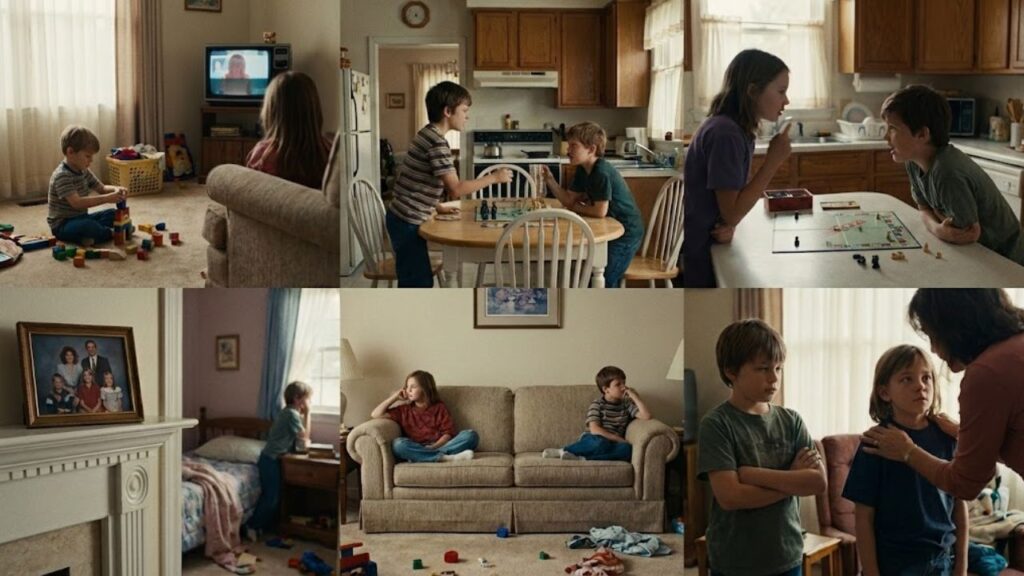
In some families, sibling relationships are defined by constant comparison from an early age. Whether it’s school grades, sports achievements, or career milestones, one child may be labeled as “the smart one” while another is “the athletic one.” These labels, often made casually by parents, can feel like a permanent cage, with each sibling’s success serving as a reminder of the other’s “second place” status. This environment fosters rivalry rather than cooperation, creating emotional distance that makes it hard for siblings to support one another as adults. Rivalry breeds mistrust, and as the years pass, what was once a sibling bond can feel like an emotional battleground.
2. The Burden of Being the “Responsible” One
Many eldest children, and some naturally responsible ones, are burdened with the role of the family mediator. Phrases like “You’re the older one, so you should be the bigger person” or “Keep the peace” become second nature. Over time, this responsibility can feel overwhelming, leaving little room for the eldest to express their own feelings. The constant expectation to act as the emotional “shock absorber” of the family can lead to exhaustion and a sense of emotional neglect. As adults, those who played the role of “little adults” often feel drained and disconnected, making it difficult to sustain close relationships with their siblings. Emotional exhaustion becomes a silent barrier.
3. The Strain of Parental Favouritism
In households where parents are overwhelmed, their attention becomes a scarce resource. This often leads to subtle, yet impactful, favouritism. One child may be praised for every accomplishment, while another might be told to “not make a fuss.” Over time, these subtle differences create clear divides between siblings: one becomes the “golden child,” while the other feels invisible. The favoured sibling may carry a sense of guilt, while the neglected one often harbours quiet resentment. As both siblings grow older, the emotional distance remains, making it difficult to bridge the gap. Favouritism leaves a lasting impact, shaping both siblings’ ability to connect as adults.
How Childhood Experiences Shape Sibling Distance in Adulthood
Many sibling relationships remain distant well into adulthood due to the invisible “scripts” created during childhood. These unwritten rules and roles—such as the “caregiver” or the “troublemaker”—define how siblings interact and expect to be treated. Unless these roles are consciously challenged, they continue to influence relationships long after childhood. For example, a sibling who felt responsible for everyone’s emotions might remain emotionally distant as an adult, while a sibling who felt judged may keep conversations short. The key to understanding this distance lies in recognizing that it’s often a product of family scripts developed early on, not simply a sign of coldness or neglect.
| Childhood Pattern | Common Adult Outcome |
|---|---|
| Constant competition and comparison | Increased rivalry, emotional distance |
| Being the responsible one | Emotional exhaustion, detachment |
| Parental favouritism | Resentment, reluctance to reconnect |
| Lack of emotional depth | Superficial conversations, disengagement |