
He checks the mirror, fingertips brushing the back of his head, and repeats a line countless men say every month: clean up the neck, give me a hard edge. The barber agrees, lifts the trimmer, and cuts a razor-sharp border into the hairline. Minutes later, he leaves looking freshly edged and perfectly squared. A week later, the story changes. That crisp line slips downward, becoming a fuzzy block sitting in uneven regrowth. The haircut suddenly feels dated, like clothing that shrank overnight. He wonders why his hair never seems to grow out nicely. The real explanation hides in a word many men never say out loud: taper.
Why a Hard Neckline Ages So Fast
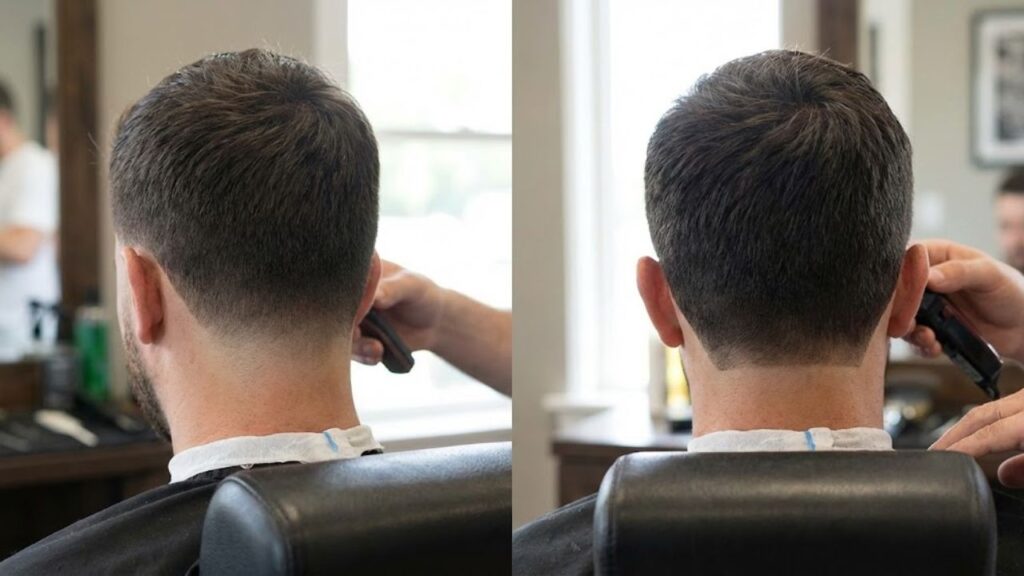
Sit behind men in a café and you start noticing the same thing. A once-perfect neckline now looks like it’s hovering above regrowth. The edge is still visible, but hair below it has returned fast and uneven. A hard neck line delivers instant satisfaction and a military-clean feel, but the neck grows hair in different directions and at uneven speeds. A strict border doesn’t extend the life of the cut; it sets an expiration date. A taper works differently. It plans for growth, letting the fade begin above the strongest regrowth so the line softens naturally instead of collapsing into an obvious band.
How a Taper Lets a Cut Age Gracefully
Barbers think in timelines, not snapshots. A harsh line looks dramatic on day one and unforgiving by day eight. A tapered neckline respects how hair behaves on the neck, including cowlicks, spirals, and stubborn fluff that grows back fastest. Men who switch notice they’re not racing back after ten days. The haircut moves from fresh to lived-in without hitting an awkward cliff. The regrowth blends instead of fighting the cut. That’s what people really mean when they say they want something that grows out well—not perfection, just fewer days of disliking their own hair.

How to Ask for a Neck Taper and Get It
The request is simple. Sit down, point to your neck, and say, taper the neckline instead of a hard line so it grows out natural. Most barbers immediately understand. You’re asking them to blend gradually, not carve a single edge. If that feels awkward, say you don’t want a boxy back and prefer a softer fade. If they ask “rounded or squared,” remember that’s about shape, not blending. You can have a squared neckline that’s tapered or a rounded one that’s sharply edged. The difference lives in the gradient, not the outline.

Why a Taper Fits Real Life Better
A neck taper usually buys you an extra wearable week. The haircut ages slowly instead of flipping overnight into hat territory. Most men don’t style the back of their head daily. With a hard line, every millimetre shows. With a taper, growth melts into the design. It also improves comfort. Harsh, low lines sit where collars rub and sweat builds. As stubble grows back, irritation follows. A slightly higher taper keeps the shortest hair where skin is calmer, meaning less itch, fewer ingrowns, and fewer reminders of your last appointment.
The Small Word That Changes the Whole Haircut
The real shift isn’t just the fade; it’s the language. Swapping hard line for taper tells your barber you’re thinking past the first day. You’re considering week two, week three, and real mornings with no time to style. Clear wording gives a better brief, not a demand. Most professionals appreciate that honesty. A tapered neckline doesn’t pretend hair will freeze in time. It expects movement, missed appointments, and busy schedules. That’s why it works. It lets the unseen part of your head age quietly instead of collapsing into a familiar floating rectangle of regrowth.

- Say “taper” instead of asking for a hard line at the neck
- Explain regrowth by saying you want it to grow out soft and natural
- Clarify the shape by choosing squared or rounded separately
- Avoid harsh phrases like cleaning it all the way down if you dislike boxy results
- Ask to check the neckline with a hand mirror before the cut is finished
