The girl in the café bathroom doesn’t realize anyone is watching. But the quiet line behind her notices every move as she casually touches up her lips. With two quick pencil strokes, a soft press of her lips, and a hint of gloss, she transforms her look. There’s no dramatic overlining, no intense contouring. When she looks up, her lips look naturally full—like she just returned from a relaxing vacation.
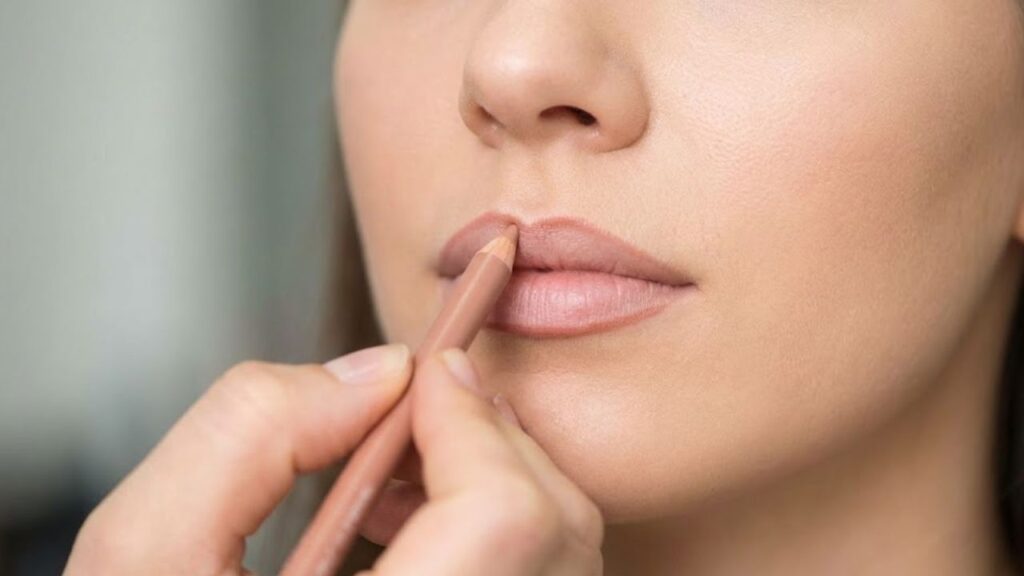
Nothing feels forced. There’s no harsh border or exaggerated shape. Her lips appear dimensional and effortless. Later, as you try to recreate the effect in your own mirror—with the same pencil, gloss, even the same pout—it falls flat. The secret? A tiny change in placement that makes all the difference.
It’s Not About Making Lips Bigger—It’s About Drawing the Eye
We’ve all heard the classic tip: trace outside the lip line, blur the edges, and fill in. For years, this worked well enough. But in natural light and close-up settings, that technique can make lips feel disconnected from your face. Instead of enhancing your features, it can create a mismatch that looks slightly off.

The Quiet Shift in Lip Makeup Today
Modern lip artists have moved away from chasing volume and started focusing on guiding attention. The goal isn’t bigger lips—it’s better balance. That’s why this subtle method works so well on selfies, video calls, and real-life interactions. The difference is small, but the effect is powerful.

Why Small Adjustments Outperform Bold Outlines
This technique isn’t about thick lines. It’s about millimetre-level precision. Once you understand exactly where to place the liner, it changes your approach. It enhances what’s already there, not invents something new—keeping the final result natural, soft, and believable.
The Strategic Zones Artists Actually Define
Scroll through social media and you’ll see a pattern: artists skip the outer corners. Instead, they focus liner in three key places:
- The peaks of the Cupid’s bow
- The center of the lower lip
- The slight “pillows” just off-center
The edges? They’re left mostly untouched—barely defined. This approach makes the outline feel more like a gentle shadow than a bold line.
Why This Looks So Natural in Real Life
One London-based artist shared that she uses the same pencil for every client, changing only the placement based on their features. When asked about fillers, she simply laughs and shows a grainy demo of her £7 liner. The most frequent feedback? “You look rested.” It’s not about fullness—it’s about facial harmony.
 4-minute seated workout after 60 highlights elite endurance when you complete every rep cleanly
How the Eyes Perceive Lip Changes
This works because our eyes naturally focus on areas of contrast and curve: the Cupid’s bow, the lower lip’s center, and spots where gloss catches light. Accentuating these zones—while softening the sides—tricks the brain into seeing fuller lips, without any harsh lines.
Step-by-Step: Exact Lip Liner Placement
Start with clean, dry lips and a relaxed expression. Use a sharpened nude pencil that matches your tone. Here’s the breakdown:
- Upper lip: Draw a soft bridge across the Cupid’s bow, slightly above the natural dip—think “plateau,” not sharp points.
- Lower lip: Place a small arc 1mm outside the fullest part of the lip, no wider than your iris. Leave outer thirds untouched.
- Connect corners: Use feather-light upward strokes to fade liner toward the edges. Let the line almost vanish.
- Finish: Blend with a fingertip, and tap gloss or balm at the center only.
The result? Soft sides and a pillowy center that looks barely enhanced—yet noticeably better. Overdoing it ruins the balance. It may look fine on your phone, but in real lighting, restraint is what keeps it believable.
Why Less Truly Is More
When liner hugs the outer corners, even a tiny mismatch between pencil and skin tone becomes visible. Instead, work gradually: define the center, step back, and only connect where necessary. Practice slowly until the technique feels automatic, even on rushed mornings.
Real-Life Benefits of the Soft-Blur Approach
This method does more than improve your look—it boosts confidence. On difficult days, outlining can feel like effort. This softer technique enhances what’s already present, offering a more forgiving and flexible routine.

Even better, it adjusts beautifully to different lighting environments. Whether you’re under bright café lights or soft evening glow, the lips stay defined in the middle, fading gently at the edges. They move with your face—not against it. It’s makeup that feels lived in, not staged.