
You walk through the front door, your bag sliding off your shoulder, keys half-dropped on the counter. It’s 7:12 p.m., the kitchen is a little too quiet, and the thought of cooking “a real meal” feels about as realistic as running a marathon. You open the fridge, stare at that whole chicken you bought with good intentions, and already imagine it coming out dry and disappointing. Again.
Then there’s the image in your head of a bronzed, lemony roast chicken in a baking dish, juices pooling at the bottom, the kind you see in cookbooks and on smug Instagram reels.
The gap between those two scenes feels huge.
What if it wasn’t?
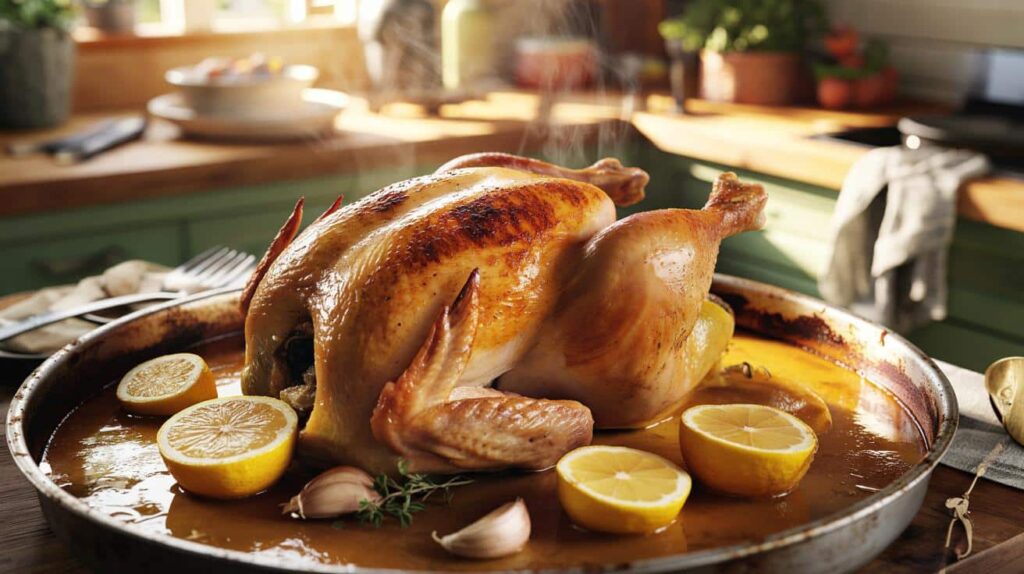
The lazy cook’s secret weapon: lemon roast chicken that never dries out
The first time you pull this lemon roast chicken out of the oven, you’ll probably lean in closer, suspicious. The skin will be crisp and peppered with dark golden spots. The legs will wiggle easily when you nudge them with a spoon. The smell alone – lemon, garlic, hot chicken fat – will have someone wandering in from another room asking, “Whoa, what is that?”
It looks like you fussed. But you really didn’t.
A friend of mine swears this recipe saved her weeknights when her second kid arrived. She told me she could barely remember where she’d left her phone, but somehow a perfect roast chicken kept coming out of her oven every Sunday. She’d shove lemon halves and garlic inside the bird, drizzle oil, throw it in a hot oven, and walk away to deal with bedtime chaos.
By the time the baby was half-asleep and the 6-year-old was mid-tantrum over lost LEGO, the house smelled like a restaurant kitchen. They ate with fingers, over the baking tray.

There’s a logic behind why this almost-zero-effort method works so well. The lemon steams from the inside as it roasts, gently keeping the breast meat from drying out. The skin, rubbed with oil and salt, crisps on the outside while the meat bastes in its own juices underneath. You don’t need complicated marinades or timing three different temperatures.
You just rely on heat, fat, and citrus doing what they naturally do.

The simple method: a lemon, some salt, a hot oven
Here’s the basic move. Take a whole chicken, pat it dry with paper towel, and sprinkle salt all over it like you actually mean it. Add freshly ground pepper if you like. Cut a lemon in half, give it a little squeeze over the bird, then shove both halves right into the cavity along with a few smashed garlic cloves and maybe a sprig of thyme if you have it.
Drizzle olive oil over the top, rub it in, and put the chicken in a snug oven dish. Roast it at high heat until the skin is browned and the juices run clear.
The common fear is always the same: “What if I undercook it and poison everyone?” So most people overcorrect and cook the poor thing into cotton. Here’s the calmer way through. Use the wiggle test: when the leg moves easily in its socket, you’re close. If you have a thermometer, aim for 74°C / 165°F in the thickest part of the thigh. Then, and this is the part we all want to skip, let it rest.
Ten to fifteen minutes on the counter while you set the table and slice a lemon is where the magic happens.
“I used to think juicy roast chicken meant some secret chef trick,” a neighbor told me. “Turns out it was just a lemon and not messing with it too much.”

While the bird rests, those roasting juices at the bottom of the dish are your free bonus. Tilt the pan gently and spoon off a little of that golden liquid over the top of the chicken just before carving. It’s like a fast sauce, made by doing nothing.
- Rub with oil and salt so the skin crisps up.
- Stuff with lemon halves and garlic for built-in moisture and flavor.
- Roast hot, then rest so the juices settle.
Why this lemon roast chicken quietly changes the way you cook
Once you’ve made this a couple of times, something shifts in your mind about “real cooking.” That heavy feeling at 6 p.m. gets lighter when you know dinner can be dumped in a pan and basically forgotten. *You start to realize that one good, unfussy recipe can carry a whole week.*
There’s also the small, private satisfaction of carving into the breast and watching actual juice bead up instead of dust.
Later in the week, that same chicken keeps paying rent. You tear leftover meat into salads, toss it with pasta and lemon zest, or stuff it into flatbreads with a bit of yogurt and herbs. The carcass, which most of us quietly throw away, can simmer into a broth while you’re answering emails or scrolling. Let’s be honest: nobody really does this every single day.
But the day you do, your freezer holds a bag of stock that will save some future soup.

There’s also something grounding about this kind of recipe. No special equipment, no intimidating techniques, no twenty-ingredient shopping list. Just a chicken, a lemon, and a standard oven that might not even heat evenly. You don’t have to perform. You don’t have to “plate.”
You just cook, carve, and pass around pieces at the table, hoping someone asks for the last crispy wing.

| Key point | Detail | Value for the reader |
|---|---|---|
| High-heat, low-effort method | Salted, oiled chicken roasted hot with lemon inside | Gets a juicy, bronzed bird without complex steps |
| Lemon as built-in moisture | Lemon halves steam from inside the cavity | Keeps breast meat tender and gently flavored |
| Resting and reusing | Rest the chicken, use pan juices and leftovers | Better texture, natural sauce, and multiple easy meals |
FAQ:
- Can I use chicken pieces instead of a whole chicken?Yes, you can. Roast thighs or drumsticks tossed with lemon wedges, garlic, oil, and salt in a single layer. They’ll cook faster than a whole bird, so start checking around 30–35 minutes.
- Do I have to truss the chicken?No. You can leave the legs untied and it will still come out juicy. Trussing looks neat but isn’t mandatory for this kind of relaxed, weeknight roast.
- What if I don’t have fresh herbs?Skip them or sprinkle a pinch of dried thyme or oregano over the top. The lemon, garlic, and chicken fat already carry most of the flavor.
- Can I use butter instead of olive oil?Yes, or even a mix of both. Butter gives a deeper flavor and browns nicely, while oil handles high heat well. Use what you have.
- How do I stop the vegetables burning in the pan?If you roast potatoes or carrots under the chicken, cut them in larger chunks, toss with oil and salt, and add a splash of water or stock to the tray. The chicken juices will mingle in as it cooks.
