
On the page, it looks simple: the house, the savings, the small portfolio of investments. Split into three equal parts. Fair. Clean. Mathematically perfect. Yet the room is thick with something no calculator can catch.
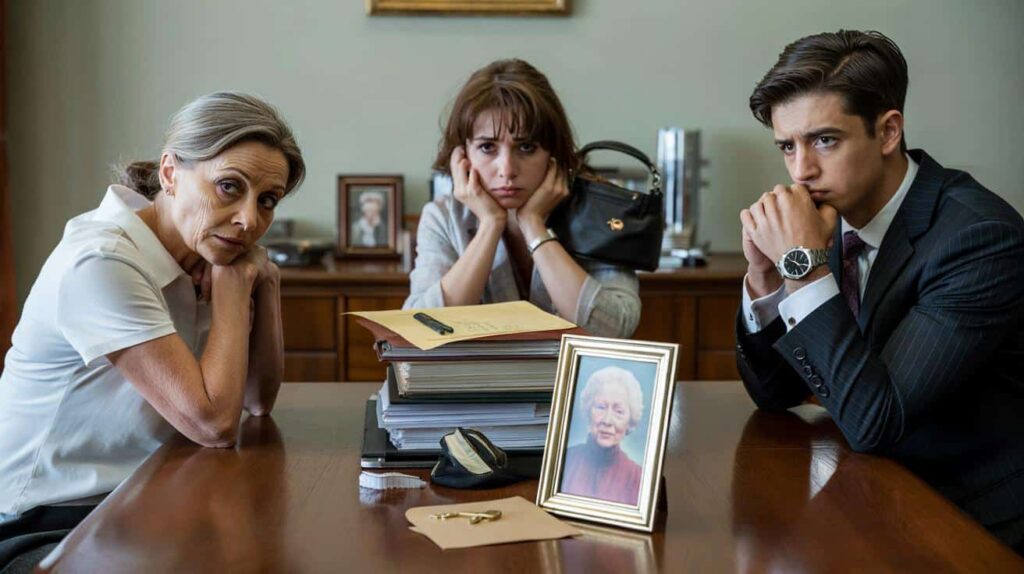
The eldest, who paused her career for years to care for their mother, bites her tongue. The middle one, drowning in debt after a messy divorce, hears numbers that might finally mean breathing space. The youngest, who’s done well in finance, is already wondering if taking their full share will make them look greedy. Nobody says it out loud, but everyone feels it: equal isn’t always fair.
The solicitor clears his throat and reads the will. The words are ordinary. The silence after them is not.

When “equal” slices cut differently in real life
On paper, equal shares feel reassuring. Parents like the idea: no favourites, no drama, no child left out. It’s the legal version of cutting the cake into perfect thirds and stepping back. Yet inheritances don’t land in a vacuum. They drop into lives that are already wildly unequal.

One sibling might own a house outright. Another might be back in their childhood bedroom at 43. One glides on a partner’s solid salary. Another juggles two jobs and a late-night side hustle. The same £100,000 doesn’t hit them in the same way at all. *It carries a different emotional weight, a different kind of relief, a different kind of sting.*
Equal sharing can feel like a blindfold. It sees numbers, not context. It treats a lifetime of unpaid care, sacrifices, career pauses and quiet favours as irrelevant footnotes. That’s where the resentment sneaks in.
Take the kind of family scenario that keeps financial advisers busy. Imagine three siblings: Emma, Tom and Priya. Their mum died last year, leaving a house worth £450,000 and £60,000 in savings. The will says: split everything equally. Safe move, right?
Except Emma spent five years living nearby, doing the hospital runs, handling paperwork, missing promotions. Her marriage took a hit from the stress. Tom moved abroad, visited a couple of times a year, sent flowers and money when he could. Priya lives in rented accommodation with two young kids, stretching every penny and waking up at 3am counting the days until the next childcare bill.
On inheritance day, they each stand to receive the same sum. **Tom feels awkwardly overpaid for what he actually did.** Priya feels seen financially but invisible emotionally. Emma feels punished for being the reliable one. Statistically, disputes like these are rising: UK solicitors report a surge in contested wills, with sibling conflicts a major driver. A tidy 33/33/33 split often masks untidy stories.
Money has a way of exposing the things families never quite said out loud. An “equal” inheritance can feel like a verdict on the past: who mattered, who tried, who was loved in what way. When that verdict clashes with people’s lived reality, hurt blooms fast.
What makes this so combustible is that two versions of fairness collide. One is mathematical: same parents, same genes, same share. The other is contextual: different lives, different sacrifices, different needs. Both feel valid from the inside.
Parents gravitate towards the simple version. They fear setting off a bomb by favouring the struggling child, or rewarding the carer, or helping the one with kids more. So they freeze. Equal slices, done. Problem shuffled into the future. The emotional maths is left to the children to solve.
Yet humans don’t weigh fairness in neat columns. We remember who was there at 2am in A&E. Who missed holidays to stay home with Dad. Who always seemed to land on their feet, while another sibling was permanently one bill away from disaster. **A flat split can feel like a refusal to recognise reality.**
Lawyers see it all the time: siblings in their 40s and 50s suddenly dragged back into childhood roles. The “responsible” eldest, the “golden child”, the “lost one”. Equal inheritances don’t neutralise those roles. They often lock them in place.
How to talk about unequal shares without blowing up the family chat
If you’re a parent thinking about your will, one quiet, awkward conversation now can save your kids from a nuclear argument later. A practical first step is simple: put your real reasons on paper, in plain language. Not legalese. Human words.
That might look like a letter kept with the will: why you left more to the caring child, or boosted the one with fewer assets, or paid off someone’s debt early as part of their “share”. Set out that an unequal split isn’t a love scorecard. It’s a response to different circumstances. This doesn’t solve everything, but it creates a story that your children can lean on when emotions spike.
 Older adults keep habits younger people mock, yet psychologists say they reduce mental overload
Where possible, talk while you’re still here. Not some dramatic family summit. A series of smaller, calmer chats. “Here’s what we’re thinking, and here’s why.” Invite questions. Listen without jumping to defend your choices. Even if they don’t like the plan, feeling heard now can blunt the shock later on. Shock is what often fuels rage.
On a more practical level, parents and siblings can put a few quiet safety valves in place to keep conflict from boiling over. One is to separate “lifetime help” from inheritance in a clear way. If one child had a house deposit gift, write it down somewhere everyone can see, framed as part of their eventual share. That stops old gifts turning into fresh resentments.
Another is to get an outside voice in early. A financial planner or solicitor who can say, “Here are three options and what they might trigger emotionally.” Sometimes hearing a stranger gently point out, “Leaving everything equal may actually feel unequal in practice,” loosens people’s thinking.
There are pitfalls too. Telling one child quietly they’ll get more and hoping nobody else ever finds out? Bad bet. Relying on siblings to “sort it out among themselves later”? That’s how lifelong rifts start. Soyons honnêtes : personne ne fait vraiment ça tous les jours.
“My parents thought leaving everything 50/50 to me and my brother would prevent arguments,” says Claire, 52. “In reality, it started the worst one we’ve ever had. I’d cared for Dad for eight years. My brother turned up for birthdays. The money wasn’t the real issue. It was that their will acted like those eight years didn’t count.”
Claire’s story is painfully common. An equal split with unequal history feels like a rebuke to the person who carried the heavier load. You can’t rewrite what happened, but you can acknowledge it. Sometimes the most healing thing is a line in a letter: “We know how much you did. We’re grateful.” That sentence can be worth far more than an extra 10 per cent.
- Consider compensating carers with a slightly larger share or a separate gift.
- Talk openly about previous financial help given to each child.
- Use a letter of wishes to explain your thinking in your own voice.
- Encourage siblings to share their fears before anything is signed.
- Accept that “perfect fairness” may be impossible — aim for understandable.
Living with an inheritance that doesn’t feel fair
Once a will has been read, the theoretical arguments become painfully real. The cheques clear. The house is sold. You’re left staring at a bank balance that doesn’t match the story in your head. That gap can poison you if you let it fester.
One way through is to ask a quiet, private question: what, exactly, am I hurt about? The number, or what the number seems to say about my role in this family? If your rage sits on top of years of feeling taken for granted, no legal challenge will fix that. You might win more money and still feel overlooked. Naming the real wound makes choices clearer.
Sometimes, the most radical move is between siblings, not in court. The better-off brother who says, “Look, I know you did way more for Mum. I’m going to gift you part of my share,” can change the whole family atmosphere. The sister who acknowledges, “You’ve always struggled financially, and this inheritance hits us differently,” releases a pressure valve. That doesn’t make the split mathematically “fairer”, but it can make it emotionally survivable.
Families rarely admit this out loud, yet many readers know the feeling: the way money dredges up old slights, half-remembered comments, teenage rivalries. On a bad day, an inheritance becomes one giant scoreboard. On a good day, it can be something else entirely — seed money to shift a sibling’s life, a last chance to act out the kind of family you wish you’d been.
The question lingers long after the solicitor’s office is cleared: what does fairness look like when three very different adults are holding the same sum of money and completely different histories? There’s no tidy formula that can swallow divorce, disability, burnout, unchosen childlessness, or the quiet heroism of the sibling who always said, “Don’t worry, I’ll go.”
What’s left are choices. Parents choosing to look past the comfort of equal slices and ask the awkward questions while they’re still around to hear the answers. Siblings choosing whether to keep old roles alive, or to break the pattern with one unexpected act of generosity. Lawyers and advisers choosing whether they talk only in percentages, or also in family stories.
An inheritance is rarely just money falling onto a spreadsheet. It’s one last message from the generation before, interpreted through all the scars and loyalties of the generation after. That message can say, “We loved you all the same,” in a way that lands as, “We didn’t really see you.” Or it can say, clumsily but honestly, “We tried to meet you where you were.”

Equal splits will always be attractive in theory. They’ll keep showing up in wills, promising safety and neutrality. The harder, more human work is asking whether equal is really what your family needs — or whether the real fairness lives in those messy, uneven spaces where love and reality meet.

| Point clé | Détail | Intérêt pour le lecteur |
|---|---|---|
| Égal ne rime pas toujours avec juste | Un partage chiffré identique peut ignorer des années de soins, de sacrifices ou de difficultés | Aide à mettre des mots sur un malaise souvent ressenti mais rarement formulé |
| Expliquer ses choix de son vivant | Lettre d’intention, conversations calmes, prise en compte des aides déjà données | Réduit les chocs émotionnels et les conflits entre frères et sœurs |
| Réagir après coup sans se déchirer | Nommer la blessure réelle, envisager des gestes entre frères et sœurs, chercher un terrain d’entente | Offre des pistes concrètes pour apaiser une situation perçue comme injuste |
FAQ :
- Isn’t an equal split the safest way to avoid family fights?It looks safer, yet many disputes start precisely because an equal split ignores very unequal histories, needs and contributions.
- Can parents legally leave different amounts to their children in the UK?Yes, they generally can, though adult children can sometimes challenge wills; clear reasoning and good advice reduce that risk.
- How can parents explain an unequal inheritance without hurting feelings?By combining a clear will with a personal letter and honest conversations that separate love from financial decisions.
- What if I feel my sibling’s share is unfair but I don’t want a court battle?You can still talk, name how you feel, and explore private arrangements or symbolic gestures between you.
- Does caring for a parent usually lead to a bigger inheritance?Not automatically; some families recognise this in their wills, others don’t, which is often where resentment begins.
