
At 7:15 a.m., the bus shelter outside the supermarket is already full. Not with students or office workers, but with grey hair, folded newspapers and sturdy walking shoes. Denise, 68, adjusts the strap of her fluorescent vest and laughs: “Well, so much for retirement, huh?” She clocks in for her shift as a shelf-stocker, two years after officially leaving her job in public administration.
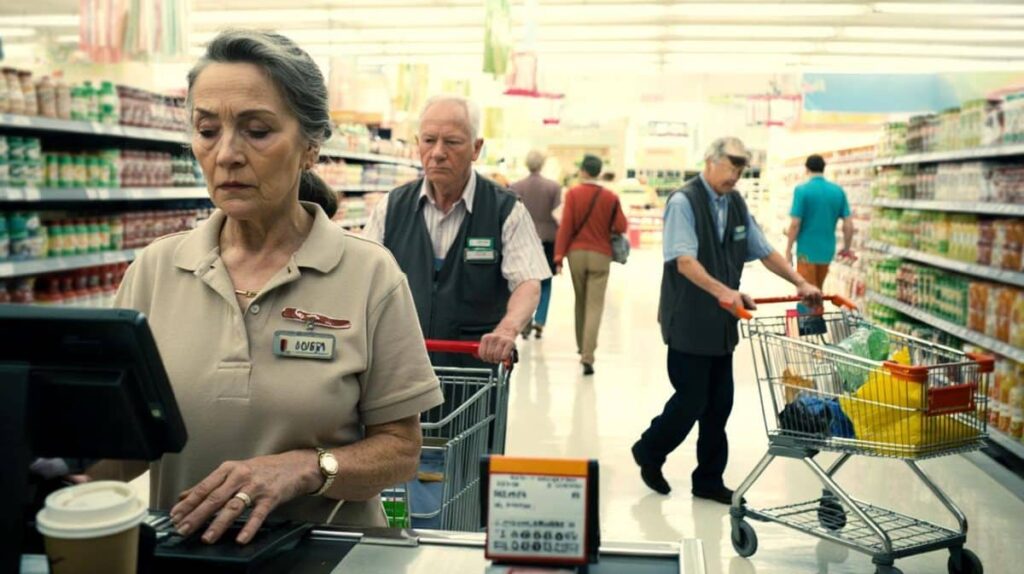
Around her, the same story repeats. Former teachers become receptionists, ex-nurses scan groceries, one-time factory workers run deliveries on battered scooters. They all spoke once about “enjoying their golden years”.
Today, they’re counting loyalty points on discount apps.
 Forget vinegar and wax: the simple home trick that makes hardwood floors shine and look like new
Something is shifting quietly in our streets.

A new “lifestyle” that nobody really dreamed of
In survey after survey, seniors still say the same thing: they want time, peace, and a bit of freedom after 65. Yet, on the ground, you see more and more retirees in uniforms, behind counters, or logged into gig-work apps late at night. They call it “keeping active”, “staying young”, “having a routine”.
Behind those words, the calculator is never far away.
Many pensions don’t follow the rising cost of rent, food and healthcare. A small gap at the end of the month at 63 quietly becomes a financial cliff at 73. So a new lifestyle trend is being sold as “active ageing”, when it’s often something far more basic: survival.
Take Gérard, 72, a former machine operator who thought his full career would grant him a quiet retirement. His pension: just enough to pay the rent, electricity, and a modest grocery budget. Then came a rent increase, an unexpected dental bill, and his granddaughter’s student expenses.
That’s how he found himself delivering parcels in the evenings. Two shifts a week turned into four, “temporarily”. A year later, he still pedals through the industrial zone under the rain. What saved him from giving up was a small network of other “cumulants” – retirees who combine pension and work – exchanging tips on the best shifts, the least physically demanding tasks, and how to talk to your doctor about fatigue.
Statistics quietly confirm what you see in Gérard’s eyes: the over-65s are the fastest-growing segment in low-paid jobs.
Behind this trend, several forces collide. Life expectancy rises, but pensions were calculated for a different economic world, with cheaper housing and lower energy bills. Children leave later, come back more often, and sometimes never really become financially independent.
There’s also social pressure: nobody wants to admit they struggle after 40 years of work, so many seniors wrap their financial anxiety in phrases like “I like to stay busy”. That doesn’t mean the desire to remain active isn’t real. It just means **choice and constraint are now tightly mixed**.
Underneath, a plain truth sits there, slightly uncomfortable: working after retirement is slowly becoming the norm, not the exception.

How seniors are reinventing work just to keep going
Faced with shrinking purchasing power, many seniors adopt a kind of “patchwork” strategy. Not one big job, but several small ones that can be stopped if health drops or a spouse needs care. Morning cleaning shifts, a few afternoons of tutoring, two evenings as a night receptionist.
The smartest among them start by listing what their body can still handle. Standing all day? Lifting loads? Long car trips? From that honest inventory, they target roles that protect their energy: phone support instead of warehouse work, caretaking instead of fast-food kitchens.
Some also use one simple method: they keep any extra income on a separate account, as an emergency shield. That small buffer reduces stress and allows them to say no when a job becomes abusive.
The biggest trap is emotional. Many retirees feel guilty for not helping their grown-up children more, or they’re ashamed to say no to a low-paid job “because at least it’s something”. That’s how they accept night shifts at 70, unpaid overtime, or work schedules that clash with medical appointments.
We’ve all been there, that moment when you say “it’s fine, I’ll manage” while knowing perfectly well you’re already exhausted. Seniors do it too, just with a quieter voice. Yet protecting sleep, joints, and heart health is not a luxury at this age. It’s basic self-defense.
Let’s be honest: nobody really does this every single day – the perfect diet, the perfect rest, the perfect financial planning. But saying “no” once in a while to preserve your body is not selfish. It’s how you stay available for the people you love, longer.
“I don’t work again because I’m bored,” says Maria, 69, who does three mornings a week as a school canteen assistant. “I work because my rent went up 120 euros, my husband’s medication costs more, and I don’t want to choose between heating and fruit.”
- Pick jobs that fit your age, not your ego
Think “lighter tasks, shorter hours, closer to home” even if your past career was high-level or prestigious. - Aim for one real day of rest
A full day with no shifts, no caregiving, no paperwork. Your body needs regular zero-pressure time to recover. - Protect your future self
Every extra euro can go to a fund for dental work, hearing aids, or house repairs, so tomorrow’s crisis doesn’t become tomorrow’s panic. - Stay socially plugged in
Work can’t be your only social life. A coffee with neighbors or a weekly club meeting matters more than it seems.
Between dignity and fatigue: what this trend says about us
What’s happening with these “cumulants” mirrors a deeper shift. Retirement used to mark a border: before, you belonged to the productive world; after, you stepped into another rhythm. That line is fading. The same supermarket may employ a 19-year-old student and a 74-year-old widow at the same cash register, on the same contract, with the same pressure to “smile for the customer”.
Some seniors embrace this new life, saying work gives them purpose and structure. Others swallow their frustration when they realize that decades of contribution don’t grant them the basic security they were promised. *Somewhere between pride and weariness, a silent negotiation is happening: how much longer can I keep going like this?*

Maybe that’s the real question this trend throws at society. Not just “why are so many seniors working again?” but “what kind of old age are we collectively building?” If you read this and think of a parent, a neighbor, or your own future self, you’re already part of the answer.
 Meteorologists warn Arctic conditions are deteriorating ahead of February in unprecedented ways
| Key point | Detail | Value for the reader |
|---|---|---|
| Rising number of “cumulants” | More retirees combine pension and low-paid jobs to fill monthly budget gaps. | Helps you understand why seniors are increasingly visible in roles once reserved for students. |
| Choosing sustainable work | Shorter shifts, lighter physical tasks, and a clear health “red line”. | Gives practical ideas to protect energy and dignity if you or a loved one must keep working. |
| Financial buffer mindset | Separating extra income for emergencies and future medical or housing costs. | Shows a simple way to reduce stress and avoid constant crisis-mode decisions. |
FAQ:
- Question 1Why are more retirees working after they officially stop their main career?
- Question 2Is this trend mainly about financial need or about staying active and social?
- Question 3What kinds of jobs are most common among these “cumulants”?
- Question 4How can a senior protect their health if they decide to take a job after retirement?
- Question 5What can families do when they see a parent or grandparent working too much to make ends meet?
