
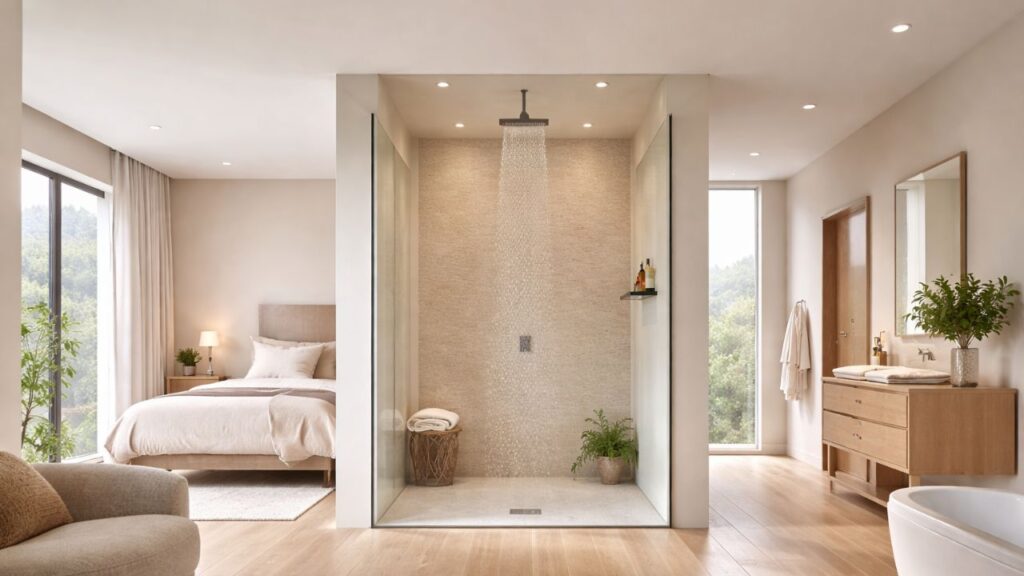
The first time Emma introduced her parents to the new “bathroom,” their reaction was silence. The shower stood openly in the master bedroom, resting on a low marble step, surrounded by soft lighting. There was no separating wall, no curtain, only glass placed a few metres from the bed. Her mother whispered about lost boundaries, her father searched for the missing bathroom, and the architect smiled knowingly. Online reactions were just as split, swinging between boldly sensual and deeply unsettling. What was once the home’s most private room had quietly become a public feature.
From Private Space to Design Statement
In luxury hotels, glass showers beside the bed began as a playful provocation. They hinted at intimacy and modern living, evoking design-forward escapes in places like Berlin or Bali. That idea has since migrated into everyday homes. Architects now place showers beside headboards, influencers film spa-suite tours, and property listings replace “bathroom” with lifestyle language. The shower becomes a visual focal point, turning steam and light into part of the bedroom’s scenery. What was hidden behind doors now performs openly, reshaping how personal spaces are perceived.
Why Homes Are Losing Their Walls
The shift is partly practical. Urban homes are shrinking, prices keep rising, and every square metre must earn its place. Removing walls saves space, but it also changes how rooms feel. Designers talk about wellness rituals and flowing zones instead of fixed rooms. There’s also a strong sense of modern identity at play. An open shower signals openness, confidence, and distance from older norms. It photographs beautifully. Living with it daily, however, often reveals the gap between design fantasy and routine reality.

Living With an Open Shower Day to Day
For couples considering this layout, the real question isn’t style but timing. Morning rushes, late-night showers, or one partner sleeping while the other washes all test the idea. Designing around real habits matters more than copying hotel aesthetics. Semi-open layouts, textured glass, or slight offsets from the bed often work better. Practical details—wet footprints, towel placement, and storage—shape daily comfort. Romance fades quickly when basic routines create friction.

Boundaries, Awkwardness, and Honest Talk
The biggest mistake isn’t glass or tiles; it’s skipping the conversation. Many couples agree in theory, then struggle once exposed routines become shared. Morning grogginess, shaving, illness, and other ordinary moments suddenly have an audience. Designers stress the importance of small privacy options, such as hidden curtains or sliding panels. These quick privacy fixes protect comfort without undoing the open feel. As one architect put it, partial openness often preserves harmony better than full exposure.
 Goodbye Hair Dye for Grey Hair: The Simple Conditioner Add-In That Restores Natural Colour Gradually
The Intimacy Test Hiding in Plain Sight
An open bedroom shower quietly tests what intimacy means. Some couples feel closer, sharing space without barriers. Others feel watched rather than connected, turning light and visibility into subtle tension. On a deeper level, it raises questions about personal limits and the need for retreat. In family homes, it can symbolise an adult zone, both freeing and performative. Over time, living without walls can redefine expectations, making traditional bathrooms feel outdated while also reminding people why doors once mattered.
 Not once a week, not on alternate days : dermatologist explains how often we should wash our hair
Key Takeaways for Anyone Considering the Trend
- Design statement shift: Moving the shower into the bedroom makes washing part of the room’s visual centre, helping you judge if it suits daily life or just looks good online.
- Different privacy needs: Couples often react differently after living without a door, highlighting the value of honest discussion before renovation.
- Hybrid solutions: Partial walls, curtains, textured glass, and a separate toilet area balance the spa-like feel with everyday comfort.
