For years, managing grey hair meant choosing between harsh chemical dyes and natural remedies that often gave inconsistent results. But a new method is gaining traction—mixing a common kitchen ingredient into your regular conditioner. This approach is appealing to those seeking a gentler, low-maintenance way to reduce the appearance of greys without damaging the hair or scalp.
Why More People Are Moving Away from Hair Dyes
Grey strands emerge when melanin production slows in the hair follicles. While ageing is the primary cause, stress, genetics, smoking, nutrient deficiencies, and certain illnesses can speed up the process. Many turn to semi-permanent or permanent dyes for quick coverage, but regular use can lead to dryness, scalp irritation, and weakened strands. Grey hair is already more delicate, and continuous dyeing can make it brittle and prone to breakage.
The Limits of “Gentle” and Natural Dyes
Even so-called ammonia-free or gentle dyes work by altering the hair’s internal structure. While younger, thicker hair might tolerate this well, mature or fine hair often reacts poorly. Plant-based alternatives like henna or indigo appeal to those wanting natural options, but results vary, tones may shift unpredictably, and once applied, these dyes are difficult to correct.

The Cocoa Conditioner Method Making Waves
This is where unsweetened cocoa powder enters the picture. Common in baking, this natural brown powder contains plant pigments that tint the hair’s surface gently. Cocoa isn’t a permanent dye. Instead, it works as a subtle tint that warms grey strands while conditioning the hair. Compounds like flavonoids and tannins lightly stain the hair, especially on lighter or grey hair, resulting in a gradual darkening effect over time. On darker hair, it simply adds depth and warmth.
More Than Colour: Cocoa’s Extra Benefits
Beyond colour, cocoa delivers additional hair benefits. Its antioxidants help protect hair from environmental stress, while its softening properties improve texture. Cocoa may also aid in balancing the scalp’s oil levels. When blended with conditioner, the result is a dual-action treatment that tones and nourishes simultaneously.
How to Mix Cocoa Powder into Conditioner
This trending method is both easy and affordable. It’s best applied to freshly washed, towel-dried hair once or twice a week.
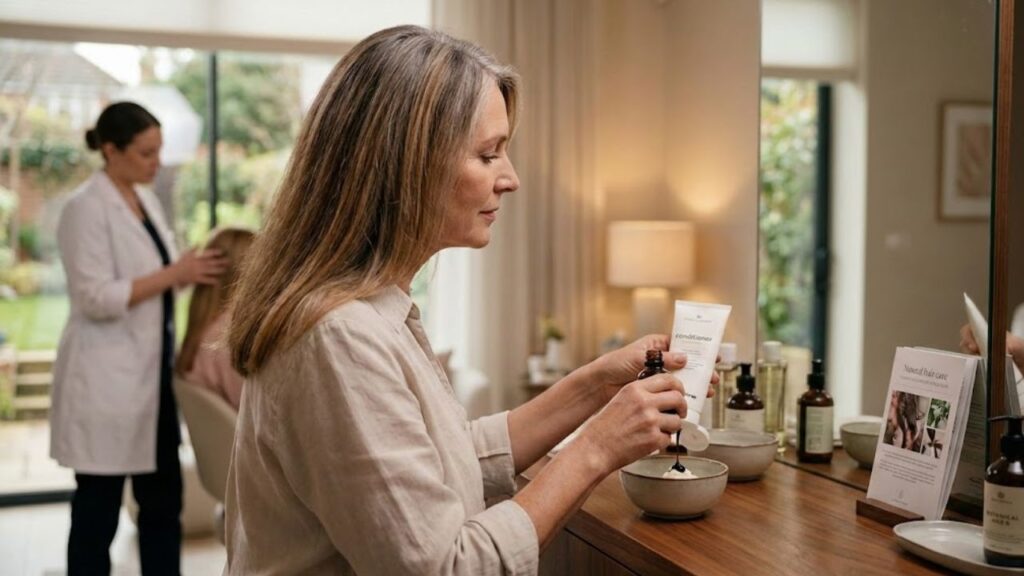
- Put a generous amount of your usual conditioner into a bowl
- Use a silicone-free or light-silicone conditioner for better pigment absorption
- Add 2 to 4 tablespoons of unsweetened cocoa powder based on your hair’s length and density
- Mix until smooth and lump-free
- Apply section by section, focusing on visible greys—temples, part line, crown
- Use a wide-tooth comb for even distribution
- Leave on for 20 to 30 minutes, extending time for more resistant white strands
Best Hair Types for This Approach
This method is ideal for those with scattered greys rather than fully white hair. It’s especially helpful for light brunettes and blondes, where greys are more visible. Individuals with sensitive scalps often find it much gentler than chemical dyes. While it won’t completely hide grey roots on very dark hair, it can soften the contrast and make growth lines less stark—more like a natural gloss than a full-coverage dye.
Results Based on Hair Colour
- Fine or mostly white hair may take on a soft beige-brown glow with enhanced shine
- Salt-and-pepper hair often looks more blended and uniform
- Dark brown or black hair typically sees a slight warmth boost without strong colour change
Why Cocoa Produces a Natural Look
Grey hair often becomes coarse and frizzy due to its raised cuticle layer. Conditioner helps smooth this, and cocoa’s surface-level pigments cling gently to the strands. Unlike oxidative dyes, cocoa doesn’t penetrate the hair shaft, so the effect is gradual and fades evenly. With no harsh chemicals, the hair’s internal structure remains untouched, making this approach safer for ageing or dry hair.
Cocoa vs Other Grey-Coverage Options
Herbal rinses like black tea or coffee can stain, but may also cause dryness. Tinted conditioners and salon glosses offer reliability but come at a higher cost. Cocoa stands out for being cheap, accessible, and nourishing, although results can differ based on hair type and consistency of use.
Supporting Grey Hair Health Naturally
Hair care doesn’t end with what’s applied topically. Lifestyle factors like stress, UV exposure, smoking, and poor diet can worsen greying. Many who use cocoa also adopt gentler habits—limiting heat tools, avoiding harsh shampoos, wearing hats outdoors, and eating antioxidant-rich foods. The growing popularity of cocoa treatments reflects a larger move toward natural, reversible beauty routines that work with your hair’s biology—not against it.