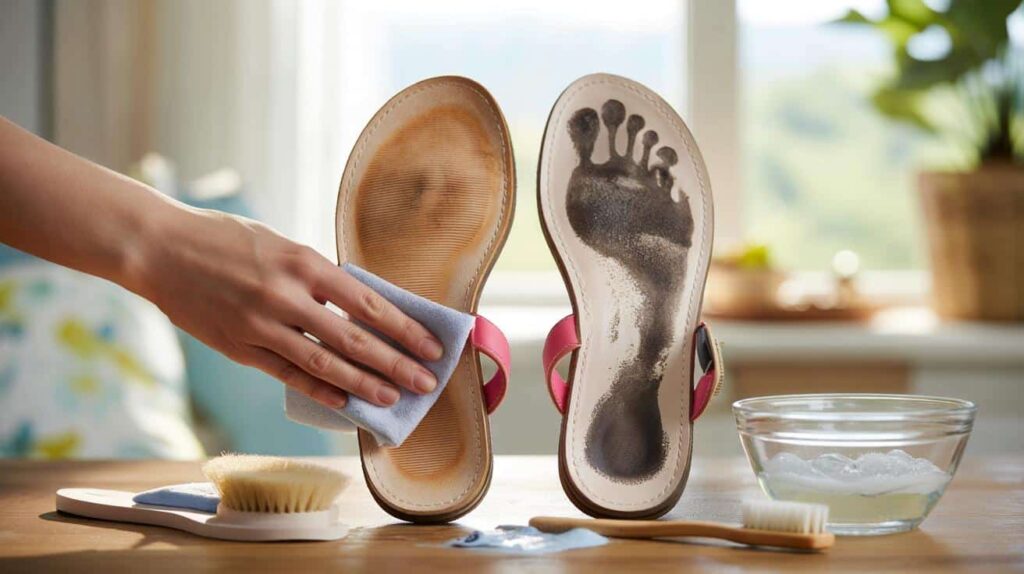
That grey-brown imprint of your toes and heel doesn’t mean your sandals are finished. With the right routine and a few household products, those marks can fade dramatically and your summer shoes can feel fresher underfoot.
Why sandals stain so fast
Open shoes feel light and breathable, yet they act like a sponge for everything your feet go through in a day. Skin rubs directly against the insole, and unlike trainers, there’s no sock to absorb moisture.
Footprints on sandals are not just “dirt”. They’re usually a cocktail of:

- sweat and natural skin oils
- dust, city grime and sand
- body lotion and sunscreen
- tiny dead skin particles
This mix seeps deep into the insole, especially if it’s made from absorbent materials like leather, suede or fabric. Left there, it oxidises and darkens, creating that visible print of your foot.

Those dark shapes are a hygiene issue as much as a style problem: they can harbour bacteria and smell.
The good news: on most sandals, the marks are far from irreversible. The key is to adapt the cleaning method to the material.
The step-by-step method to clean leather insoles
Leather insoles are common on dressy or “comfort” sandals. They’re durable but sensitive, so aggressive cleaning can crack or stiffen them.
1. Brush away surface dirt
Start by knocking off loose dust and grit.
- Use a soft shoe brush or a clean, dry toothbrush.
- Brush in small circles, including around the edges and stitching.
- Tap the sandals together to shake out any remaining particles.
This first step prevents abrasive particles from scratching the surface once you add moisture.
2. Mix a gentle cleaning solution
Leather doesn’t like harsh detergents. A mild, soapy mix works best:
- Fill a small bowl with lukewarm (not hot) water.
- Add a few drops of neutral soap: baby shampoo or a fragrance-free hand soap is ideal.
- Stir until the water looks slightly cloudy, not foamy.
Neutral soap and lukewarm water are enough to dissolve sweat and body oils without stripping or drying the leather.
3. Clean with a lightly damp cloth
Dip a clean microfibre cloth into the solution, then wring it out thoroughly. The cloth should be damp, not dripping.
- Wipe the insole gently, following the shape of the footprint.
- Insist a little more on the darker patches, but avoid vigorous scrubbing.
- Keep re-rinsing and wringing the cloth so you are not spreading dirt around.
You should see colour lifting onto the cloth. If the water becomes murky, replace it and keep going.
4. Rinse and dry correctly
Once the stains have lightened, use a second cloth dampened with plain water to remove any soap residue. Again, keep moisture minimal.
Then:
- Pat the insoles with a dry towel to absorb surface moisture.
- Leave the sandals to air dry indoors, away from radiators and direct sunlight.
Direct sun can warp the sole and cause leather to crack, even in a single afternoon on a windowsill.
Once dry, a small amount of leather conditioner rubbed into the insole can keep it supple and less prone to future marking.
Cleaning fabric or canvas insoles without ruining them
Casual sandals and espadrille-style designs often use fabric, canvas or microfibre on the footbed. These absorb more sweat than leather, but they tolerate slightly more moisture.
1. Dust off the surface
Begin the same way: brush away loose debris with a soft brush. Pay attention to the joins where the upper meets the insole, where dust tends to accumulate.
2. Use a soapy-cloth method, not a full soak
Even fabric insoles can lose shape if soaked. Aim for controlled moisture.

- Prepare the same lukewarm water and mild soap solution.
- Use a soft cloth or a soft-bristled toothbrush for stubborn areas.
- Work the solution into the stains with gentle circular motions.
If the insoles are heavily marked, repeat the process instead of scrubbing harder. Patience protects the structure of the shoe.
3. Rinse lightly and dry in the shade
Wipe the area with a clean, damp cloth to remove soap. Avoid running water directly over the sandals, especially if the soles are cork, rope or glued foam.
Leave them to dry at room temperature, in a well-ventilated, shaded place. A breeze helps much more than heat.
How cleaning improves comfort and foot health
Visible marks are just one side of the story. Dirty insoles can quickly become a breeding ground for bacteria and fungi, especially in hot, closed environments like public transport or offices.
Regular cleaning limits odours, reduces the risk of athlete’s foot and keeps the contact surface softer against the skin.
A fresh insole also tends to feel less sticky and less abrasive, reducing friction and blisters. Once sweat buildup is removed, the material can breathe again, and moisture evaporates more easily instead of sitting against the foot all day.
Simple routine to keep sandals looking new for longer
A few small habits between deep cleans delay the return of those dark tracks.
| Action | Frequency | Benefit |
|---|---|---|
| Wipe insoles with a dry cloth at night | After each long wear | Removes fresh sweat and dust before they set |
| Use a foot powder or anti-perspirant spray | On hot or long days | Limits moisture, odours and staining |
| Deep clean with soapy solution | Every 1–2 weeks in summer | Lightens marks and refreshes the material |
| Rotate between two pairs of sandals | All season | Gives each pair time to dry fully |
Common mistakes that damage sandals
In the rush to erase stains, people often reach for the strongest product in the cupboard. That usually backfires.
- Bleach can burn fabric, fade colours and weaken glue.
- Alcohol or acetone strips leather and synthetic coatings, leaving them brittle.
- Machine washing may twist the sole, break straps and crack cork or foam.
- Hairdryers and radiators can deform the footbed and shrink leather.
Even household baking soda, often recommended for odours, should be used with care. On dark leather it may leave pale rings or a chalky finish if not brushed off thoroughly.
When stains will not budge
Some marks are simply too old or too deep, especially on pale suede or fine nubuck. Before giving up on a favourite pair, a cobbler or professional shoe cleaner can sometimes sand and re-dye the insole.
For budget sandals, replacement might make more sense. The cleaning routine still has value though: starting early on a new pair delays that decision for many summers.
Extra tips for holiday and beach use
Sun lotion is a major culprit for greasy, dark patches on insoles. Applying sunscreen, then slipping feet straight into sandals, pushes the product into the material.
On holiday, try this sequence:
- Apply sunscreen and let it absorb for at least 10–15 minutes.
- Rinse or wipe any excess from the soles of your feet.
- Only then put on your sandals.
After a day at the beach, always shake out sand and salt. A quick wipe with a damp cloth that evening limits the white salt rings that sometimes appear on leather insoles.
Understanding a few key terms
When brands talk about “footbeds” and “insoles”, they usually refer to the same top surface where the foot rests. A “removable insole” can be taken out entirely, often making cleaning much easier. Many sporty sandals let you do this, so you can wash the insole separately by hand with soap and water.
Cork footbeds, common on ergonomic sandals, deserve a note too. The top layer often has a thin suede or leather lining: treat that like any other leather insole, but keep water away from the raw cork sides, which can swell and crumble when soaked.
Small changes that make sandals last longer
Footprint marks are partly a design issue. Darker insoles, textured finishes and removable liners all hide or reduce stains. When buying your next pair, checking these details can save cleaning work later.

Paired with a simple weekly routine, these choices stretch the lifespan of your summer shoes, keep them more comfortable, and make slipping them on each morning feel a little less like putting your bare feet onto last week’s commute.