Home cooks typically respond with more fat, more heat, or more swearing. But there’s a quieter, almost counterintuitive kitchen hack doing the rounds: a dry, powdery ingredient that quietly stops eggs sticking without drowning them in oil or splashing in water.
A clever fix hiding in your cupboard
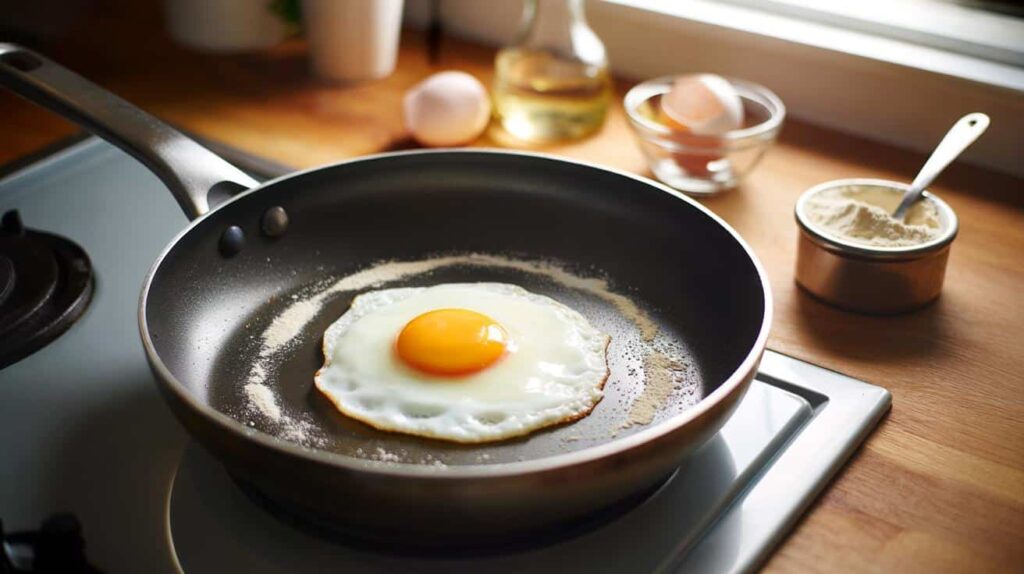
The method sounds almost too basic. Before cracking in the egg, you dust the pan with a thin veil of plain wheat flour. That’s it. No butter, no water, and barely a drizzle of oil.
Sprinkling a light layer of flour in the pan creates a tiny barrier that keeps the egg from bonding to the metal.

Think of it as laying down microscopic stepping stones between the hot surface and the fragile egg white. Instead of clinging, the egg sits on that flour film, browns gently, then slides out with minimal effort.

Step-by-step: how to fry an egg on flour, not fat
Here’s how to use the trick in a controlled way, so the egg cooks evenly and doesn’t taste dusty.
- Preheat the pan on medium heat: Let it warm until a drop of water sizzles lightly, not violently. Too hot and the flour burns; too low and the egg spreads before setting.
- Add a whisper of oil: Pour in a very small amount of neutral oil, just enough to thinly coat the base. Spread it with a pastry brush or folded kitchen paper.
- Dust with flour: Sprinkle a pinch or two of plain flour over the oiled surface, then tilt and tap the pan so it’s evenly covered with a fine layer. Clumps make dark spots, so aim for a light, even mist.
- Crack the egg onto the flour: Break the egg into a small bowl first if you want full control, then slide it gently into the centre of the pan, right on top of the flour film.
- Let it sit: Resist the urge to poke. Give the egg a couple of minutes for the white to set and the underside to crisp lightly.
- Lift and slide: Run a thin spatula around the edge. You should feel the egg loosen easily, almost skating on the base.
The result is a fried egg with a tender, creamy yolk and a white that’s crisped at the very bottom instead of torn or shredded from scraping.
Why flour works against stubborn sticking
At the heart of this trick is a very simple bit of kitchen physics. Protein plus high heat plus bare metal usually equals sticking. Eggs are loaded with proteins that unfold and hook onto the pan’s surface as they cook.
The flour acts as a sacrificial shield, taking the heat and contact so the egg doesn’t have to.
The flour particles sit between the pan and the egg white. They disrupt the direct contact that would normally let the proteins latch on. As the egg cooks, the flour toasts slightly, creating a dry layer that the egg can rest on instead of fusing to the metal.
There’s also a moisture angle. Egg whites contain a lot of water. That water steams and seeps into the flour, turning it into a paper-thin, cooked paste that further separates the egg from the surface. The combination of mild oil, toasted flour and gentle heat helps the bottom brown without charring.
Texture and flavour: does it change the egg?
Used sparingly, the flour doesn’t make the egg taste like bread or batter. You’re not coating the egg; you’re lining the pan.
- The edge of the white tends to be slightly crisper and more evenly golden.
- The yolk keeps its soft, runny centre if you control the heat.
- There’s no heavy greasiness, because you can cut oil right down compared with classic frying.
If you dump in too much flour, you’ll notice a bready, almost pancake-like note on the underside. A pinch is plenty for a standard frying pan.
Choosing the right pan and heat
This hack plays nicely with most home cookware, though some pans handle eggs better than others.
| Pan type | How the flour trick behaves |
|---|---|
| Non-stick | Makes already easy eggs almost foolproof, especially in older pans whose coating has lost some glide. |
| Cast iron | Reduces the risk of serious sticking while the pan is still building up its seasoning layer. |
| Stainless steel | Provides a buffer on a surface that’s notorious for welding protein to the metal. |
Heat control remains crucial. Medium to medium-low is the sweet spot. On high heat, the flour will scorch before the egg sets, leading to bitter flavours and dark patches under the white.

What kind of flour works best?
Standard plain or all-purpose wheat flour is the simplest option. It toasts evenly and is already in most kitchen cupboards. That said, people with gluten allergies or coeliac disease can still use the principle with alternatives.
Any fine, starchy flour that can toast quickly and form a thin film will help reduce sticking.
Viable alternatives include finely milled rice flour, maize flour, or potato starch. Coarser flours and nut meals tend to burn more easily and can taste gritty under the egg.
Health angle: fat control without dry eggs
Frying eggs in butter or a generous pool of oil makes them rich, but also bumps up calories and saturated fat. The flour barrier lets you get away with much less fat while keeping that satisfying fried edge.
Because the egg no longer needs a thick layer of oil to stay mobile, you can work with just a thin sheen in the pan. That means less spitting, quieter cooking, and a plate that doesn’t glisten with leftover grease.
Common mistakes and how to avoid them
Like any cooking shortcut, this one can go wrong if you rush it. A few issues tend to crop up:
- Too much flour: Leads to a gummy layer and a floury flavour. Use a small pinch and spread it well.
- Pan too hot: The flour blackens quickly and makes the egg taste burnt. Reduce the heat and give the pan time to cool slightly.
- Cold pan: The egg spreads out before setting, becoming thin and rubbery. Preheat until just hot, then add oil and flour.
- Moving the egg too early: Disturbs the forming crust and reintroduces sticking. Wait until the white is mostly opaque around the edges.
Beyond fried eggs: applying the same logic
This simple flour film has uses beyond the breakfast plate. Any food that tends to cling to the pan while frying or searing can benefit from a similar barrier.
Thin fish fillets, particularly delicate white fish, often tear when you try to flip them. A light dusting of flour in the pan, or on the fish itself, can help the underside crisp and release more cleanly. Soft tofu slices behave in the same way: a dry interface helps them brown instead of shredding.
There’s also a link to classic baking techniques. When you dust a cake tin with flour after greasing, you’re doing a more visible version of this trick. The idea is the same: create a film between the batter and the metal so it can be turned out intact.
What “non-stick” really means in practice
Many home cooks rely on marketing promises on the box: “non-stick”, “scratch-resistant”, “stone coating”. In reality, no pan remains perfectly non-stick forever, especially if it’s overheated or scrubbed with harsh tools.
Building small habits, like using a flour barrier when you fry eggs, helps compensate when your pan is past its peak.

Understanding what causes sticking – protein catching on microscopic rough spots, moisture turning to steam and lifting food in uneven patches – makes tricks like this feel less like magic and more like good kitchen sense. The flour hack doesn’t replace proper cookware care, but it gives your tired pan a second wind and your fried eggs a far better chance of reaching the plate in one graceful piece.