On a dreary Tuesday morning in eastern France, a small group of geologists emerged from a forest, visibly shaken. With mud on their boots and laptops in hand, they had been surveying an old mining site near a peaceful village—an area where nothing much happens, aside from cows grazing, church bells tolling, and the occasional visit to the bar-tabac.
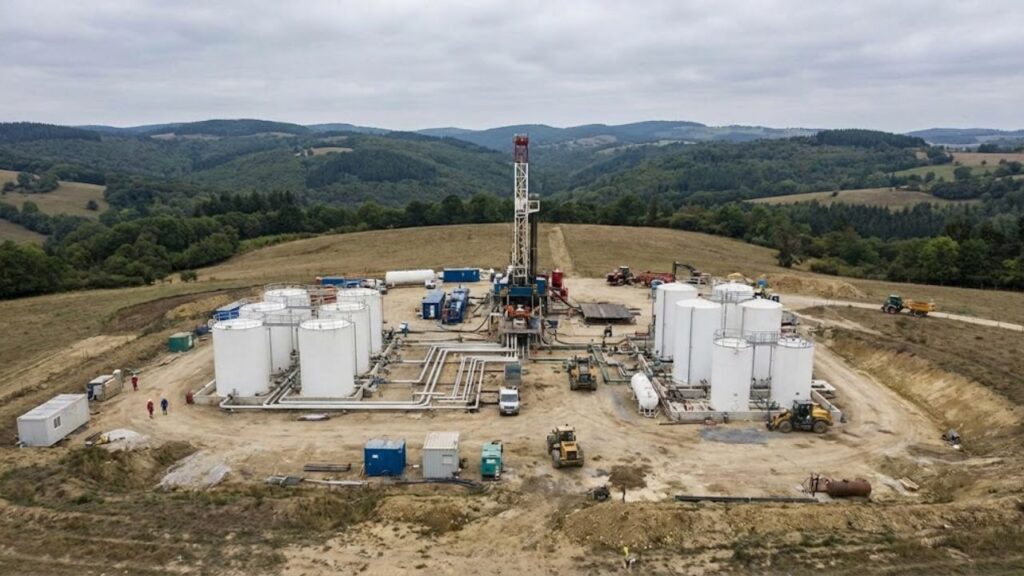
What they brought back, however, was news that could transform a quiet region into the heart of the world’s energy landscape. Their sensors and models all pointed to the same conclusion: there was hydrogen in the earth, and not the kind produced in factories. This was naturally occurring hydrogen, and they called it “white hydrogen.”
Early estimates suggested that this discovery wasn’t just a small deposit, but potentially one of the largest natural hydrogen reserves ever found on Earth.
France’s Hidden Energy Treasure in Lorraine
The discovery took place in Lorraine, a region more associated with steel and coal than cutting-edge energy sources. For decades, this area symbolized industrial decline, with closed mines and memories of miners who worked tirelessly underground. But the geologists weren’t reopening old mines—they were mapping geological faults to understand how the ground was shifting.
Then, they noticed something unusual in the data: gas anomalies deep beneath old coal seams. When they analyzed the composition, they found an unexpectedly high concentration of hydrogen. It wasn’t a trace element or a fleeting curiosity—it was a consistent, significant presence.
The implications were extraordinary. Researchers from the University of Lorraine and France’s Bureau of Geological and Mining Research started discussing the possibility of millions of tonnes of natural hydrogen trapped beneath the soil. Some early models suggested that the basin could hold anywhere from 6 million to over 250 million tonnes of hydrogen, depending on how far the reservoir extends.
While there is still uncertainty, these estimates suggest that France could be sitting on one of the largest known natural hydrogen deposits in the world—a discovery that could radically change the country’s energy future.
The Rarity and Promise of White Hydrogen
Hydrogen is the most abundant element in the universe, but on Earth, it rarely exists in its pure form. Typically, it has to be produced artificially by cracking natural gas or splitting water—processes that consume energy and often produce CO₂ as a byproduct. White hydrogen, however, forms naturally underground through reactions between water and iron-rich rocks and escapes through faults and fractures.
Finding a stable reservoir of white hydrogen is a breakthrough. It’s essentially a low-carbon, self-refilling energy source—a dream come true for the energy industry. The potential for tapping into this hydrogen is that it can be harnessed like oil or natural gas, but without the environmental drawbacks. While scientists have been searching for natural hydrogen in places like Africa and the U.S., no one expected the biggest discovery to be made in rural France.
From Scientific Discovery to Potential Energy Revolution
The French discovery didn’t occur in isolation. For years, a small global community of scientists has argued that natural hydrogen could play a key role in the energy transition. There have been some small-scale finds in places like Mali, where a village has been using natural hydrogen for years, and in the U.S., where seepages have been mapped in the Midwest.
But those finds were more like interesting case studies than game-changers. The situation in Lorraine is different. France, a highly industrialized country, may have stumbled upon a massive, domestic, low-carbon resource hidden beneath its former coalfields. This discovery could represent the future of energy for a country once known for its smog-filled past. It’s a symbolic turning point: the land that once powered Europe’s industrial growth could now lead the way toward its decarbonized future.
The Promise and Peril of Lorraine’s Hydrogen Reservoir
While local officials are optimistic about the region’s “second life,” there are mixed feelings among residents. Some recall the promises made during the shale gas boom that ultimately fell flat in France, and there’s caution about whether this will be another short-lived energy rush. There’s tension between hope and skepticism.
What makes this discovery different is the broader context: the EU is desperate for energy independence, climate deadlines are looming, and there’s a pressing need for clean energy sources to power industries, planes, and ships. With millions of tonnes of hydrogen potentially lying under its soil, France now holds geopolitical leverage on the global stage.
The Challenges of Extracting Natural Hydrogen
Extracting white hydrogen is not without challenges. It’s often found deep underground, mixed with other gases, and sometimes several kilometers below the surface. The extraction process will require adapting drilling techniques from the oil and gas industry, monitoring for leaks, and testing how quickly the reservoir replenishes itself. The central question remains: does this hydrogen behave like a finite resource, or does it regenerate naturally over time?
Early models suggest that the hydrogen could be replenished continuously by geological reactions, which would make it a kind of “hydrogen fountain” that could last for decades. This would represent a completely new frontier for energy extraction, where science, public policy, and industry will need to come together to adapt to this unique resource.
What Happens Next for France’s Hydrogen Revolution
While the theoretical process of extracting and using natural hydrogen sounds simple, in practice it will be much slower and more complex. The first step will be seismic surveys to map the underground structures, followed by deep exploratory wells to determine the volume, flow rate, and long-term behavior of the hydrogen reservoir.
Once that data is collected, only then can production begin, and France will need to rethink its hydrogen strategy. Instead of relying solely on expensive green hydrogen from electrolysis, France could blend biologically, industrially, and geologically sourced hydrogen into a three-pronged energy strategy, with Lorraine playing a key role in this shift.
Balancing Opportunity and Responsibility
As with any major energy discovery, the temptation to rush into development is strong. But policymakers must resist the urge to bypass regulations or rush permits. The lessons of past fossil fuel booms—where promises of jobs and prosperity often led to environmental damage and community unrest—should not be ignored.
Instead, the focus should be on transparency, community involvement, and responsible development. This means addressing the potential risks of hydrogen extraction, including induced seismicity, contamination, and the visual impact of drilling sites. It also means acknowledging that the science is still evolving and that France must take a measured approach to ensure that the benefits of this discovery are shared equitably.
The World’s Eyes on Lorraine
As France grapples with the future of its hydrogen resources, the world will be watching. If this discovery is developed responsibly, Lorraine could become a model for other nations seeking to tap into their own natural hydrogen reserves. If it fails, however, the dream of white hydrogen might be dismissed as too complicated, just when the world needs new, low-carbon energy sources the most.
This is a pivotal moment in the energy transition. With geological processes that have taken millions of years colliding with human deadlines for decarbonization, France faces a rare opportunity to write a new chapter in the global climate story. The question remains: who will hold the pen?
| Key point | Detail | Value for the reader |
|---|---|---|
| Scale of discovery | Millions of tonnes of natural “white hydrogen” detected in Lorraine, possibly among the world’s largest deposits | Helps understand why this French find is making global headlines |
| Energy transition impact | Low‑carbon hydrogen directly from the ground could complement green hydrogen and cut dependence on imported fossil fuels | Shows how this can affect future energy prices, jobs, and climate goals |
| What happens next | Pilot drilling, new regulations, and strong local involvement will decide if the resource is a boon or a new controversy | Gives readers clues on what signals to watch in the coming years |