Across research labs and living rooms, one quiet practice keeps coming up as a possible antidote: mindfulness meditation. Not the hour-long retreat version, but very short sessions that might actually fit into a busy day. Can those few minutes really change how the body responds to pressure, or is it just another wellness trend?
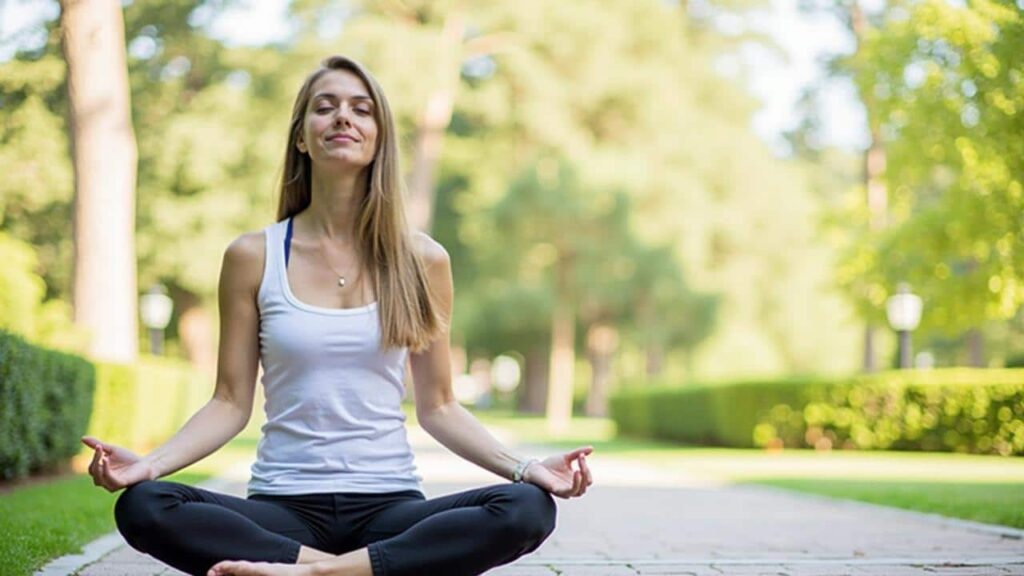
Mindfulness as a practical tool, not just a buzzword
Psychologists describe stress as an internal tension that appears when a situation seems too demanding for our mental, social or emotional resources. The trigger can be small or huge. What really shapes our health is how our body and mind respond to that tension.
This is where mindfulness enters the picture. Rooted in Buddhist traditions going back some 2,500 years, it has been adapted over the past few decades into secular, science-backed programmes. In simple terms, mindfulness means paying deliberate attention to what is happening right now, without judging it or trying to change it.
 Hypersonic jet speed claims: the physics question that makes or breaks the story instantly
Mindfulness is less about “emptying your mind” and more about noticing where your attention is, then gently bringing it back.

In the late 1970s and 1980s, American professor Jon Kabat-Zinn turned this approach into a structured medical programme: Mindfulness-Based Stress Reduction (MBSR). The idea was clear: could systematic training in present-moment attention help patients cope better with pain, illness and stress?
Why classic mindfulness programmes feel out of reach
MBSR and similar programmes have shown consistent benefits for stress, chronic pain and even relapse in depression. But they are demanding. A typical MBSR course lasts eight weeks, with:
- Daily home practice of around 45 minutes
- A weekly group session of about 2.5 hours
- Additional reading or reflection between sessions
For many people juggling work, caring responsibilities and financial pressure, that level of commitment is unrealistic. The paradox is obvious: the people most in need of stress relief often have the least time to commit to it.
So researchers began asking a simple question: could a shorter version still work?
Short mindfulness sessions under the microscope
In recent years, several teams have tested so‑called “brief mindfulness” programmes. These usually run for about four weeks, with total practice time of less than 1.6 hours per week and individual sessions capped at 30 minutes.
Compared with the classic eight-week MBSR format, these are tiny doses. The key question is whether such small shifts in daily routine can produce measurable changes in the body’s stress systems.
Looking inside the body: what heart rhythms reveal
To move beyond questionnaires and self-report, researchers have turned to a physiological marker: heart rate variability (HRV). This is the natural variation in time between one heartbeat and the next. It is controlled by the autonomic nervous system, which has two branches:
| Branch | Role in the body | Stress context |
|---|---|---|
| Sympathetic | Prepares for action: raises heart rate, releases energy | Dominant during threats, deadlines, conflict |
| Parasympathetic | Supports recovery: slows heart rate, aids digestion | Dominant at rest, during relaxation and sleep |
Higher HRV is generally linked with better flexibility in switching between these two states. People with higher HRV tend to cope better with pressure and recover faster after stress. Low HRV, by contrast, is associated with chronic stress, burnout and some cardiovascular risks.
When studies show HRV rising after a mental training programme, it suggests the body is becoming more capable of calming itself down.
A recent systematic review pulled together research on brief mindfulness programmes and HRV. Across different groups and designs, one pattern stood out: short, regular practices were associated with increases in HRV. That points toward a real biological effect, not just a pleasant feeling after a quiet moment.
How just a few minutes can shift the stress response
The emerging picture is that even modest doses of mindfulness can help the nervous system rebalance. Rather than eliminating stressors, the practice appears to change how quickly the body can come back to baseline once a challenge has passed.
The gains are not dramatic overnight fixes. But they are meaningful. For people who will never sign up for a demanding eight-week course, a four-week routine with sub‑30‑minute sessions is more realistic and still seems to offer measurable benefits.
Researchers behind these studies now cautiously recommend weaving short mindfulness sessions into daily life as a prevention tool, a way to stop stress from constantly draining mental and physical reserves.
Learning the basics: a simple breathing awareness exercise
One of the entry-level practices is deceptively straightforward: becoming aware of the breath. This is considered a “formal” exercise, meaning you deliberately stop what you are doing and focus on a single task.

The steps are simple:
- Sit upright on a chair or cushion, feet grounded or legs crossed.
- Let your hands rest comfortably, eyes closed or softly focused.
- Bring your attention to the physical sensations of breathing: air moving in and out, chest or belly rising and falling.
- Do not try to change your breathing; just notice it as it is.
- When your mind wanders, gently acknowledge it and return to the next breath.
This “mind wandering” is not a failure. It is part of the exercise. Every time you notice your attention drifting and steer it back, you are practising the mental equivalent of a small bicep curl.
The work is not in holding perfect focus; it is in coming back, again and again, with as little self-criticism as possible.
Other formal practices include the body scan, where attention moves slowly through different parts of the body, noticing sensations without labelling them as good or bad.
Informal mindfulness: paying attention while you live your life
Mindfulness does not always mean sitting still on a cushion. Informal practice weaves awareness into normal activities:
- Mindful walking: noticing the contact of your feet with the ground, the movement of your legs, the air on your skin.
- Mindful eating: putting screens away for one meal, paying attention to smell, texture, taste and the feeling of fullness.
- Mindful running or sport: focusing on rhythm, breathing and bodily sensations rather than performance metrics alone.
In these informal exercises, the goal is the same: be fully present with what you are already doing, instead of running a mental slideshow of emails, arguments and worries.
Starting small: three to five minutes that actually fit
For beginners, long sessions can feel daunting. Many clinicians now advise starting with three to five minutes once a day and increasing gradually only if it feels helpful.
Some people prefer to learn with a trained professional such as a psychologist, GP, mental coach or therapist who has specific training in mindfulness programmes. Others are happy to use books, recorded audio or short online sessions. The key is consistency rather than intensity.
Who might struggle with mindfulness, and what to watch for
Mindfulness is not a magic solution, and it does not suit everyone. Some people find that focusing inward, especially on the breath, triggers unease or mild anxiety at first. For most, this fades with guidance and practice. For a minority, it can feel overwhelming.
Anyone with severe depression, intense anxiety or a history of trauma should discuss mindfulness with a health professional and avoid using it as a stand‑alone treatment.
Research-based programmes always stress that mindfulness is a complement, not a replacement, for medical or psychological care when needed. If practising leads to distress that persists after the session, or worsens existing symptoms, stopping and seeking professional advice is wise.
Key terms that help make sense of the practice
Two notions often confuse beginners:
- Non-judgment: this does not mean you never evaluate anything. During practice, it simply means you notice thoughts like “I’m bad at this” and treat them as passing events, not facts.
- Acceptance: this is not resignation. It means acknowledging what is present in this moment before deciding how to respond, rather than fighting reality and adding another layer of stress.
Putting these ideas into practice tends to soften the pressure to “do mindfulness correctly”, which is one of the quickest ways to make the exercise tense rather than calming.
How brief mindfulness can fit into real-life stress scenarios
Picture a nurse finishing a night shift, heart still racing from emergencies. A five‑minute breathing practice in the staff room will not erase exhaustion, but it can give the nervous system a small window to reset before the commute home.
Or a student facing an exam surge: two short sessions a day during the revision period can train attention to come back from spirals of catastrophic thinking. The benefit is not a perfect calm, but a bit more space between anxious thoughts and automatic reactions.

These micro-interventions will not remove bills, queues or emails. What they can do, increasingly backed by data on heart rhythm and nervous system balance, is change how the body and mind ride those waves—as long as the practice is realistic, regular and approached with a degree of patience rather than pressure.