
On a grey January morning, the kind where the cold seems to hang a little heavier in the air, a small cluster of people stood outside a suburban train station, phones in hand. Most were doom-scrolling headlines about layoffs, politics, that usual digital noise. Then a different kind of alert started popping up: long-range meteorological models flagging a “rare Arctic disruption” sliding into early February.
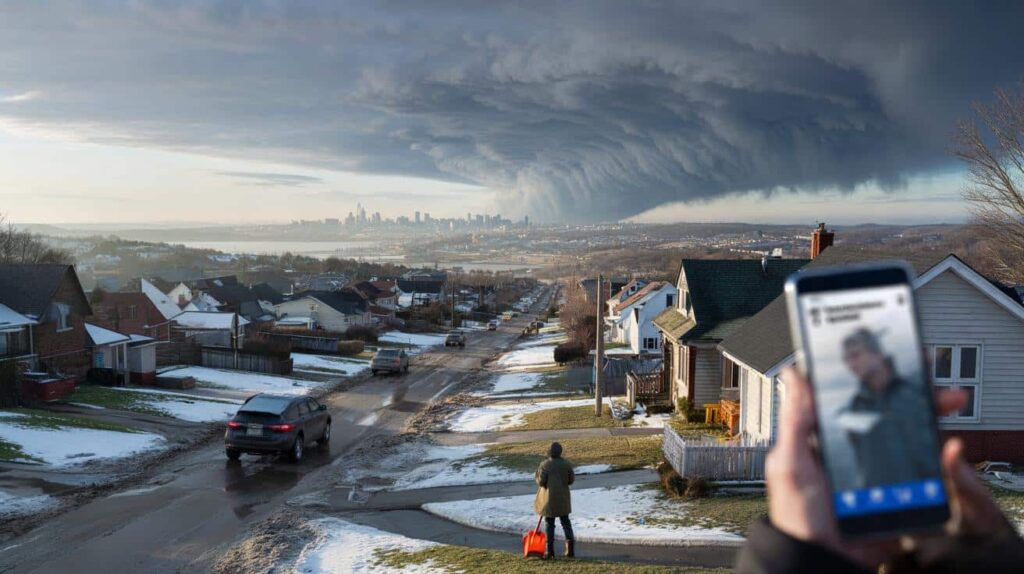
Nobody talked about it out loud, but you could see it in their faces: that tiny, familiar flicker of “wait, are we about to get hit with something big again?”
Above them, clouds were drifting south, quietly pulling a story with them that began thousands of kilometres away, over a swirling, fragile cap of polar air that is suddenly not behaving the way it normally does.

Something high above the North Pole is getting ready to snap.

What meteorologists are really seeing over the Arctic right now
Up over the top of the world, about 30 kilometres above the ground, a river of icy air usually spins like a well‑aimed lasso. That river is the polar vortex, and for most winters it keeps the deepest cold locked up near the Arctic Circle. This winter, that lasso is fraying. The stratosphere over the pole is warming fast, the vortex is wobbling out of shape, and the models that meteorologists stare at for hours are lighting up with colours that mean trouble.
They’ve seen this pattern before, but not often, and rarely with this combination of timing, sea‑ice anomalies and North Atlantic warmth.
Take Berlin in February 2018, or Texas in February 2021. Both were hit by brutal cold spells that didn’t appear from nowhere: they were the aftershocks of a disrupted polar vortex, broken apart weeks earlier over the Arctic. In 2018, parts of Europe saw temperatures plunge 10–15°C below average. In 2021, power grids in the southern United States cracked under record demand, and at least 200 people died as pipes burst and homes lost heat.
Those events are now case studies in meteorology classes, and this year’s charts are starting to look uncomfortably familiar to the forecasters who remember them.
When the stratosphere over the Arctic warms sharply in a sudden stratospheric warming event, that spinning vortex can slow, weaken, or even shatter into separate lobes of cold. Once that happens, the atmosphere below starts to rearrange like a slow‑motion game of dominos. High‑altitude winds flip, jet streams kink and dip, and tongues of polar air can spill south into Europe, Asia, or North America. Not every disruption triggers a historic freeze, and not every model is right. *But enough of the signals are lining up this February that seasoned meteorologists are speaking with a different kind of caution in their voices.*
How a rare Arctic disruption could reshape your February on the ground
From a practical point of view, the most useful thing you can do right now isn’t panic, it’s to shorten your weather horizon. Instead of thinking “What’s winter going to be like?”, think in ten‑day chunks. Follow updates from your country’s official meteorological service and one independent forecaster you trust. If you see consistent talk of “Arctic air mass” or “blocking high” over Greenland or Scandinavia, that’s your cue to quietly shift gears.

That might mean delaying a long road trip, getting your winter tyres fitted this week, or checking that vulnerable relatives have working heaters and a backup plan.
We’ve all been there, that moment when a cold wave hits and you realise your only “preparation” was a half‑charged phone and a thin jacket. The people who cope best with weather surprises aren’t survival experts, they’re the ones who did three or four small, boring things a few days earlier. Stocking a couple of extra cans and a flashlight doesn’t make you paranoid, it just means you’d rather not queue at a supermarket with empty shelves.
Let’s be honest: nobody really does this every single day. But when meteorologists start using words like **“rare disruption”** and highlighting February as a pivot point, it’s a smart moment to upgrade from vague concern to simple, concrete steps.
Meteorologists themselves are torn between scientific caution and human urgency. They know models can exaggerate. They also know what it looks like when cities are caught off guard.
“Think of the atmosphere like a crowded highway,” explains Dr. Lina Kovács, a climate dynamics researcher in Budapest. “The polar vortex is the fast lane around the city. When a crash blocks that lane, everyone starts cutting across, and chaos spreads far from the original problem. That’s what we’re worried about this February — not just cold, but the downstream chaos.”
To keep that “chaos” manageable, here are a few quiet moves you can consider before the forecasts escalate:
- Revisit your week: move any flexible travel or outdoor events away from the most uncertain days.
- Do a five‑minute home check: windows that leak, doors that don’t quite shut, radiators that need bleeding.
- Charge the essentials: power banks, spare batteries, and that old radio you forgot you own.
- Talk once: a quick call or text thread with neighbours or relatives about “what we’d do if the power went for 24 hours”.
- Follow one clear source: pick a single, **reliable forecast outlet** so you don’t drown in conflicting maps.
What this rare Arctic signal says about our future winters
Long after this February fades from your weather app, the story playing out over the Arctic will still matter. Scientists are debating a paradox: as the planet warms, polar vortex disruptions may become either more frequent, more intense, or simply more unpredictable. Some studies link the loss of sea ice and changing snow cover to a wobblier jet stream and higher odds of extreme winter swings. Others urge caution, warning that our datasets are still short and noisy.
In the middle of that scientific tug‑of‑war sits the rest of us, just trying to plan a ski trip, keep the pipes from freezing, or avoid another grid failure headline.

| Key point | Detail | Value for the reader |
|---|---|---|
| Arctic disruption signal | Sudden warming high above the pole is weakening the polar vortex ahead of February | Gives early warning that unusual cold or storm patterns could hit your region |
| Local preparation window | Real impacts tend to arrive 1–3 weeks after a major vortex disturbance | Offers a short but real chance to adjust plans, supplies, and home readiness |
| Broader climate context | Scientists are tracking links between warming, sea‑ice loss and polar‑vortex behaviour | Helps you understand why winters feel less predictable than they used to |
FAQ:
- Question 1What exactly is a “rare Arctic disruption” that meteorologists are warning about?
- Answer 1It usually refers to a major disturbance of the polar vortex, often triggered by sudden stratospheric warming. The normally tight ring of cold air over the Arctic weakens or splits, raising the odds that very cold air will spill into mid‑latitudes a few weeks later.
- Question 2Does a polar vortex disruption always mean a deep freeze where I live?
- Answer 2No. The cold air has to be steered by the jet stream into your region. Some areas might see historic cold, others just a brief chill or even milder, stormier weather if the cold dumps somewhere else. That’s why local forecasts matter more than global headlines.
- Question 3How early can forecasters know if February will bring extreme cold?
- Answer 3They can spot the risk pattern 2–4 weeks out by watching the stratosphere and long‑range models. But detailed, day‑to‑day forecasts usually sharpen only 5–7 days ahead, when short‑range models lock onto specific air masses and storm tracks.
- Question 4Is this Arctic disruption linked directly to climate change?
- Answer 4The short answer: the science is still evolving. Some research suggests that a warming Arctic and shrinking sea ice can destabilise the jet stream and polar vortex, leading to more wild swings. Other studies find weaker or more region‑specific links. Most experts agree the background climate is warming, while extremes are becoming more noticeable.
- Question 5What’s the one practical thing I should do before February’s pattern shifts hit?
- Answer 5Pick a calm evening this week and do a 15‑minute readiness check: look at your local 10‑day forecast, secure any travel or work changes you can, and set aside a small stash of essentials — warm layers, basic food, light, and a way to stay informed if the power or internet drops. It’s low effort, and you’ll be glad you did if the Arctic decides to knock on your door.
