
The woman staring back from the mirror looks almost identical to yesterday. The same sleek high ponytail sits in its familiar place, secured with the same quick twist of elastic. Her clothes change, her makeup shifts, but that ponytail stays loyal to its spot. Then she notices it again: a faint white line along her hairline that didn’t exist a year ago. Baby hairs thinning, edges that once curled forward now stopping short. The skin looks slightly shiny. She blames stress and age, anything except the one constant she never questions. That elastic isn’t just holding hair in place. It may be quietly taking something away.
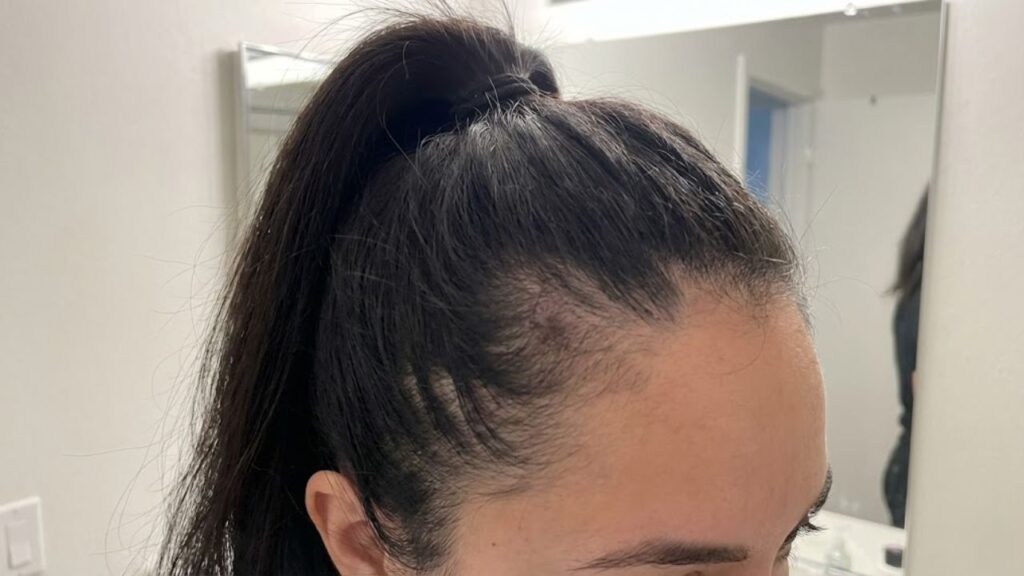
Why the “perfect spot” slowly becomes risky
The scalp simply isn’t designed for constant repeated tension in the exact same area. When hair is tied up every day, muscle memory takes over. Hands grab, smooth, twist, and secure the elastic in that familiar location without thought. Over time, the follicles along the hairline and beneath the tie are pulled in the same direction again and again. What begins as a mild tug becomes ongoing follicle stress. The skin stretches, roots weaken, and the warning signs stay subtle until thinning is already visible in the mirror.
When tension turns into traction alopecia
Dermatologists call this pattern traction alopecia. It usually appears along the temples, the front hairline, or behind the ears—areas that carry the most strain from ponytails, buns, tight braids, or extensions. Some clinics now report younger patients, including teenagers, showing recession once associated with older age. One UK trichologist estimates that nearly 1 in 10 women she sees for hair loss has traction alopecia linked to repetitive, tight hairstyles. The story is consistent: a trusted signature look, worn daily, applying silent pressure.

What’s happening beneath the scalp
Each hair follicle sits in a tiny pocket within the scalp. Ongoing pulling force acts like a slow, relentless drag on those pockets. Over time, inflammation forms around the follicle, triggering the body’s defense response. Scar tissue begins to replace healthy tissue. Once that happens, the follicle can no longer produce oil or new hair. That’s why traction damage can become permanent if the stress continues. Catching early thinning and changing habits gives vulnerable follicles a real chance to recover.
 5 cylinders, 240 hp and 16,000 rpm: this engine is Europe’s last hope of keeping petrol alive
Reducing damage without quitting ponytails
The most effective step sounds simple: change the tension and location. Instead of fixing your hair in the same high pony every day, rotate styles. Try a low pony at the nape, a mid-height tie, a loose braid, or a soft claw clip. If you prefer a sleek look, keep the front relaxed while securing the back. Let the hairline move naturally rather than pulling every strand tight. Small adjustments in placement and tightness can give follicles room to recover.
Listening to early discomfort signals
Many people wait for visible thinning before reacting, ignoring physical cues. Hair specialists are clear: if your scalp aches, throbs, or causes headaches, the style is too tight. That sensation isn’t normal. Switching to snag-free elastics, satin scrunchies, or spiral ties helps spread pressure more evenly. Wrapping a band one time less may look slightly looser, but it can preserve hair health long-term. A relaxed bun today can prevent a polished bald patch tomorrow.

Daily habits that quietly affect your hairline
Styling rituals matter too. Laying edges with gel, then scrubbing product away nightly, creates a double strain on the hairline. Mechanical tension combines with chemical stress and friction. Trichologists often note that hair rarely falls out suddenly. It sends warnings first: soreness, redness, bumps, or short broken hairs along the edge. These signs appear long before visible bald areas, offering a crucial window to change routines.
- Rotate ponytail height and parting several times each week.
- Keep the hairline looser than the rest of the style.
- Use softer accessories like satin scrunchies or fabric ties.
- Schedule down days with hair worn loose or lightly gathered.
- Watch early signs such as soreness, bumps, or broken edge hairs.
Protecting your hairline, not just your hairstyle
Hairline changes often come with quiet embarrassment. People hide behind headbands, heavier makeup, or careful selfie angles. A ponytail that once felt empowering can start to feel risky. Yet the hairline is one of the few areas you can still protect early. Choosing a gentler styling day instead of another ultra-tight bun can preserve edges years from now. Hair is more than keratin; it’s identity and history. Many tight styles hold cultural and personal meaning, making “just wear it down” unrealistic.

Long-term thinking for healthy edges
The goal isn’t abandoning styles you love but adjusting their frequency and intensity. Rotate looks, give your scalp rest at night, and avoid sleeping in pulling updos. If thinning is already visible, early traction alopecia is often partially reversible once stress is removed. Dermatologists may suggest soothing routines, topical treatments, or gentle anti-inflammatory care. Left unaddressed, however, traction can reach a point where follicles are replaced by scar tissue, leaving transplants or camouflage as the only options. This is the moment most people wish they’d acted sooner.

Key takeaways to remember
- Traction alopecia explained: Repeated tension in the same spot damages and scars follicles along the hairline.
- Change the anchor point: Rotate styles and loosen the front to reduce constant pull.
- Notice early warnings: Redness, soreness, bumps, and broken hairs signal excessive tension.
