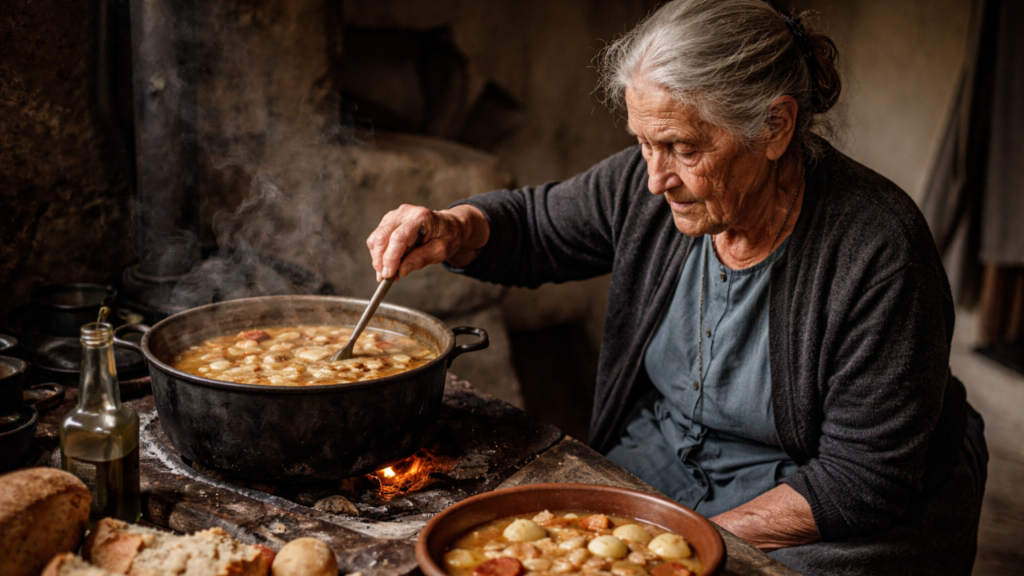
After the Civil War in Spain, families faced years of scarcity, forcing them to stretch every last crumb. Out of this necessity emerged a humble yet filling dish known as Ajo-Molinero – a thick garlic and bread soup. Today, it is largely forgotten, with even grandmothers struggling to recall its preparation.
The Rise of Ajo-Molinero in Postwar Spain
In the aftermath of Spain’s Civil War, the 1940s and early 1950s were defined by rationing, long queues, and empty pantries. Meat was a rarity, fish hard to come by inland, and fresh produce often disappeared for weeks at a time. Women, typically the cooks, became experts in making do with whatever they had, feeding families with what we might now consider scraps.
Ajo-Molinero wasn’t a dish of celebration – it was survival food. Hot, hearty, and dense, it was designed to keep people going all day.
What Was Ajo-Molinero?
The name “Ajo-Molinero,” which translates roughly to “miller’s garlic,” evokes the fields and long laborious days of rural Spain. It originated in the southern regions, where scorching summers and damp winters demanded nourishing, long-lasting meals.
The basic ingredients, readily available even under strict rationing, included:
- Stale bread
- Garlic cloves
- Tomatoes
- Green peppers
- Olive oil
- Water and salt
The soup’s defining characteristic was its thick texture. More a paste than a liquid, it resembled a hearty mash rather than the light gazpacho known today. Bread, never wasted, formed the base of this dish, while garlic added flavor and believed medicinal properties. Olive oil contributed calories, keeping hunger at bay for longer.
How It Was Made
The method varied slightly by region, but the basic process remained the same: soak bread, crush vegetables, and bind it all together with olive oil.
A typical preparation looked like this:
- Bring water and tomatoes to a boil in a pot.
- Add chunks of stale bread, allowing it to soak until soft.
- Crush garlic, green peppers, and salt together in a large bowl.
- Mix the soaked bread into the vegetable mash while still hot.
- Beat the mixture vigorously until it forms a thick, smooth mass.
- Drizzle with olive oil just before serving.
There were no strict measurements; the proportions were judged by eye and hunger. More bread meant a denser soup, and less oil resulted in a rougher texture.
The Role of Ajo-Molinero During the Postwar Years
Ajo-Molinero was designed to do two things: fill the stomach and fuel hard physical labor. Many adults worked long hours in the fields or in manual labor jobs that required significant physical strength. A filling meal like this one was essential.
The combination of water, salt, and carbs helped replace fluids and combat dizziness under the harsh sun, while the olive oil helped slow digestion, ensuring the meal lasted throughout the afternoon.
For children, Ajo-Molinero was a regular meal, sometimes eaten twice a day. While the dish is remembered with a sense of hardship and scarcity, it became intertwined with the emotional weight of survival. This association with struggle is part of the reason it faded as better times arrived.
| Ingredient | Main role in the dish |
|---|---|
| Stale bread | Provided bulk, carbohydrates and a sense of fullness |
| Garlic | Flavouring and traditional home remedy against infection |
| Tomato and pepper | Added some vitamins, colour and acidity |
| Olive oil | Supplied fat and extra calories for energy |
| Water and salt | Hydration and basic mineral balance |
The Decline of Ajo-Molinero
As Spain’s economy improved in the late 1950s and 1960s, diets began to change. Meat, eggs, and dairy became more accessible, and new industrial products started appearing in shops – canned goods, biscuits, and even soft drinks.
Dishes like Ajo-Molinero, which were tied to hunger, quietly disappeared. People were eager to forget the hardships of rationing and poverty. Today, if you ask someone under 40 about this hearty dish, you’re likely to receive a confused look. Even the chefs reviving traditional Spanish dishes tend to focus on more celebratory recipes, not the survival meals of the past.
Could Ajo-Molinero Return?
While Ajo-Molinero may be a relic of Spain’s postwar past, there are signs that it could make a comeback, albeit in a modernized form. With the rise of interest in food history and zero-waste cooking, younger cooks are rediscovering the resourcefulness of previous generations.
Recreating Ajo-Molinero at home is straightforward. The ingredients are inexpensive and readily available, and the process requires little equipment – just a pot and a bowl. Some cooks add modern twists, such as:
- Roasting garlic for a milder flavor.
- Adding a pinch of smoked paprika for depth.
- Using vegetable stock to replace some of the water for more complexity.
- Brightening the dish with herbs like parsley without altering its spirit.
By keeping the essential components intact—bread and garlic—you can still create a dish that honors the past while making subtle adjustments to suit contemporary tastes.
The Story Behind Ajo-Molinero
Ajo-Molinero serves as a poignant reminder of how quickly collective memory can fade. Once a dish consumed regularly, it is now at risk of disappearing entirely. For historians, recipes like this one provide a glimpse into everyday life during postwar Spain, offering insight beyond political events and official records. For families, these dishes are a tactile way to share the stories of their grandparents: the hardships, the long hours, and the creative ways of surviving hunger.
However, there’s a tension in this revival. Many older Spaniards would rather not revisit that difficult era through food. For them, recreating Ajo-Molinero may feel like reopening old wounds, rather than celebrating heritage.
Recreating Ajo-Molinero Today
Picture a modern kitchen in London or New York. A half-loaf of bread is left to go stale on the counter, destined for the bin or perhaps breadcrumbs. Transforming it into Ajo-Molinero-style soup changes that fate, offering more than just a frugal meal. It sparks questions about how families in the past stretched their ingredients before the convenience of modern appliances and delivery apps. It invites reflection on what “comfort food” really means when it’s not about indulgence, but about survival.
While the original version of Ajo-Molinero is rich in carbohydrates and oil, which is great for people with physically demanding jobs, it might not suit a sedentary lifestyle. A modern approach could involve smaller portions, additional vegetables, or side dishes like greens to balance the meal without changing its essence.
The term “hot gazpacho” may be misleading for those familiar only with the chilled summer drink. In this case, “gazpacho” referred to a rustic, bread-thickened soup born out of necessity and creativity, rather than temperature.
Bringing Ajo-Molinero back to the table, even just once, offers a rare combination: a practical way to reduce food waste, a lesson in resilience, and a conversation starter about a part of Spanish history that is still felt today, even if the dish itself is nearly forgotten.