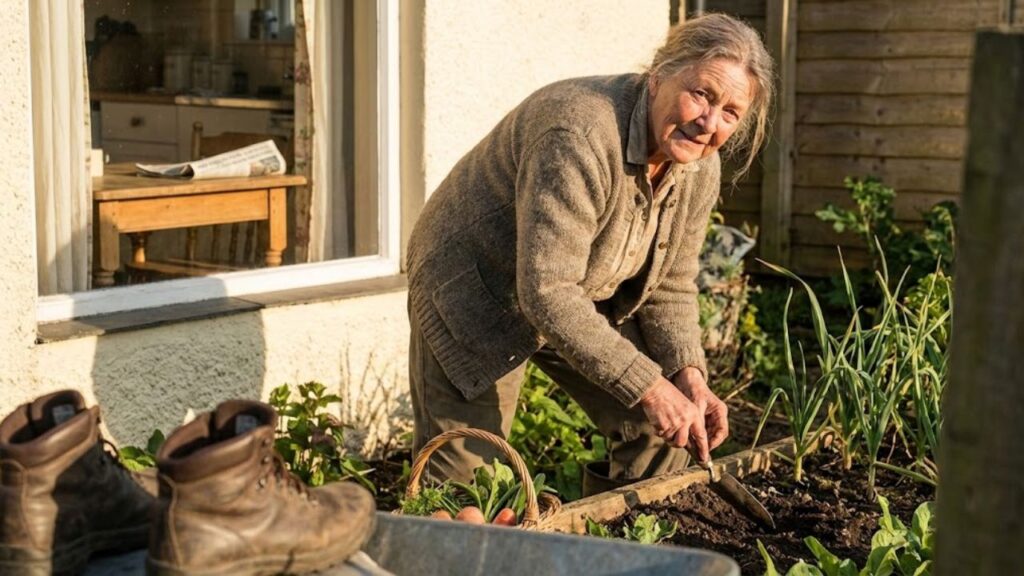
In a quaint kitchen tucked away in the English countryside, 100-year-old Margaret Ellis proves that age is just a number. Despite her age, Margaret maintains a daily routine that keeps her independent and sharp. She begins each day with a simple yet meaningful ritual that ensures she never lets a day slip by without purpose. Her morning starts with the small but significant action of wiggling her toes, checking in with her body. This commitment to daily habits, including walking, movement exercises, and staying socially engaged, allows Margaret to maintain a sense of autonomy that many people her age struggle to achieve.
The Power of Small, Consistent Actions for Long-Term Health
Margaret’s approach to aging isn’t about dramatic changes or difficult routines. It’s about consistency. She has built a series of small actions into her daily life that she considers non-negotiable. From preparing her own breakfast every morning to doing “kitchen gymnastics,” Margaret makes sure she stays active, even when her body protests. “It’s not about perfection,” she says, “it’s about showing up every day.” Her commitment to movement, even in small doses, helps her avoid the physical decline that often comes with aging. She believes that by constantly challenging her body, her muscles remain responsive and her independence intact.
How Social Connections Play a Crucial Role in Healthy Aging
Staying socially active is just as important as physical movement in Margaret’s routine. While some might view social interactions as a secondary concern, Margaret treats them as essential to her well-being. She refuses to let silence dominate her days, making sure to reach out to friends, family, and neighbors regularly. Whether it’s writing a handwritten letter, attending the local library club, or simply calling a loved one, Margaret understands the power of connection. Social engagement combats isolation, which can lead to cognitive decline and a loss of independence, helping her maintain both mental and emotional health well into her 100s.
Margaret’s Daily Checklist: A Commitment to Staying Independent
Margaret’s daily life is guided by a checklist, a simple set of tasks she holds herself accountable to. While she doesn’t always check everything off, the act of striving toward these small goals helps her retain a sense of control over her life. From walking to the end of the street to ensuring she interacts with at least one person each day, Margaret’s checklist reflects her belief that independence is a practice, not a given. The goal isn’t perfection; it’s persistence, a commitment to never letting the days pass by unnoticed.
| Key Point | Detail | Value for the Reader |
|---|---|---|
| Micro-habits beat heroic efforts | Daily routines like “kitchen gymnastics” and short walks are more beneficial than intense, occasional exercise. | Shows that healthy aging is achievable with simple, realistic actions even for busy individuals. |
| Independence is a daily practice | Managing basic tasks like preparing meals and getting dressed keeps independence strong. | Provides a concrete method for delaying dependency and maintaining dignity as we age. |
| Social contact is a health tool | Maintaining regular social connections through calls, letters, and visits helps prevent isolation and cognitive decline. | Offers a non-medical, human-centered approach to supporting mental and emotional health in later life. |