It’s that moment we all know too well—the steam from the pot fogging up the kitchen window, and there you stand, fork in hand, staring at a sad, khaki-colored mound of broccoli. You followed the recipe, boiled it “until tender,” thinking you were getting a healthy side dish. Instead, you’re left with a mushy vegetable no one wants to touch.
We’ve all had this experience, where healthy intentions clash with the reality of what’s on the plate. Some people swear by raw broccoli, tossing it into salads as little “trees.” Others believe long cooking is the key to making it digestible. The truth is, no matter how you cook it, broccoli often loses out in both flavor and nutritional value. The result? Most of the antioxidants you bought it for vanish.
Why Boiled and Raw Broccoli Miss the Nutritional Sweet Spot
Watch someone drop broccoli into boiling water, and you’ll see two things happen quickly: the color turns bright green, you catch a whiff of that sulfurous note, and if you leave it too long, the florets begin to wilt, and the water turns slightly green. That color is a warning bell—those nutrients, such as vitamin C, B vitamins, and antioxidants, are leaching out into the water.
Leave it boiling for five minutes or ten, distracted by your phone, and you’ll have a vegetable that’s more about comfort than a superfood. Meanwhile, raw broccoli shows up in salads, Buddha bowls, and detox plates looking fresh, crunchy, and healthy. But many people find that eating it raw leads to bloating or discomfort. Why? Because its fibers and certain compounds are tough on the gut without any cooking at all. Plus, compounds like sulforaphane, which are touted as antioxidants, only become active after light cooking.
In short: fully boiled broccoli releases water-soluble vitamins and sensitive antioxidants into the water, while raw broccoli is difficult for your body to fully digest. The sweet spot lies somewhere between these extremes.
The Secret to Unlocking Broccoli’s Nutrients
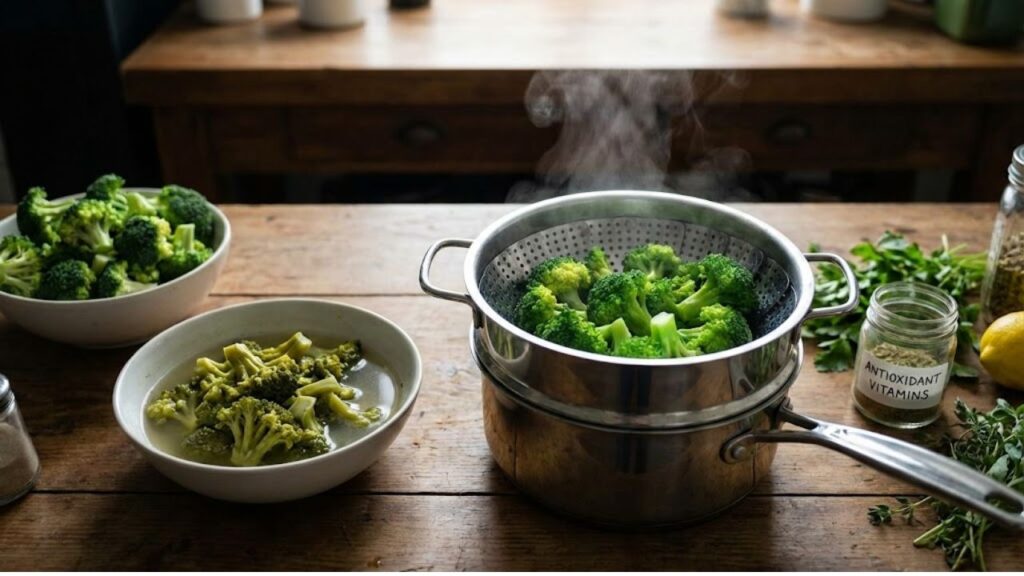
The key to keeping broccoli crunchy, flavorful, and rich in vitamins lies in using gentle steam for a short time. This method is simple, effective, and far superior to boiling, microwaving, or overbaking your broccoli. Here’s how to do it:
- Cut the broccoli into medium florets, trying to keep them the same size.
- Bring a small amount of water to a boil in a pot and set a steamer basket on top.
- Place the broccoli into the steamer basket, cover, and steam for 4 to 5 minutes.
The goal? Bright green, tender broccoli that’s still slightly crisp when you bite into it. It’s easy to overcook, so here’s a tip: start tasting at minute three. Take a floret out, rinse it under cold water, and bite into it. If it offers a bit of resistance but doesn’t squeak between your teeth, you’re nearly there. Stop cooking just before it feels fully done—the residual heat will carry it the rest of the way.
Make It Even Better with These Tips
Short steaming has been shown to preserve more vitamin C and antioxidants than boiling, and may even enhance the formation of beneficial compounds like sulforaphane. Plus, you can further boost the effects with a few additional steps:
- Let the broccoli sit for about 30 minutes before cooking to activate the enzyme that forms sulforaphane.
- Keep the lid on while steaming to preserve moisture and nutrients.
- Finish with a drizzle of olive oil and a squeeze of lemon for added antioxidants and flavor.
With these small adjustments, you turn a simple side dish into a powerhouse of nutrition, without overhauling your entire routine.
Why People Actually Want to Eat Broccoli
Now picture the same dinner scene, but with a change: the broccoli arrives on the table vibrant green, glistening with a light drizzle of olive oil. When you bite into it, there’s a satisfying crunch, and the sweet-nutty flavor is a far cry from the overcooked cabbage taste. What happens next? People actually go back for seconds. You’re no longer forcing yourself to “eat healthy.” Instead, you’re enjoying your plate, and the antioxidants, vitamin C, folate, and other beneficial compounds are quietly working in the background.
Some nights, you’ll still boil it, or throw a few raw florets into a salad when you’re in a rush. That’s real life, and it’s okay. The key isn’t perfection; it’s about shifting the balance. If most of the time your broccoli is lightly steamed, rather than overcooked or left raw, you’re winning. Over time, this small shift adds up: better digestion, more energy from micronutrients, and less food waste.
Broccoli nutrition might sound technical—sulforaphane, glucosinolates, myrosinase—but its impact shows up in everyday moments. A child who suddenly accepts “the green stuff” because it tastes good, a lunchbox that comes home empty, or an adult who notices feeling lighter after meals. It’s a small, often invisible choice, but it makes a big difference in long-term health and family routines.
It’s not a miracle technique or a secret known only to chefs. It’s just a short burst of steam, a little timing, and the decision to let broccoli be itself, rather than fighting it with boiling water or leaving it completely raw.
| Key point | Detail | Value for the reader |
|---|---|---|
| Optimal cooking method | Short steaming (3–5 minutes) preserves vitamin C and antioxidant activity far better than boiling | More nutrients from the same portion of broccoli, without changing what you eat |
| Preparation trick | Cut broccoli 30 minutes before cooking to activate enzymes that boost protective compounds | Simple habit that increases the vegetable’s health power with zero extra cost |
| Flavor and texture | Bright green, slightly crisp florets, finished with olive oil and lemon | Broccoli that people actually enjoy, making healthy eating easier to sustain |