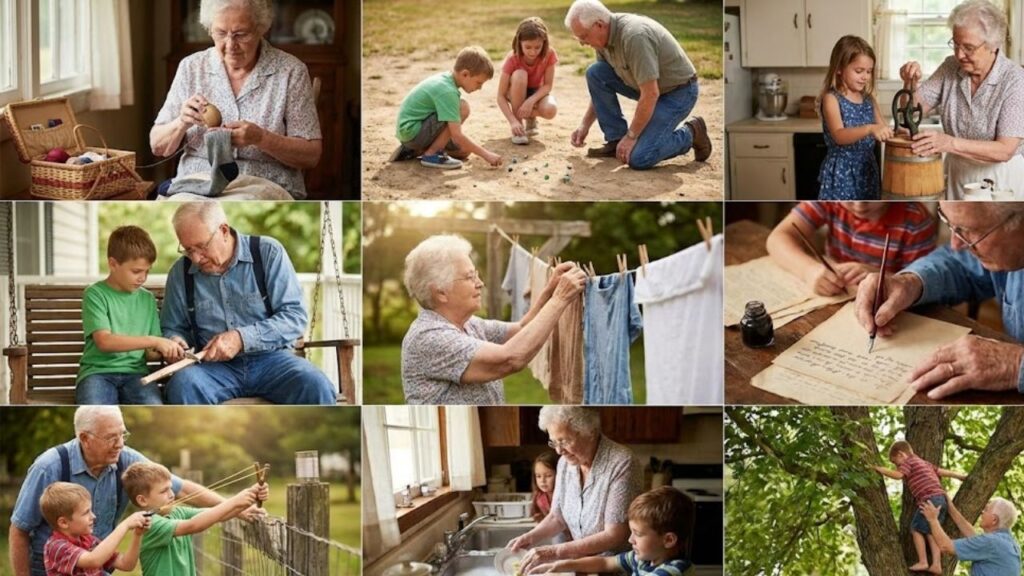
When talking to today’s grandparents, you often hear a mix of pride and unease. They remember growing up in an era that was tougher in some ways, but freer in others. Their days were filled with simple, daily lessons that helped shape who they became, and many believe that children today miss out on those formative experiences.
A Generation Shaped by Different Expectations
For people now in their 60s, 70s, and 80s, growing up often meant living with fewer material comforts, little to no technology, and far greater responsibility. They were trusted at a younger age, expected to pitch in at home, and took on family duties well before they were teenagers. Unlike today’s children, who are constantly under the watchful eye of adults, this generation learned how to manage independently at a young age, with little concern about the “dangers” that now dominate parenting fears.
The Decline of Basic Life Skills
While it may seem like technology is the biggest difference between generations, it’s more about the life skills that were once taken for granted. These simple lessons taught children the importance of self-reliance, punctuality, and being part of a community. Unfortunately, many of these lessons are no longer a priority in today’s fast-paced, tech-driven world. Children today often miss out on key experiences that help build confidence, patience, and a sense of belonging.
Walking or Cycling to School Alone
In the past, the school run was not a rushed event, but a solitary or group journey, made on foot or by bike. It taught children punctuality, resilience in all kinds of weather, and an early understanding of safety in their neighborhood. Today, however, many parents feel uncomfortable letting their children walk alone, especially in quiet neighborhoods. The danger from traffic, strangers, and the sheer busy nature of modern life have made such solo walks seem too risky. Yet, grandparents often point to these experiences as crucial in shaping their sense of independence and responsibility.
Earning Pocket Money through Chores
Another lost tradition involves earning pocket money by doing chores around the house. In the past, children knew they had to mow the lawn, wash the car, or do the dishes if they wanted to earn their allowance. This practice helped develop a sense of responsibility and understanding of how effort translates into reward. Today, children are often given money freely, without needing to work for it. While this generosity can be well-meaning, it misses an opportunity to teach valuable lessons about saving, patience, and the satisfaction that comes from hard work.
Handwritten Letters and Thank-You Notes
Before the advent of messaging apps, communication was slower but more thoughtful. Writing thank-you notes or staying in touch with family through handwritten letters was a key part of childhood. Children were taught the basics of cursive handwriting, how to structure a letter, and the importance of showing appreciation through personal, thoughtful communication. Today, a quick text or emoji suffices for many, leaving little room for the same sense of connection. Some grandparents continue to encourage their grandchildren to write handwritten cards, hoping to preserve this personal, meaningful tradition.
Doing Their Own Laundry
By their early teens, many children were expected to take care of their own laundry – washing, drying, and folding their clothes. They learned about responsibility and the basics of caring for their belongings, including the occasional mistake like shrinking a favorite sweater. In today’s busy world, parents often handle laundry themselves, leaving children unaware of how to operate a washing machine or how to care for their clothes. This has led to a lack of basic independence when children head off to university or start living on their own.
Queuing Without Complaints
In the past, standing in line was a part of daily life – whether at the bank, the post office, or for bus passes. Children learned the importance of patience as they waited, sometimes for long periods, with nothing to distract them but their thoughts or conversation with an adult. This taught children that not everything arrives on demand, and helped build the ability to deal with boredom and frustration. Today, people often fill even the shortest wait with their phones, which alleviates boredom but doesn’t help build patience or social skills.
Repairing Before Replacing
When something broke in the past, the first instinct was often not to throw it away, but to fix it. Broken furniture, torn clothes, and faulty appliances were seen as opportunities to learn the value of repair. Children grew up learning how to use tools, sew, or patch things up rather than replacing them. Today, however, many modern products are disposable, and the idea of fixing something often seems less practical, contributing to rising waste and a loss of basic repair skills.
Wearing Hand-Me-Downs and Second-Hand Clothes
Children growing up in earlier decades often wore clothes handed down from older siblings or cousins, or bought second-hand. This helped develop a sense of appreciation for what they had, rather than always chasing after the latest trends. These habits not only taught gratitude but also contributed to sustainability by extending the life of clothing. While second-hand shopping is making a comeback due to environmental concerns, for many, it’s still an idea that feels foreign, even though it’s one that grandparents may fondly remember as a practical necessity.
Quiet Time for Reading or Doing Nothing
There was a time when quiet time was built into every day. Whether it was after lunch, before tea, or on Sunday afternoons, children were encouraged to enjoy a period of silence, away from the noise of the television or other distractions. They spent this time reading, drawing, or simply daydreaming. In today’s world, constant background noise from devices has made it harder to find moments of quiet, yet many grandparents fondly remember these times of reflection and creative solitude as an essential part of their childhood.
| Old‑style quiet time | Typical benefit |
|---|---|
| Reading comics or books | Builds focus and imagination |
| Journalling or drawing | Supports emotional expression |
| Staring out of the window | Encourages creativity and problem‑solving |
Checking in on Neighbors and Extended Family
Perhaps one of the most striking differences that seniors remember is the sense of community. Children were often tasked with checking in on neighbors or dropping off food for a sick family member. Neighbors knew each other’s routines and looked out for one another. Today, while digital platforms allow us to connect instantly with far-flung relatives, many don’t even know the names of their neighbors. Grandparents who grew up with this close-knit sense of community are now trying to revive these habits by involving their grandchildren in visiting neighbors and staying connected to the wider community.
What These Old-Fashioned Skills Teach
Psychologists have identified three key traits that help children thrive: autonomy, competence, and connection. Many of the skills that seniors remember from their childhood, like walking alone, doing chores, and communicating through handwritten letters, quietly helped develop these qualities. Autonomy was built through small, independent tasks. Competence grew from learning how to handle challenges like repairs and queuing. Connection was fostered through checking in on neighbors and contributing to family responsibilities. These are the qualities that support well-rounded, confident, and compassionate individuals.
Practical Ways Grandparents Can Share These Lessons
Grandparents often wonder how they can pass on these important lessons without clashing with modern parenting rules or the current pace of life. Here are some ideas: Set up a “repair workshop” and show grandchildren how to fix things. Offer pocket money for a manageable chore, helping them learn the value of effort. Walk the school route together and discuss safety decisions. Create a “quiet half hour” for reading or drawing. Write a short letter to your grandchild, inviting a handwritten reply. Even in a fast-paced, digital age, children still value these slower rituals and often carry these lessons with them into adulthood.