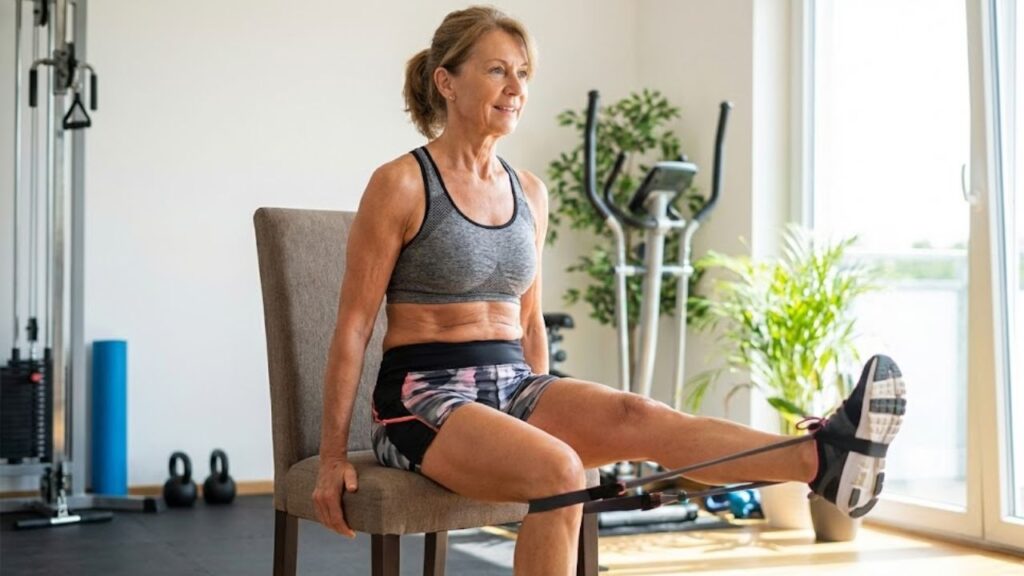
Hip strength is one of the most overlooked elements of healthy aging. With nearly four decades of experience helping older adults improve movement and function, one pattern shows up repeatedly: people underestimate how much hip mobility and hip stability influence daily life. As we age, keeping the hips strong and mobile becomes a key advantage, affecting balance, comfort, and independence. The encouraging part is that improving hip function does not require a gym, equipment, or even standing. A simple 8-minute chair routine can target the muscles that weaken over time, making it possible to start rebuilding strength right from your living room.
How Weak and Stiff Hips Quietly Limit Everyday Movement
Across years of training experience, the same issues appear again and again. The hips gradually become tight and weak, slowly losing natural range without obvious warning signs. Simple tasks begin to change. Getting out of a car feels awkward, shoes become harder to put on, and stairs demand more effort. Often, people notice these changes only once they start interfering with daily routines. Walking patterns shift as stride length shortens, balance becomes less reliable, and the body compensates in ways it was never designed to handle.
The Three Hidden Causes Behind Most Hip Problems
Hip limitations rarely come from a single issue. Instead, three factors usually combine. First, front hip muscles shorten from prolonged sitting. Second, glute muscles weaken due to underuse. Third, the small muscles responsible for hip rotation lose strength and flexibility. Together, this creates excess strain on the lower back, reduced power during movement, and difficulty turning or stepping sideways. While many accept this as normal aging, most of these problems are actually caused by lack of movement, not unavoidable decline.

Seated Knee Lifts
This movement directly strengthens the hip flexors while maintaining core control. Performing it seated removes balance concerns, allowing full focus on hip engagement.

- Muscles trained: Hip flexors, core
- Sit near the front of the chair with feet flat and hip-width apart.
- Maintain an upright posture with a tall spine.
- Lift one knee toward the chest in a slow, controlled motion.
- Hold briefly, then lower with control and switch legs.
Recommended volume: 20 reps per leg (2 minutes total)
Seated Leg Pushes
This exercise targets the outer hip muscles and glute support needed for side-to-side stability. These muscles help prevent swaying during walking and are often the first to weaken.
- Muscles trained: Hip abductors, glutes
- Sit upright with feet together and knees bent.
- Slowly move one knee outward while keeping the foot grounded.
- Pause briefly, then return to center with control.
Recommended volume: 15 reps per side (2 minutes total)
Seated Hip Press Backs
This movement reactivates the glute muscles and retrains backward hip motion essential for walking and standing. Many glutes become inactive from prolonged sitting, and this exercise helps restore their function.
- Muscles trained: Glutes, hip extensors
- Sit toward the front of the chair with a straight back.
- Lift one foot slightly and press the leg backward.
- Squeeze the glutes, then return slowly.
Recommended volume: 15 reps per leg (2 minutes total)
 What psychology reveals about people who feel emotionally drained after small social interactions
Seated Hip Rotations
Hip rotation is essential for smooth turning and directional changes. This exercise restores rotational mobility that commonly fades with time.
- Muscles trained: Internal and external rotators
- Lift one foot slightly off the floor.
- Rotate the leg inward, then outward from the hip joint.
- Keep movements slow and controlled.
Recommended volume: 10 rotations each direction per leg (1.5 minutes total)
Seated Hip Circles
This exercise combines all hip movements into one fluid pattern, improving joint awareness and highlighting areas of stiffness.
- Muscles trained: Entire hip complex
- Lift one foot and draw slow circles with the knee.
- Move forward, outward, backward, and around.
- Reverse direction after several repetitions.
Recommended volume: 5 circles each direction per leg (30 seconds total)
When Medical Guidance Is Important
Individuals with a hip replacement, recent injury, or worsening pain should seek medical advice before starting. Those with severe arthritis, balance issues, or existing pelvic or lower back conditions may need exercise modifications. Any sharp pain, swelling, or night discomfort should be professionally assessed to ensure safety.
How to Choose the Right Chair
A stable chair is essential. A firm dining chair without wheels works best. Feet should rest flat on the floor with knees close to a right angle. If the chair is too high or too low, simple adjustments like foot support can help. No additional equipment is required—your body weight resistance is enough to begin.
 Awake Look Hack: The Subtle Eyebrow Adjustment Makeup Artists Use for Instantly Brighter Eyes
What Changes to Expect After 4–6 Weeks
With consistent practice, movements become smoother and easier within the first week as neuromuscular control improves. By two weeks, everyday tasks like standing up or putting on shoes feel less demanding. After four weeks of regular sessions, walking becomes more fluid, balance improves, and turning movements feel natural again. By six weeks, noticeable gains in hip strength, flexibility, and comfort often appear, reducing compensatory pain patterns and restoring lost function through steady, realistic progress.