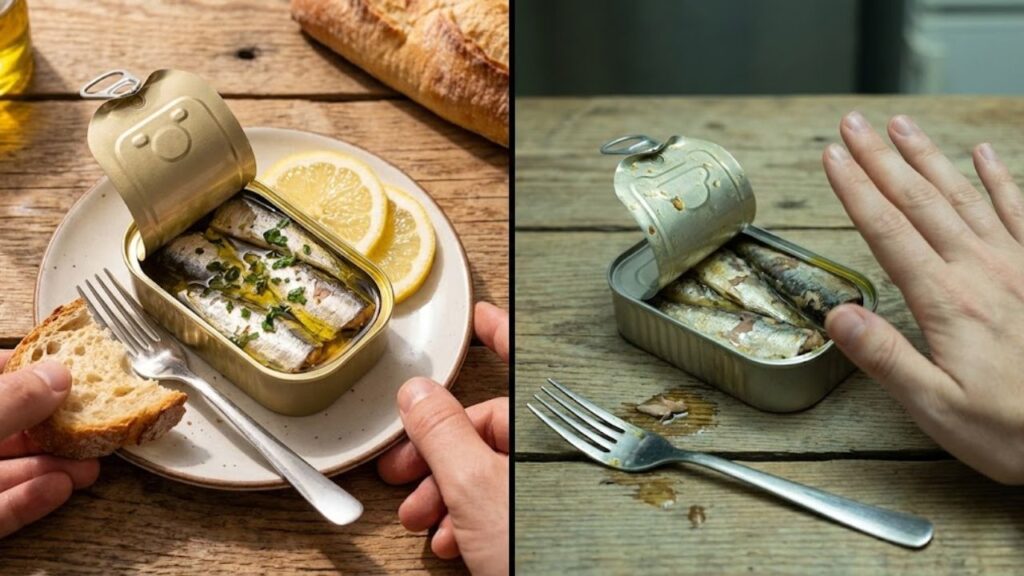
The can opened with a soft metallic hiss, filling the kitchen with the unmistakable scent of low tide. My friend Laura’s face twisted in horror as I eagerly eyed the shiny canned sardines lined up on my toast. She recoiled, exclaiming, “You’re seriously eating that?” as if I had just cracked open a jar of formaldehyde. But I didn’t mind; with a squeeze of lemon, a dash of chili flakes, and one hearty bite, I found it salty, rich, and oddly comforting. The divide was clear: two people, one can of fish, and a room filled with contrasting opinions.
The Sardine Debate: Love or Loathe?
Sardines seem to have a knack for triggering strong reactions. Some swear by them as the ultimate health food, claiming they are the cheapest, most accessible form of health insurance. Others, however, regard them as little more than a smelly gimmick hidden behind a vintage label. These tiny fish, packed in their small, rectangular tins, manage to evoke passion like no other food.
Why Sardines Stir Such Strong Emotions
Walk through any supermarket, and you’ll find them nestled between tuna and mackerel, usually with their old-school, retro labels. Sardines, once considered a cheap pantry staple for our grandparents, are now popping up everywhere — from wellness TikTok to trendy cafés serving them on artisan sourdough toast. But despite their newfound popularity, many still find the smell, the bones, the skin, and the very “fishiness” of sardines too much to handle. Part of this division stems from how we first encounter sardines. For some, they are a nostalgic holiday treat in places like Portugal or Spain, enjoyed grilled on vacation. For others, they’re a last-ditch pantry item, eaten out of necessity rather than desire.
Nutrition in a Tin: The Hidden Benefits
Regardless of your stance, one thing is undeniable: sardines pack a powerful punch when it comes to nutrition. A typical 100g serving provides over 20g of protein, a rich dose of omega-3 fatty acids, and a healthy amount of calcium thanks to their tiny edible bones. They are also loaded with vitamin D, B12, iron, and selenium, making them a mini multivitamin in a can. With fewer contaminants than larger fish like tuna, sardines are a nutrient-dense, budget-friendly option that’s often cheaper than a latte.
How to Enjoy Sardines Without the Discomfort
If your first encounter with sardines involved eating them straight from the can over the sink, it’s no wonder they left a bad taste. But there’s a better way to enjoy them. First, opt for sardines packed in olive oil instead of water, as they tend to be milder and richer. Open the can, drain a bit of the oil, and add fresh ingredients like lemon juice, parsley, and capers. Spread them over hot toast, and you’ll feel closer to a rustic tapas bar than to a sad pantry snack.
Adjusting to the Texture and Appearance
Another common mistake is forcing yourself to face the full fish right away. While the heads might be missing, the visible spine and silvery skin can be enough to make anyone turn away. Try gently removing the bones with a knife and keep just the soft fillets. Alternatively, mix mashed sardines into a pasta sauce or a chickpea salad, adding lemon and herbs to balance the flavors. The goal is to get the nutrients without the psychological barrier of “eating a whole fish.”
Building a Better Relationship with Sardines
Over time, enjoying sardines becomes less about taste and more about breaking through the stigma. A chef in Lisbon shared that sardines are “humble,” and people are often uncomfortable with humble foods. They crave more glamorous options like salmon or sushi, rather than the fish their grandfather might have eaten after a long shift. The secret to learning to love sardines is to treat them as a quick, accessible protein option, not as a high-end delicacy. Pair them with fresh, acidic flavors like lemon, pickles, and crunchy vegetables. And most importantly, accept that the smell is part of the deal—open a window, and move on.
The Divide: A Tale of Two Sardine Narratives
Ask two people sitting at the same table about the contents of a sardine can, and you’ll get completely opposite stories. Some see it as a miracle of modern food: affordable, nutritious, and practical, a true safety net for tight weeks. Others feel it’s a low-cost product marketed as a superfood by influencers, who enjoy fresher, more expensive options. It’s the same product, but the stories we tell ourselves about it couldn’t be more different.
| Key Point | Detail | Value for the Reader |
|---|---|---|
| Choose your can wisely | Look for sardines in olive oil, with short, clear ingredient lists and sustainably caught labels | Better taste, fewer unpleasant surprises, and a bit more trust in what you’re eating |
| Use them as an ingredient | Mash into sauces, salads, or spreads rather than eating them plain at first | Gentler introduction for skeptical eaters, with most of the nutritional benefits |
| Reframe the “cheap” image | See sardines as accessible, nutrient-dense protein instead of “poor food” | Less shame around budget-friendly choices and more freedom to eat what nourishes you |