
Fluorescent lights, a faint smell of disinfectant, and a long wall of moisturisers staring back at you like a glossy, silent jury. One tub is £5, another is £55, both claiming “deep hydration” and “barrier support”. A teenager in a school blazer grabs the cheapest one and walks off. Next to you, a woman in a cashmere coat hesitates, then takes the luxury jar with the gold lid.
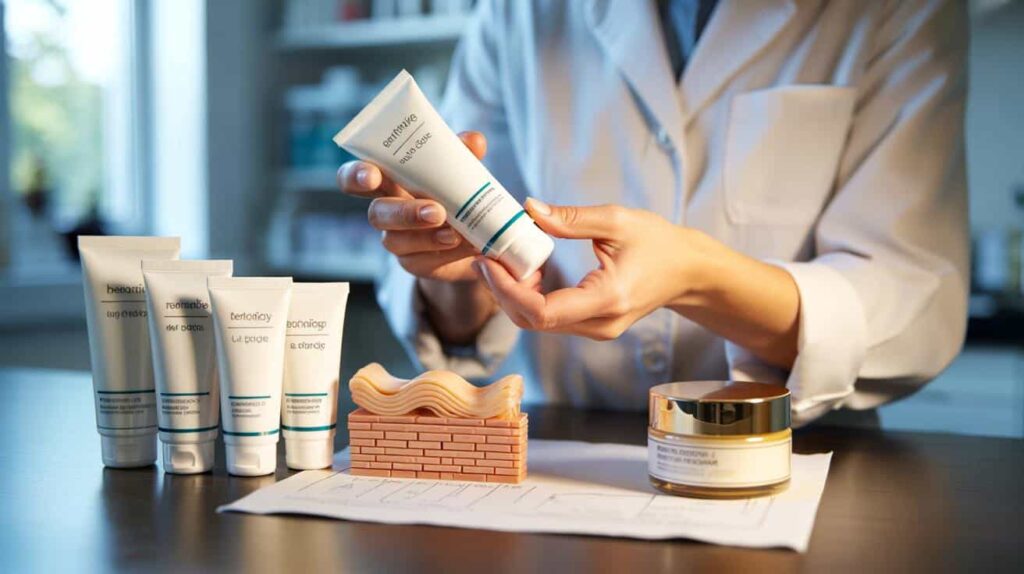
You stand there, stuck between marketing and your bank balance. Your skin is tight from the office air-con, your phone is full of targeted ads, and the voice in your head whispers that the expensive one is probably “better”. A dermatologist passing by would disagree. For them, the label on the front barely matters.
They’re looking for something very different.

Why dermatologists secretly love “boring” creams
Ask three dermatologists to name their favourite moisturiser and you’ll often get the same awkward pause. Not because they don’t know, but because their real answer isn’t sexy: they like the simple, “ugly” ones. White tubs. Pharmacy brands. No perfume, no shimmer, no glass bottle that looks good on Instagram. When they look at a product, they’re not asking, “Will this look cute on my sink?” They’re asking, “Will this calm a damaged barrier at 2am in A&E?”

That’s the quiet truth behind a lot of “#1 ranked” budget moisturisers you see trending. They weren’t built to be glamorous. They were built to work on angry, inflamed, stressed-out skin. A dermatologist doesn’t care about your bathroom shelf aesthetic. They care if the cream can hold water in the top layers of the skin, patch the microscopic cracks, and not start a firestorm of irritation.
Numbers back that up. In UK clinics, doctors still reach for pharmacy classics that have been around for years. Ceramide-rich creams, plain glycerin lotions, petrolatum-based ointments — the kind you could easily overlook because the packaging feels outdated next to K‑beauty glass and “clean” branding. Yet when you trace the ingredients in some cult luxury creams, you’ll find the same barrier heroes, just dressed up with fragrance, a plant extract or two, and a zero added to the price. It’s not that luxury never works. It’s that the “magic” is often the same humble molecules you can find in a £7 tube.
The logic from the dermatologist’s side is brutally simple: your skin barrier is a brick wall. The cells are the bricks, lipids are the mortar. Every time that wall is cracked — through over-exfoliation, harsh cleansers, pollution, winter heating — moisture leaks out and irritants sneak in. A good moisturiser does three jobs: pulls water into the skin (humectants like glycerin, hyaluronic acid), traps it there (occlusives like petrolatum, squalane), and replaces missing lipids (ceramides, cholesterol, fatty acids). Branding, “skinimalism”, ocean-inspired stories… none of that changes whether those three jobs get done. That’s what dermatologists are ranking when they say a budget cream is “number one”.
How to shop like a dermatologist with a high-street budget
First quiet trick: flip the tube. Forget the front claims for a moment and go straight to the ingredients list. Scan, almost like a grocery list, for a few repeat names: glycerin near the top, ceramide NP/NG/AP, cholesterol, niacinamide, petrolatum, dimethicone, squalane. If you can spot at least two of those in the first half of the list, you’re usually in safe, barrier-friendly territory. Long, unpronounceable names aren’t automatically bad. Short lists aren’t automatically good.
Second trick: choose texture based on how your face actually behaves at 3pm, not how you wish it behaved. Oily or acne-prone? Go for a gel-cream with humectants and light emollients, labelled non-comedogenic, fragrance-free. Dry or eczema-prone? Look for a thicker cream or balm with ceramides and occlusives. Night shifts, retinoids, or radiation therapy in the mix? That’s when plain, rich creams from the pharmacy suddenly become priceless allies. *The right moisturiser should feel boring five minutes after you put it on — as if your skin just exhaled and then forgot about it.*
On a human level, this is where things get messy. On TikTok and Instagram, the moisturisers that go viral are the ones that drip, glow, sparkle. The “most-loved” badges, the frosted glass jars, the spatulas you’ll lose within 48 hours. On a dermatologist’s desk, the favourites are often squat white pumps and dented tubes with half-worn labels. On a bathroom shelf in a shared London flat, you’ll see both: a £60 moisturiser bought on payday, next to a £4 pharmacy cream someone’s mum recommended. One is there for the fantasy. The other quietly rescues the skin when the fantasy stings.
We all know the emotional tug. That tiny feeling that a more expensive cream means you’re taking better care of yourself. Online, it’s easy to forget that many of the moisturisers dermatologists genuinely love are under £15 and have names your algorithms don’t bother pushing. *On a purely barrier level, skin doesn’t know the price tag. It only knows if the wall is repaired or left full of holes.* Worry less about the marketing story and more about how red, tight or calm your skin feels an hour later. That’s the only review your barrier is leaving.
Real‑world rules that actually protect your barrier
The simplest, most dermatologist-approved method is almost boring: gentle cleanse, moisturise on damp skin, then SPF in the morning. At night, gentle cleanse, moisturise, sleep. That’s the skeleton. If your barrier’s already cranky — stinging, flaking, shiny but tight — they’ll often tell you to strip the routine back to two products: a bland cleanser and a repairing moisturiser. No actives for a week or two. Let the wall rebuild. Think of it as skin rehab.

One practical move is timing. Put your moisturiser on within 60 seconds of cleansing. Your skin is slightly more permeable then, and humectants have water to grab. If you’re using a powerful active like retinoids or acids, many dermatologists suggest a “moisturiser sandwich”: moisturiser, then your active, then another layer of moisturiser on top. It softens the blow without cancelling the benefits. It’s the same principle A&E doctors use with patients on drying acne meds, just adapted to a bedroom mirror instead of a hospital ward.
On a kind note, most of us are doing at least one thing that makes our moisturiser’s job harder. Over-cleansing is the big one: washing three, four times a day, or using foaming, squeaky-clean gels meant for teenage acne on a stressed adult face. Another slow saboteur is chasing “tight” or “matte” as a daily baseline. That tight feeling after cleansing? That’s often micro-damage, not freshness. Soyons honnêtes : personne ne fait vraiment ça tous les jours, cette routine parfaite racontée sur YouTube, masque, toner, sérums, massages.
Dermatologists also see the fallout of product hopping. A cream barely gets two weeks of use before being replaced by the next “#1 moisturiser” on social. Barrier repair takes time; trend cycles do not. If a budget moisturiser with ceramides and glycerin isn’t burning, itching, or breaking you out in the first week, many doctors would quietly tell you: stay with it for a month, at least. Your barrier wants stability more than excitement.
“Patients often apologise for using ‘cheap’ moisturisers,” one London dermatologist told me in clinic. “I usually tell them: if it’s fragrance-free, has ceramides or glycerin, and your skin likes it, that’s good medicine. I reach for those same products every day at work.”
There are a few patterns that come up again and again in expert advice and patient stories:
- Fragrance-free usually wins for sensitive or acne-prone skin, especially around the eyes and mouth.
- Ceramides + glycerin are the backbone of many “derm-approved” budget creams that quietly top real-world rankings.
- Simple routines work best when your barrier is damaged: one gentle cleanser, one solid moisturiser, daytime SPF.
This is the unglamorous reality behind all the glossy “top 10 moisturiser” lists. The winners in dermatologist offices are rarely the jars that trend. They’re the ones that don’t sting when applied to chapped cheeks in January, or to skin that’s been fried by a retinoid experiment gone wrong. They’re the tubes nurses hand to patients after procedures. They’re the tubs your friend with eczema swears by, even if the branding looks like it hasn’t been updated since 2004.
Where this leaves your face — and your wallet
Once you see moisturisers through that barrier-first lens, the whole shelf changes. The £70 “marine hydration cream” becomes: humectants, silicones, soft fragrance, packaged story. The £9 pharmacy cream becomes: ceramides, petrolatum, glycerin, slightly clunky tub. One is an experience, the other is infrastructure. Neither is automatically evil or holy. The question quietly shifts to: what does your skin actually need this month? Deep repair after an overzealous acid phase? Or just a decent daily buffer against heating and city air?
We’ve all had that moment where the “fancy” cream made things worse and the cheap, almost clinical one calmed everything down overnight. It’s humbling. It also explains why dermatologists tend to sound like broken records about barrier care. When they rank budget moisturisers as “number one”, they’re usually rewarding the brands that stuck to that repair formula and didn’t get distracted by trends. The same short list of barrier‑loving ingredients comes up again and again — just in different tubes, textures, and price points.

This way of looking at moisturisers is oddly freeing. You can still enjoy a beautiful jar or a luxury texture if that’s part of your self-care ritual. You can also drop a tenner at Boots and know you’re giving your skin almost exactly what a consultant might recommend in a hospital. The front labels will keep shouting about glow, youth, and radiance. The quiet, unlabelled question dermatologists are asking stays the same: “Is this helping the wall?” Once you start asking it too, your bathroom shelf — and your spending — begins to look very different.

| Point clé | Détail | Intérêt pour le lecteur |
|---|---|---|
| La barrière avant la marque | Les dermatos évaluent un soin sur sa capacité à réparer et protéger la barrière cutanée, pas sur son positionnement luxe. | Permet de choisir un hydratant efficace sans suivre le prix ou le prestige. |
| Ingrédients “humbles” gagnants | Céramides, glycérine, niacinamide, pétrolatum, squalane structurent la majorité des crèmes réellement efficaces. | Aide à lire les listes INCI et repérer les bons produits au supermarché ou en pharmacie. |
| Routine simple, peau plus stable | Nettoyant doux + hydratant adapté + SPF suffisent à protéger la barrière la plupart du temps. | Réduit les dépenses inutiles et limite les irritations dues à la surconsommation de produits. |
FAQ :
- How do I know if a budget moisturiser is actually “derm-approved” in spirit?Check for fragrance-free or very low fragrance, presence of humectants (like glycerin), and barrier lipids (like ceramides), plus a texture that feels comfortable rather than tight or burning.
- Are luxury moisturisers always a waste of money?Not always; some have excellent formulas, but the core hydrating ingredients are often similar to cheaper options, so you’re mostly paying for texture, packaging and marketing.
- My skin stings when I apply moisturiser — what does that mean?Stinging can be a sign of a damaged barrier or irritation to fragrance or actives; switching to a bland, fragrance-free cream and pausing strong actives usually helps.
- Can oily or acne-prone skin skip moisturiser?No, oily skin still needs lightweight hydration to support the barrier; skipping it can push the skin to produce even more oil and worsen breakouts.
- How long should I test a new moisturiser before deciding it “doesn’t work”?If there’s no burning or breakout, give it 3–4 weeks; barrier repair and texture changes are slow, and constant swapping makes it harder to see real results.
