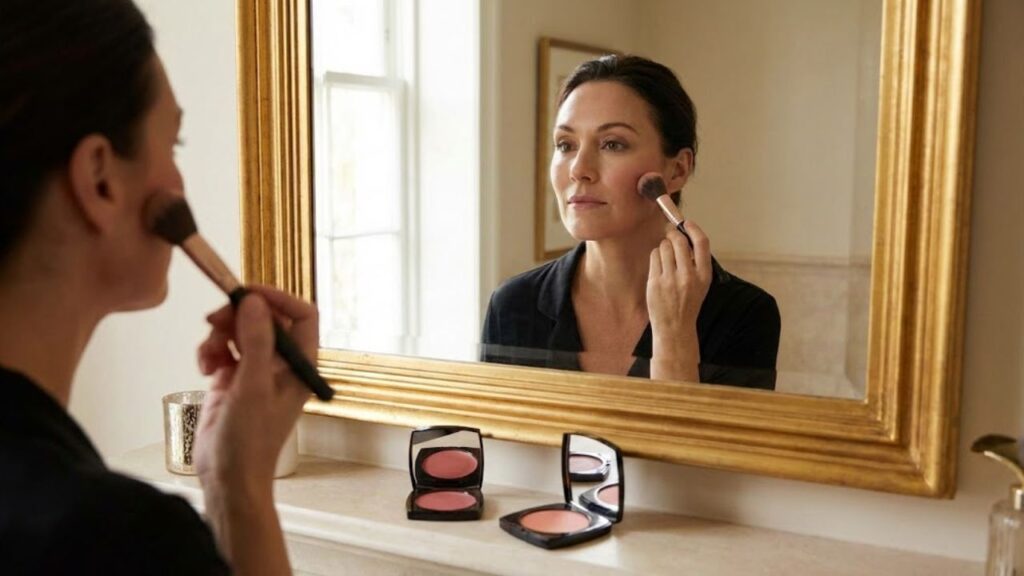
The woman studying her reflection in the bathroom mirror looks almost the same as she did at 25, but not entirely. Her cheeks sit a touch lower now, and the rounded fullness that once lifted when she smiled blends more softly into her jawline. She reaches for her familiar blush brush and follows her long-standing habit, smiling and dusting color onto the apples of her cheeks. Then she pauses. Instead of looking fresh, her face appears slightly droopy. The shadows under her eyes deepen, and the center of her face looks fuller than before. She wipes the blush away and tries again, this time placing it just a little higher. Suddenly, her cheekbones stand out. Her face looks lifted, her eyes brighter and more awake. The blush is the same. She is the same person. The only difference is where the color was applied.
Why Classic Blush Techniques Stop Working After 30
There’s a subtle stage in life when your makeup routine begins to feel off, even though nothing obvious has changed. You keep using the same techniques that worked for years, yet the results no longer look right. Blush is often the first giveaway. Applied low and round, it can make a 32-year-old look tired by afternoon. The shade that once looked fresh on the apples of the cheeks now settles closer to soft lines around the nose and mouth. Instead of shaping the face, it emphasizes areas you’d rather downplay. At this point, placement becomes more important than the product itself.
A London makeup artist once shared that she can often guess someone’s age simply by watching how they apply blush. Younger faces place it right in the center of the cheeks, almost instinctively. Many people continue this habit into their thirties, even though their facial structure has shifted. She recalled two sisters, aged 28 and 38, with similar skin tones using the same products. On the younger sister, blush on the apples brightened her whole face. On the older sister, that same placement made under-eye hollows more noticeable. When the artist moved the blush higher, toward the temples, the 38-year-old instantly looked rested. The color redirected attention to her eyes and cheekbones rather than the center of her face.

The explanation is simple. After 30, your bones stay the same, but the fat beneath the skin begins to move downward. The roundest part of the cheek drops slightly, yet muscle memory still guides your brush to where that fullness used to be. Placing blush there can make the face appear heavier. Move it up and outward, and the face looks lifted. You’re not changing your features, only changing where the eye is drawn first.
The Modern Blush Placement That Creates a Natural Lift
The blush technique appearing everywhere right now is surprisingly easy. Instead of smiling and applying color to the apples of your cheeks, keep your face relaxed and look straight ahead. Imagine a diagonal line running from the top of your ear toward the side of your nostril. Apply blush along the upper half of that line, closer to the ear than the nose. The shape should form a soft, slanted C that curves gently toward the outer corner of your eye. Blend upward into the temples, allowing the color to fade naturally toward the hairline.
For most people over 30, this placement instantly reveals cheekbones they may have forgotten about. One small detail makes an even bigger difference. Leave a clean gap between your under-eye area and where the blush begins. About a finger’s width of bare skin prevents color from settling into fine lines or emphasizing dark circles. If you want a subtle flush, you can add a tiny touch of blush across the bridge of the nose, but keep the main color high and toward the outer face.
Many people worry about looking overdone, and that concern is valid. Heavy blush placed too low can create an unflattering, flushed effect. That’s why placement matters more than quantity. Start with less product than you think you need. Tap it on instead of sweeping. Build the color gradually in light layers. Cream and liquid formulas often suit mature skin better because they melt in rather than sitting on top. In real life, mornings are rushed. Remember one simple rule like “higher and further back”, and let the rest go.
Key Blush Placement Guidelines to Keep in Mind
- Think diagonally rather than applying blush in a round spot on the cheek.
- Keep the strongest color away from the nose and mouth area.
- Blend upward toward the temples to create a lifting effect.
- Choose cream or liquid formulas if powder settles into texture.
- Reassess placement over time, as faces naturally change with age.
Why Blush Becomes a Quiet Confidence Reset Over Time
There’s something quietly powerful about changing how you apply a product you’ve used for years. It’s an acknowledgment that your face has evolved and a decision to work with it, not against it. A simple diagonal sweep becomes a small agreement with time. People often say they look tired or unlike themselves. In many cases, it’s not their features that have changed dramatically, but how light and shadow move across the face. Shift the color, and you shift the light.
That’s why this adjustment feels almost philosophical. The map you draw on your skin influences the story your face tells before you speak. Remapping blush won’t erase every surprise reflection, but it can soften it. The right placement quietly says you’re still there. It doesn’t pretend you’re 22, but it highlights the structure and expression you’ve gained without pulling everything downward. Once you see the difference, it’s hard not to share it. Blush becomes less about trends and more about understanding your own facial architecture. Sometimes, all it takes is moving what you already own a few millimeters upward.
Practical Placement Principles and Visual Benefits
- Raise the application area: Apply blush above the ear-to-nose axis toward the temples for a natural lifting effect.
- Preserve under-eye space: Leave about one finger’s width of bare skin to soften the appearance of dark circles and fine lines.
- Favor angled blending: Diffuse blush diagonally instead of in circles to refine facial contours after 30.