Most of us focus on locks, alarms and cameras, but overlook something far simpler: whether the bedroom door stays open or shut while we sleep. Fire brigades, security experts and even psychologists say that choice shapes not only physical safety, but also how deeply we rest.
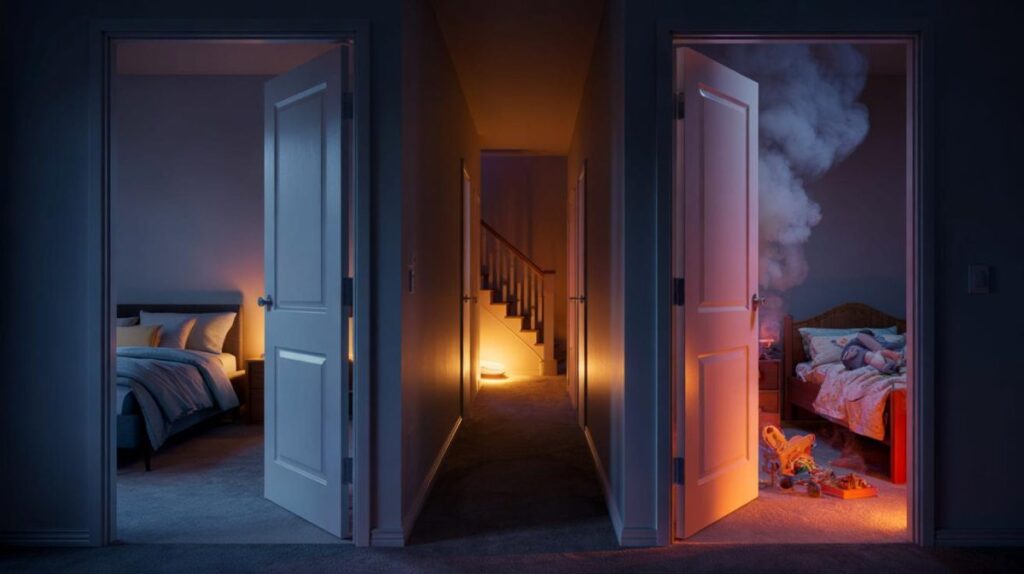
Why the bedroom door at night is a life-or-death detail
If a fire starts in the kitchen or living room at 2am, the flames are rarely the first thing that reaches the bedroom. It’s heat, toxic smoke and poisonous gases that spread fastest through a home.
Closing a bedroom door can slow fire and smoke for precious minutes, often making the difference between escape and tragedy.

Modern homes burn differently from those of a generation ago. Lightweight furniture, plastics and synthetic fabrics release intense heat and thick, black smoke in minutes. In tests carried out by fire safety organisations in the US and Europe, rooms with closed internal doors stayed dramatically cooler and clearer for longer than those with doors left open.

That delay gives sleeping people extra time to wake up, understand what is happening and find a way out. Firefighters repeatedly describe arriving at burned-out houses where a single closed bedroom door preserved a habitable pocket of air for those inside.
What really happens during a night-time house fire
Most fatal home fires break out at night, when people are slow to react and visibility is low. Understanding the chain of events shows why that door matters so much.
- A small fire starts in another room – often kitchen, living room or near overloaded sockets.
- Smoke and super-heated gases rise and look for every gap, stairwell and doorway.
- Open doors act like chimneys, letting smoke pour into bedrooms within minutes.
- Toxic gases such as carbon monoxide and hydrogen cyanide build up, knocking people unconscious before they even smell smoke.
- Temperatures in open rooms quickly reach levels that cause fatal burns and lung damage.
A simple timber door is not fireproof, but it is a surprisingly good barrier for a period of time. Tests suggest a standard closed door can hold back heat and smoke long enough for alarms to sound and for occupants to escape or be rescued.
People don’t usually die from direct contact with flames; they die from heat and smoke that a closed door can delay.
Safety benefits of sleeping with the door closed
More time to react and escape
Time is the most valuable currency during a fire. A few extra minutes allow you to wake children, call emergency services and use your escape route while it is still passable. With an open door, smoke can fill the room so quickly that you may remain unconscious or disoriented until it is too late.
Less toxic smoke, lower temperature
Bedroom doors create a buffer zone. Inside, air remains cooler and clearer for longer. Even if some smoke seeps in around the edges, concentrations are far lower than in rooms directly exposed to the fire. That can reduce inhalation of toxic gases and make it easier to stay conscious and mobile.
Better protection for children and vulnerable people
Children, older adults and people with mobility or hearing difficulties are hit hardest by night-time fires. Parents often keep doors open to “hear the kids”, but modern smoke alarms are designed exactly for that role. A closed bedroom door combined with working alarms on the landing and in the bedrooms provides better overall protection.
| Door position at night | Main advantages | Main risks |
|---|---|---|
| Closed | Slows fire and smoke, lowers temperature, more reaction time, better noise control | Needs working alarms for early detection elsewhere in the home |
| Open | Parents feel closer to children, easier airflow in stuffy homes | Faster smoke spread, higher heat exposure, less chance to escape |
Sleep quality: not just a safety issue
Beyond fire, closing the bedroom door affects how well you sleep. Noise, light and drafts all influence the depth and continuity of your rest.
Noise control and deeper sleep
Even a hollow-core door blocks a surprising amount of sound from TVs, traffic and household appliances. Less noise means fewer micro-awakenings through the night. Many people say they “sleep lightly”, when in fact environmental noise keeps pushing them back into shallower stages of sleep.
A closed door turns the bedroom into more of a cocoon, cutting interruptions that your brain otherwise has to monitor all night.
For shift workers or parents sharing a home with teenagers who stay up late, that barrier can make the difference between fragmented and restorative sleep.

Temperature, airflow and that stuffy feeling
Some argue they need the door open to avoid a stuffy room. In reality, stale air is often a sign of poor overall ventilation rather than the position of one door. A small gap at the bottom of the door, an open transom, trickle vents on windows or a slightly opened window can maintain airflow while the door remains shut.
Sleeping in a room that is too warm raises heart rate and disturbs deep sleep. If closing the door overheats the room, consider lighter bedding, adjusting the thermostat at night or using a quiet fan to move air around.
Common fears about closed doors – and how to handle them
“I won’t hear my children”
This worry is widespread. Modern interconnected smoke alarms address it directly. With linked alarms, if a fire starts in the kitchen, the bedroom alarms also sound. Parents should place one alarm in or just outside each sleeping area and test them monthly.
Rely on alarms, not on half-open doors, to warn you of danger elsewhere in the house.
“I feel trapped if the door is closed”
Feeling shut in is often tied to anxiety or to past experiences. A practical approach can help: keep a torch by the bed, ensure you have a clear, rehearsed escape route, and check that windows open easily. Knowing your options can reduce that sense of being boxed in.
Therapists sometimes suggest gradual change for those with strong fears: start by closing the door most of the way, then fully, while reassuring yourself with working alarms and an escape plan.
Simple night-time safety routine for bedrooms
Fire brigades frequently promote a quick “bedtime check” to pair with the habit of closing bedroom doors. It takes less than two minutes.
- Switch off or unplug non-essential electrical items, especially heaters and chargers.
- Keep hallways and stairs clear of clutter for a fast exit.
- Close doors to living room, kitchen and utility room.
- Close each bedroom door once people are inside.
- Check that all smoke alarms have working batteries and are not covered or painted over.
Teaching children this routine turns it into a normal part of family life rather than an occasional panic about worst-case scenarios.
Technical terms worth knowing
Two phrases often appear in safety advice: “flashover” and “compartmentation”. Flashover is the moment when a room becomes so hot that almost everything combustible ignites at once. It can happen within a few minutes in open-plan spaces stuffed with modern materials. A shut door can delay that effect from reaching bedrooms.
Compartmentation simply means dividing a building into sections that slow fire and smoke. In large buildings, this is achieved with fire doors and special walls; at home, an ordinary bedroom door is the basic unit of compartmentation. By closing it, you support the design principle that keeps fire contained long enough for escape and rescue.
Practical scenarios: what a closed door changes
Imagine a phone charger fails in the lounge at 1.30am and starts a sofa smouldering. In a home where all internal doors are open, smoke rises up the stairs and into bedrooms within minutes. Sleeping people start to inhale toxic fumes before alarms fully rouse them. Visibility drops fast, making escape routes confusing.
In the same house with bedroom doors closed, smoke still triggers alarms outside the rooms. Inside, the air stays breathable for longer. Occupants wake to a loud alarm but little smoke, allowing them to open the door carefully, check conditions and follow their planned route out, or in extreme cases stay put by the window and wait for firefighters while the door holds back the worst of the fire.

Seen this way, shutting the bedroom door is not a fussy detail or an old-fashioned rule. It is a quiet, nightly decision that stacks the odds in your favour when something goes badly wrong.