Before bringing one home, your everyday routine may need a serious rethink.
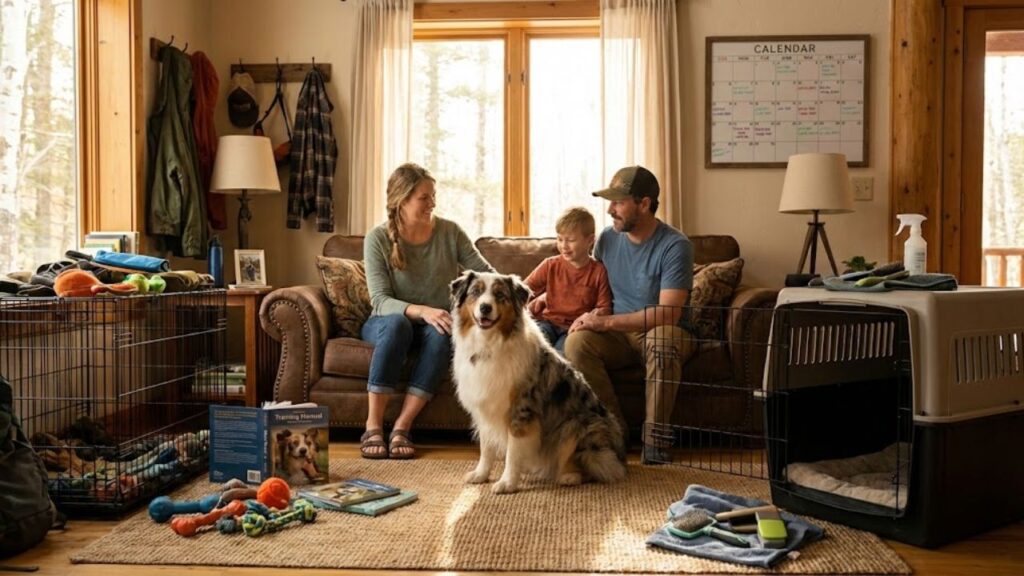
Across Europe and the United States, the Australian Shepherd has shifted from a ranch workhorse to a social-media favourite. Beneath the striking merle coat and intense gaze is a high-drive working dog whose needs can easily overwhelm even confident, experienced owners.
Where the “Australian” Shepherd Actually Originated
Despite the name, the breed did not originate in Australia. Most historians trace the Australian Shepherd’s roots to Basque herding dogs that travelled with shepherds through Australia before reaching the United States during the 19th and early 20th centuries. It was in America that the breed was shaped on large cattle and sheep ranches.
For decades, Aussies were prized almost entirely for their toughness, agility, and stock-handling ability. Their rise as companion animals came much later, driven by their distinctive merle and bicolour coats, bright or mismatched eyes, and endlessly energetic nature.
At their core, Australian Shepherds remain full-time herders, not decorative pets.
A Family Dog With Endless Energy
Australian Shepherds are often called “velcro dogs”. They prefer to stay close to their people, joining in every activity from morning to night. In an active home, this can be a joy. In a quiet or sedentary household, it can become overwhelming.
Exercise Demands That Catch New Owners Off Guard
This breed is far from a quick daily stroll. Most healthy adult Aussies require at least 1.5 to 2 hours of physical activity each day, combined with regular mental stimulation.
- Two solid walks or runs daily, not just short outings
- Off-lead time in secure areas for sprinting and exploration
- Structured training sessions to challenge their intelligence
- Interactive games such as fetch, frisbee, or scent work
When under-stimulated, Aussies often create their own “tasks”. This may include chewing furniture, herding children, or barking persistently at anything that moves.
If you cannot commit several hours most days to exercise, play, and training, this breed is likely to feel confined and frustrated.
Temperament: Intelligent, Loyal, and Occasionally Controlling
Australian Shepherds are exceptionally intelligent and quick learners. Many excel in agility, obedience, flyball, and canicross. Their eagerness to work alongside humans explains their strong presence in dog sports and working competitions.
- Day will turn to night: the century’s longest solar eclipse now has an official date
- A new inheritance law coming into force in February is set to reshape key rules for heirs and families
- Alzheimer: the crucial role of deep sleep, according to researchers
- Four risk factors explain 99% of heart attacks and strokes
- Ginger infusion and cancer: healing drink or harmful myth?
- This friend is not good for you if you notice these 6 signs
- Good news for commuters: this overlooked car setting cuts fuel use
- Engineers confirm construction is underway on a vast underwater rail tunnel linking continents
Most Aussies are affectionate with adults and children and can coexist peacefully with other dogs and even cats when raised together. However, their intelligence often comes with a strong independent streak. Without clear rules and consistent guidance, they may attempt to run the household like a flock.
Early socialisation is essential. Puppies should be gradually introduced to different people, animals, and environments. Well-socialised Aussies are typically confident, while poorly socialised ones may develop anxiety, reactivity, or excessive protectiveness.
Can an Australian Shepherd Adapt to Flat Living?
In theory, yes. In reality, only with a highly committed owner.
More important than outdoor space is daily structure. An Aussie living in a small city flat who jogs daily, attends dog daycare, and trains in agility can be far happier than one in a large rural garden with little engagement.
For this breed, routine and human interaction matter far more than square footage.
The Biggest Challenge: Being Alone
Australian Shepherds form strong bonds with their people and often struggle with long periods of solitude. For some, four to five hours alone is already difficult, particularly during their younger years.
When lonely, Aussies may:
- Chew doors, furniture, or skirting boards
- Howl or bark for extended periods
- Attempt escapes from gardens or flats
- Show anxiety behaviours such as pacing or excessive licking
Households with long workdays need a solution, whether that means a dog walker, dog-friendly workplaces, daycare, or shared care responsibilities.
Coat Care, Maintenance, and Health Commitments
Grooming: More Manageable Than It Appears
The Australian Shepherd’s double coat may look demanding, but regular maintenance is relatively straightforward.
- Brushing: once weekly, daily during shedding periods to remove loose hair and prevent matting
- Ear checks: weekly to spot redness, odour, or debris
- Nail trimming: every 3–4 weeks to avoid discomfort and posture issues
- Dental care: several times a week to reduce tartar buildup
Most Aussies tolerate both heat and cold reasonably well when provided with shade and fresh water. However, constant dampness can lead to skin issues if the coat does not dry properly.
Health and Life Expectancy
With responsible breeding and good care, Australian Shepherds often live 12 to 15 years. While generally robust, the breed does carry certain health risks.
- Eye conditions: inherited issues such as cataracts or collie eye anomaly; reputable breeders test parents
- Weight management: activity drops can quickly lead to weight gain
- Joint health: potential for hip or elbow problems common in athletic medium-sized dogs
Prospective owners should request health screening results, not just pedigrees or appearance-based assurances.
Is This Breed Truly Right for Your Lifestyle?
Energy compatibility between dog and household is critical. A runner who enjoys long hikes may find the Australian Shepherd an ideal companion. A family that prefers quiet weekends and indoor activities may struggle.
Consider this scenario: your most exhausting winter week. Short daylight hours, heavy rain, work pressure. Are you still willing to walk your dog twice daily, train for 15 minutes, and play in the evening? If the answer is no, this breed may not suit your rhythm.
What a Well-Matched Week Often Looks Like
In a home that fits their needs, a typical week may include:
- Morning: a 45-minute brisk walk, recall practice, short fetch session
- Midday: toilet break and sniff walk with a walker or neighbour
- Afternoon: rest time with enrichment toys
- Evening: a 30-minute walk or jog plus indoor training
- Weekend: long hikes, agility classes, or secure off-lead runs
With this level of engagement, many owners describe their Aussies as deeply rewarding companions: attentive, playful, adaptable, and highly responsive to human moods.
Key Terms and Hidden Responsibilities to Understand
Terms like “herding instinct” and “high drive” frequently appear in breed descriptions, and they directly influence daily life.
Herding instinct can show up as circling children, nudging ankles, or fixating on moving objects. With proper training, this behaviour can be redirected into structured activities rather than becoming problematic.
High drive refers to an intense motivation to work and chase. While ideal for sports, it also increases the risk of fixation on squirrels, joggers, or cars. Strong recall and impulse control training are essential from an early age.
Travel and holidays also require planning. A high-energy, people-focused dog may not be suitable for all rentals or casual pet sitters. Dog-friendly accommodation, trusted care, and lifestyle adjustments often become part of life with an Australian Shepherd.