At the community park on a quiet Tuesday morning, the walking track is gradually filling up. It’s not about Lycra leggings or loud music, but rather soft trainers, light jackets, and the careful pace of people mindful of their joints. An elderly man, leaning on a cane, observes others from a bench, stretching his leg with a faint grimace. A woman in her seventies, her hair perfectly set, walks past him… and then again, ten minutes later, a little quicker this time. He watches her, then looks at his own swollen joints, silently pondering: “Could I do that?”
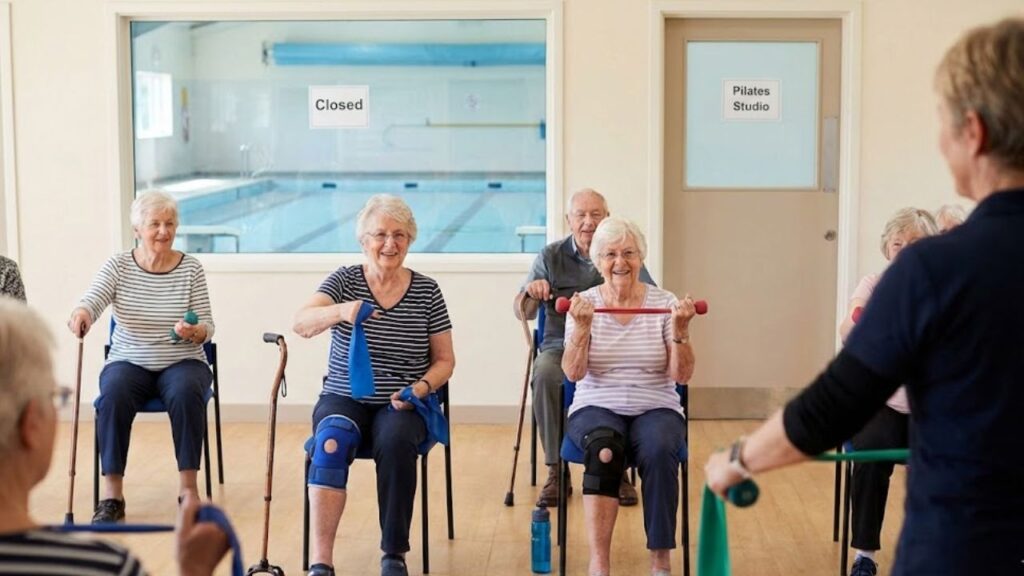
It’s not about swimming or Pilates—activities that can seem distant or intimidating—but rather something simpler, almost invisible, yet profoundly powerful: walking. This simple, daily act might just be the unsung champion for those dealing with painful joints.
The Quiet Power of Walking for Joint Pain
When you talk to older adults with joint pain, the advice they hear most often is: “You should swim,” or “Pilates could help.” While these activities have their benefits, they often feel out of reach—whether it’s the cold water, the difficulty finding time, or simply the mismatch with personal preferences. Walking, however, is always accessible. No membership, no special equipment, and no complex routines—just simple steps on the ground beneath your feet.
Why Walking Works for Joint Pain
Why does walking work so well for painful joints? Because the body responds well to rhythm and gentleness. Walking lubricates the joints, much like oil in a rusty hinge. The constant, gentle pressure and release help nourish the cartilage, without the sharp twists of tennis or the long, held positions of Pilates. As you walk, your circulation improves, calming inflammation, while the muscles around your knees and hips become stronger, providing much-needed support to fragile joints.
The Right Way to Walk When Your Joints Hurt
The key isn’t simply walking more—it’s walking smarter. The secret lies in negotiating with your joints, not pushing them too hard. Start small—just 5 to 10 minutes of walking on flat ground, once a day. If the pain becomes too much, slow down or stop. A gentle pace, with no hills at first, ensures you’re giving your body time to adapt. The goal is to feel slightly energized after the walk, not exhausted. The body thrives on consistent, small steps rather than sporadic bursts of activity.
Beyond the Physical: The Hidden Benefits of Walking After 65
Beyond the physical improvements, older walkers often speak of the quiet confidence that grows with each step. It’s the confidence to walk around the neighborhood without fear of joint pain, to sleep better after a short evening walk, or to plan outings with family without worrying about joint limitations. The psychological benefits of walking are often more significant than the physical ones—enhancing mood, boosting confidence, and making daily life feel more manageable.
| Benefit | Description | Value |
|---|---|---|
| Gentle Impact | Walking mobilizes knees, hips, and ankles without sudden twists. | Reduces pain while maintaining mobility, especially with arthritis or past injuries. |
| Easy to Stick To | No pool, no machines—just a pair of shoes and a safe route. | Higher likelihood of forming a long-term habit, not just a fleeting attempt. |
| Global Health Benefits | Improves balance, mood, cardiovascular health, and joint function. | Enhances overall independence and quality of life. |