The broccoli sat there, glowing a vivid green against the white plate. My friend poked it with her fork, skeptical. “You either boil it to death or eat it raw and suffer,” she sighed, before finally taking a bite. Two minutes later, she frowned. “I read somewhere I just destroyed all the vitamins.”
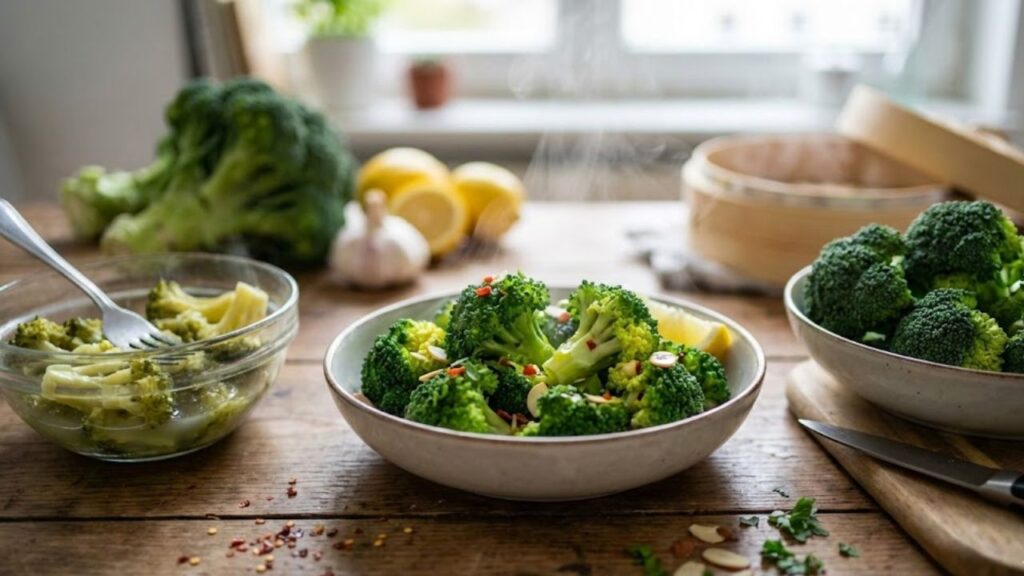
That’s the silent worry behind a lot of healthy meals these days. We buy the vegetables, steam, fry, roast, and then, at the last minute, doubt everything. Did we just lose all the nutrients?
When it comes to broccoli, the truth is more surprising than the usual “eat it raw” advice.
How Cooking Methods Affect Broccoli’s Nutrients
If you’ve ever watched broccoli transform from a vibrant green to a sad, dull color in a pot of boiling water, you’ve seen nutrients slipping away. It’s almost visible. The kitchen smells like cabbage, the water turns cloudy, and the florets slump, as if they gave up halfway through dinner.
That change in color is a sign. Behind it, valuable nutrients like vitamin C and antioxidants—the very compounds that made broccoli a health powerhouse—are being lost. You don’t need a degree in nutrition to know that limp, beige broccoli is not the kind of food scientists had in mind when they labeled it a “protective” vegetable.
Food scientists have measured this in the lab. When broccoli is boiled, a significant portion of its vitamin C and antioxidants, like glucosinolates, leach into the water. One study showed that boiling can reduce glucosinolate content by more than half.
Steaming: The Healthiest Option for Broccoli
Steaming, however, tells a different story. Quick steaming preserves a substantial amount of these nutrients, while surprisingly, raw broccoli isn’t always the best option for every nutrient. The most interesting part? How long you cook the broccoli seems just as important as the cooking method itself.
Here’s why: Many of broccoli’s protective compounds need a specific enzyme, myrosinase, to transform into their active forms, like sulforaphane. This enzyme is quite sensitive to high heat. If you boil or stir-fry broccoli for too long, this enzyme essentially goes on strike.
Gently steaming for a short time seems to hit the sweet spot. The plant tissues soften just enough to release more antioxidants and make some minerals easier to absorb, without completely destroying the enzymes or vitamins. So the question becomes less about “raw or cooked?” and more about “what kind of cooking, and for how long?”
The Best Way to Cook Broccoli for Maximum Nutrients
The most effective method, according to recent research, is surprisingly simple: lightly steam your broccoli for just a few minutes—3 to 5 minutes, not 15. The florets should turn a bright green, stay slightly firm, and have a gentle crunch in the stem.
Set up a steamer basket over simmering water, toss in evenly cut florets, cover, and watch closely. As soon as a fork slides in with slight resistance and the color pops, pull them off the heat. Rinse under cool water to stop the cooking if you think you’ve gone a bit too far.
A common mistake is to drop broccoli into a pot of water and forget about it while you’re distracted with other tasks. Ten minutes later, the kitchen smells of sulfur, and the broccoli looks like it came out of a can. We’ve all had that moment when you lift the lid and realize the broccoli’s vitamins are probably lost in that cloudy water.
Final Thoughts on Cooking Broccoli
It’s all about balance. Quick steaming gives you the perfect broccoli—bright, nutrient-rich, and slightly tender. And there’s one more trick: pairing steamed broccoli with a small amount of raw cruciferous vegetables, like raw broccoli, radish, or mustard greens. This can help restore some enzyme activity lost during cooking, boosting the nutritional benefits of your meal.
Don’t worry about being perfect—lightly steaming broccoli just a couple of times a week already shifts the balance toward better nutrition. The key takeaway: short heat, vibrant color, a little crunch, and perhaps a sprinkle of raw veggies on top to maximize your antioxidants.
- Light steaming is best: 3–5 minutes of steaming preserves color, texture, vitamin C, and key antioxidants.
- Raw is not always superior: Some compounds become more available with gentle cooking, while too much heat destroys enzymes.
- Mix raw and cooked: Adding a little raw cruciferous veggie restores enzyme activity and enhances the overall nutrient profile.