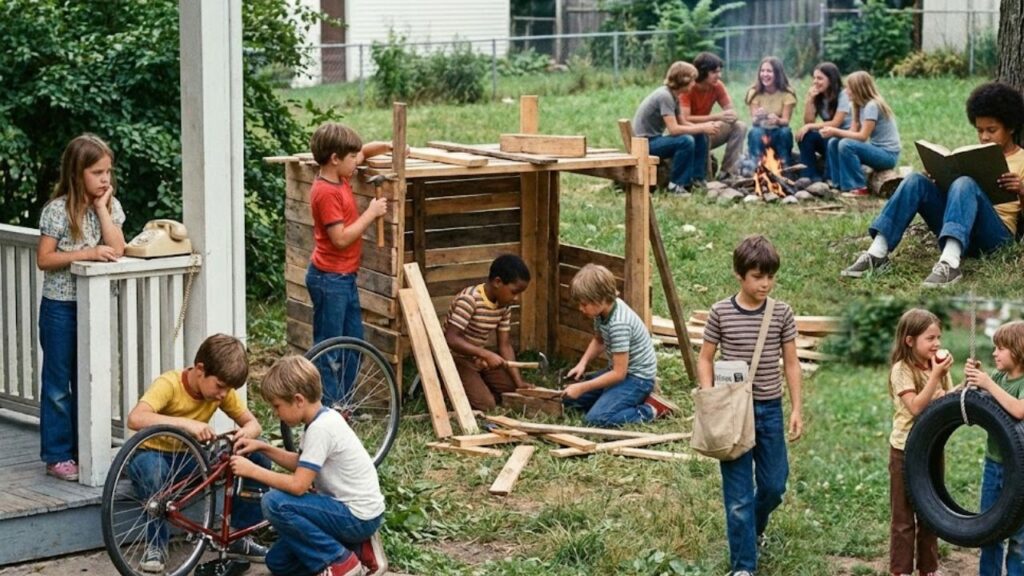
Psychologists and sociologists agree that the generations raised in the 1960s and 1970s developed mental strengths that modern life often neglects. These strengths weren’t derived from special genes or extreme discipline, but from the slower, more demanding rhythm of everyday life. Children of this era experienced boredom as a regular companion, and with fewer distractions like screens and constant media, they developed the patience and resilience needed to navigate life’s uncertainties. The absence of instant answers, constant social media, and an overabundance of options helped these generations learn to wait, adapt, and focus in ways that are often challenging in today’s fast-paced, digital world.
2. Everyday Resilience: Building Mental Strength Through Daily Life
What psychologists describe as “everyday resilience” comes from facing ordinary, repetitive challenges rather than crises. For those raised in the 60s and 70s, resilience was developed not through extraordinary events but through the everyday struggles and delays they encountered. Whether it was waiting for news through the post or dealing with a broken toy without asking for an immediate replacement, these moments of managing small discomforts helped shape their mental toughness. The ability to handle these everyday challenges is what modern generations can learn from, as they help develop patience, decision-making, and a calm approach to problems without shortcuts.
3. Embracing Patience and Delayed Gratification
Growing up in the 1960s and 1970s meant that delayed gratification was not a theoretical lesson, but a way of life. Children waited for months to buy something they wanted, watched TV shows weekly instead of binge-watching, and often wrote letters instead of receiving instant messages. This practice of waiting for things without immediate satisfaction helped develop their ability to tolerate frustration and delay instant gratification, which modern research links to better long-term outcomes in finances, health, and happiness. In today’s world of instant access, it’s a lesson worth revisiting: sometimes, the most rewarding things take time and patience to acquire.
4. Mastering Emotional Control and Problem-Solving
For many children in the 60s and 70s, emotional regulation was a natural part of growing up. With responsibilities to meet and bills to pay, decisions were made slowly, and emotional impulses were checked in favor of long-term solutions. The mantra “cool down first, decide after” guided their behavior. This approach to emotions, which psychologists refer to as emotional regulation, helped them navigate the ups and downs of life without making rash decisions. Alongside emotional control came the need for practical problem-solving. Without the internet or digital shortcuts, children were forced to figure out solutions the hard way—whether it was fixing a toy or planning an outing. These challenges fostered self-reliance and mastery, which became important life skills as they matured.
5. Facing Discomfort and Learning to Adapt
Another key aspect of mental strength developed in the 60s and 70s was the ability to face discomfort and adapt to it. From long waits at bus stops to enduring uncomfortable chairs in school, children learned that discomfort was a normal part of life. This ability to handle minor inconveniences without panic is known as distress tolerance. It’s a valuable skill that modern generations may lack, as the digital world offers instant gratification and distractions that prevent people from sitting with uncomfortable emotions. Learning to endure discomfort without rushing to escape it is crucial for resilience, especially in challenging situations that require perseverance.
6. Recreating Mental Toughness in Today’s World
Recreating some of the mental strengths from the 60s and 70s in today’s world requires conscious effort. In a time dominated by instant messaging and digital distractions, one simple practice is to remove distractions and focus on tasks with deeper attention. A “focus hour,” where phones are turned off, can help individuals concentrate on a single task, whether it’s reading, learning a new skill, or engaging in a hobby. Additionally, embracing small challenges, such as fixing things before replacing them or walking short distances instead of driving, can help modern individuals build resilience like the generations before them. By incorporating these habits into daily life, individuals can start to experience the same mental toughness that made the 60s and 70s generations so resilient to stress and uncertainty.
| Mental strength | Simple modern habit |
|---|---|
| Patience with uncertainty | Leave some messages unanswered for a few hours instead of replying instantly. |
| Distress tolerance | Schedule short periods without entertainment: no phone during a commute or a lunch break. |
| Internal locus of control | At the end of each day, write down one thing that went well because of your action. |
| Delayed gratification | Pick one purchase to delay for 30 days and track how you feel over that time. |