Strawberries are often treated as a quick snack, just a rinse under the tap, and they’re ready to eat. They look perfect, with their vibrant red color and that fresh-picked shine. But is a quick rinse enough? Strawberries are small, porous, and absorb pesticides easily. With no peel to remove, they can be contaminated not only on the surface but also in tiny crevices, particularly around the stem. This makes a simple rinse under the tap less effective in ensuring they’re clean.
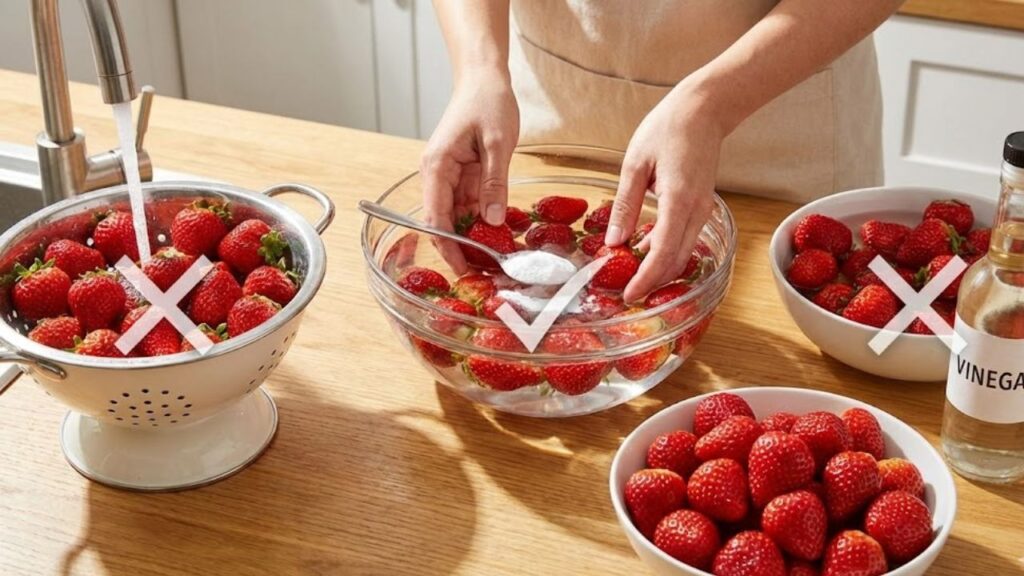
The Limits of Common Cleaning Methods
Many people turn to various cleaning hacks like vinegar baths, saltwater, or even dish soap to remove pesticide residues and dirt. While these methods might seem promising, they don’t offer a complete solution. Vinegar and lemon juice are acidic, which can help reduce some bacteria, but they won’t eliminate all pesticide residues. These solutions can also make the strawberries mushy and leave a strong taste. What you need is a method that effectively reduces both dirt and chemical residues without compromising the quality of the fruit.
The Right Way to Wash Strawberries
Food safety experts agree on the best way to clean strawberries without harming their texture or taste. Start by rinsing your hands before handling the fruit. Then, fill a large bowl with cold, clean water and place the strawberries in it, stems intact. Let them soak for about 2–3 minutes, gently swirling them to loosen dirt. Afterward, use a slotted spoon to lift them out, avoiding dumping them in a colander where residues can get redistributed. Finally, give them a gentle rinse under cool running water to remove any remaining particles before removing the green tops.
Enhancing the Cleaning Process with Baking Soda
If you’re particularly concerned about pesticides or serving strawberries to sensitive groups like young children or pregnant women, adding a mild baking soda bath can be beneficial. Dissolve one teaspoon of baking soda per liter of water and let the strawberries soak for 5–10 minutes. This helps remove certain residues without leaving a vinegar taste or strong smell. After soaking, rinse thoroughly under cold water and dry with a clean cloth or paper towel. This method, although not perfect, reduces the risk and helps ensure the fruit is safer to eat.
| Key point | Detail | Value for the reader |
|---|---|---|
| Gentle water bath | Soak strawberries 2–3 minutes in cold water, then swirl lightly | Removes dirt and a good portion of surface residues without damaging the fruit |
| Baking soda option | 1 teaspoon per liter of water, 5–10 minutes, then thorough rinse | Helps reduce certain pesticide residues more effectively than water alone |
| Timing and handling | Wash only before eating, keep stems on during soaking, dry carefully | Limits microbial growth, preserves texture, and keeps flavor intact |