At 6:45 p.m., office lights flicker off one by one, and in the elevator, people are silently asking themselves: “Should I head to the gym, or just go home?” Outside, a woman in running shoes takes a glance at the glowing gym sign, then turns toward the park. Headphones in, coat loosely zipped, she walks with purpose, almost as if chasing a train.
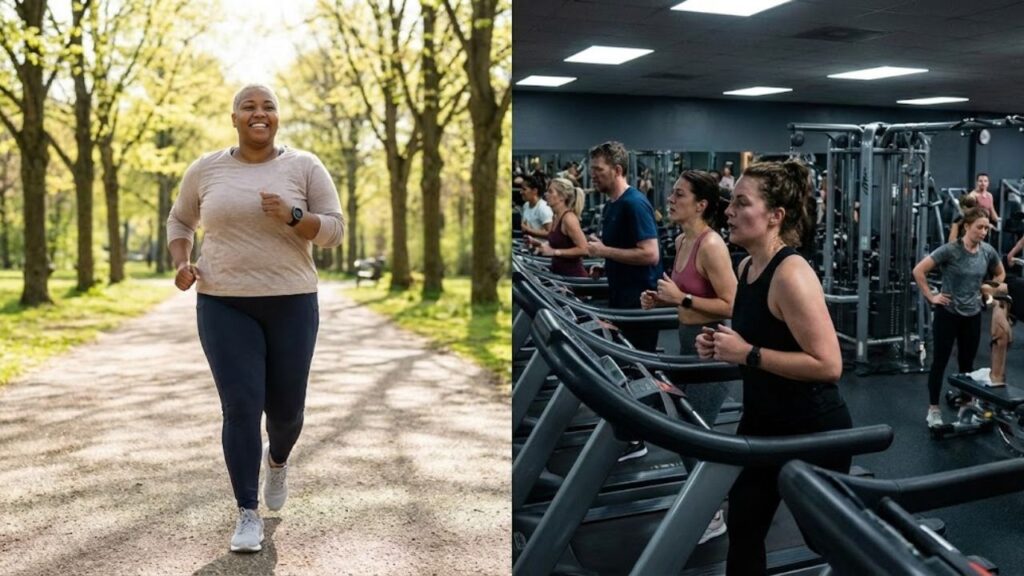
Twenty minutes later, her cheeks are flushed and her mind calmer as she checks her messages on a bench while gym-goers still line up for the leg press. Her watch shows: 32 minutes, 5.1 km/h, 160 calories burned. Her brain says: “That felt human.”
The surprising part? For most people, that simple walk beats the gym.
How a Simple Walk Becomes the Better Alternative to the Gym
Think back to your last “perfect” gym plan. Maybe you screenshotted a workout, bought a new water bottle, and even told your friends you were serious this time.
Then life happened: late meetings, family commitments, train delays. The one-hour workout turned into “I’ll go tomorrow.”
A 30-minute walk at 5 km/h requires no elaborate setup. No changing rooms, no commute, no specific outfit—just tie your shoes, step outside, and walk. It’s simple, and that simplicity is often what people can commit to five days a week.
Health experts often repeat the number “150.” Just 150 minutes of moderate exercise per week reduces the risk of early death by about 30%, based on large studies. This translates to five 30-minute brisk walks—no marathon training, no CrossFit hero sessions needed.
The Power of Consistency: Why Walking Beats the Gym for Long-Term Health
A 2017 study from The Lancet analyzed over 130,000 adults across 17 countries, finding that brisk walking was linked to a lower risk of heart disease—without gym access or fancy equipment. Harvard also linked regular walking to reduced depression and better sleep.
Yet, countless gym memberships quietly renew while their owners walk less than 3,000 steps a day. The logic is simple: your body rewards what you repeat, not what you dream about. And walking at 5 km/h for 30 minutes is something people can easily repeat daily. It’s easy on the joints, requires no learning curve, and can fit into a busy day, often between meetings or after dinner.
Heavy gym sessions may bring quicker results for some, but they often come with long inactive gaps. Steady, almost boring consistency wins every time.
Turning Walking Into an “Unskippable” Ritual
Let’s make it practical: walking at 5 km/h is a pace where your arms naturally swing, your breathing deepens, and you feel like you’re going somewhere—not just meandering.
Pick a fixed time each day: after work, after lunch, or right after breakfast. Treat it like a meeting with yourself—not optional.
Start with 10 minutes of light walking to warm up, then hit that brisk pace where talking becomes slightly challenging. Finish with 5 minutes of slower walking to cool down.
If you like tracking, use a watch or phone to monitor time, not just steps. If not, just walk 15 minutes in one direction, then turn back. Same route, same rhythm, fewer decisions.
The Value of Walking: What It Offers Beyond the Gym
Walking may feel too ordinary to brag about, but that’s exactly why it works. No sweat-drenched selfies, no excessive performance pressure. It’s low-stress, low-drama, and low-risk of failure. If you miss a day, it’s just a walk—no need for a comeback.
For those with back pain, excess weight, or chronic fatigue, a brisk walk can be kinder and safer than jumping into high-intensity workouts. “Most of my patients don’t need a gym membership,” a cardiologist explained. “They need a pair of shoes and a 30-minute walk daily.”
Simple Steps to Make Walking a Consistent Habit
- Start slow: If 30 minutes feels like too much, begin with 10-15 minutes three times a week and increase by five minutes each week.
- Set a reminder: Place your walking shoes by the door, set a recurring alarm, or link it to something you already do, like your afternoon coffee.
- Keep it interesting: Try different routes, listen to podcasts or music, or use your walk for phone calls with friends.
- Respect your body: If you experience joint or chest pain, slow down or seek professional advice. Muscular fatigue is normal, but sharp pain is not.
- Don’t focus on performance: Forget about tracking every step or trying to hit a specific number. One solid, mindful 30-minute walk is better than obsessing over numbers.
What Walking Gives You That the Gym Often Doesn’t
Choosing the sidewalk over the squat rack feels subversive. You’re not just training your body; you’re reclaiming a piece of your day. Outside, your senses engage with the world—air, light, smells, snippets of conversations—while your mind takes a break from screens and your surroundings.
Many people find their best ideas while walking, during the stretch between the third traffic light and the little bakery. The human-paced movement clears your mind in ways a crowded, noisy gym rarely can.
Walking, especially for parents with strollers or people recovering from burnout, offers a gentle way to reconnect with oneself. It’s low-pressure, non-threatening, and even provides opportunities for meaningful conversations.
Why Brisk Walking Beats the Gym in Long-Term Health
There’s a social reality hiding in plain sight. The gym has become a symbol of moral superiority: if you go, you’re disciplined; if you don’t, you lack willpower. But when you look at people who live longest and stay active into old age, you’ll see a pattern: regular walking, light manual tasks, and minimal focus on intense workouts.
The gap between what’s visible and what quietly works is vast. Walking, regular, brisk, and almost invisible, sits right in that gap.
Key Takeaways on Brisk Walking for Health
| Key Point | Detail | Value for the Reader |
|---|---|---|
| Brisk walking provides health benefits | 150 minutes per week of walking at 5 km/h lowers risks of heart disease, early death, and boosts mood | Reassurance that walking is an effective exercise |
| Consistency beats intensity | Daily walks are easier to maintain long-term than high-intensity gym sessions | Encouragement to adopt a sustainable routine |
| Walking fits into real life | No commute, no special gear, can be combined with calls, podcasts, or family time | Practical way to integrate movement into busy days |