The microwave in my small kitchen is a familiar fixture, but every time I reheat coffee, I’m reminded of its shortcomings. It leaves my mug scalding hot, yet the coffee inside is lukewarm at best. As I stood there, waiting for my leftovers to heat in what felt like a time machine from 1987, I couldn’t help but feel like there had to be a better way.
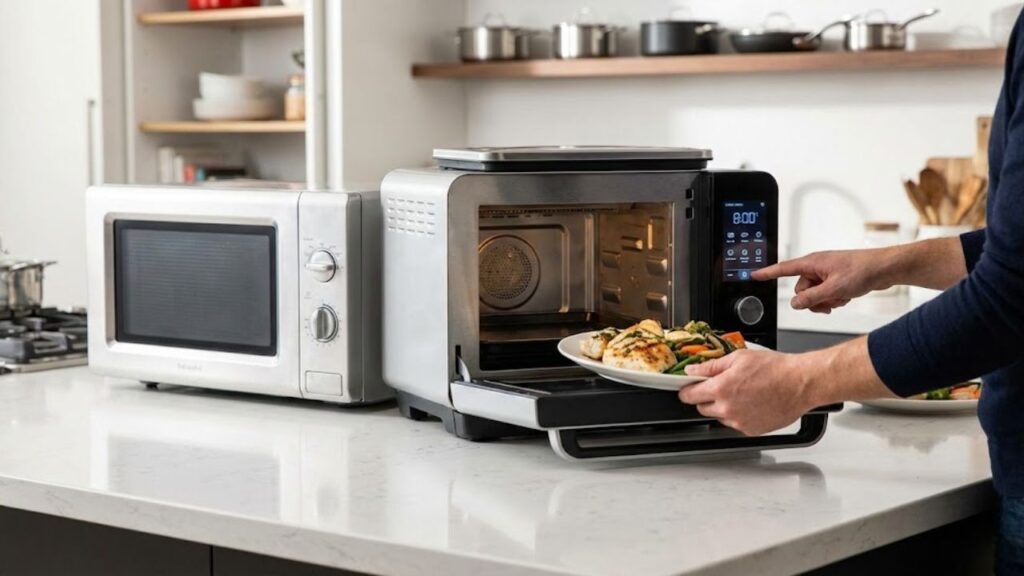
One day, a friend shared her decision to unplug her microwave for good. She wasn’t on some eco-crusade; instead, a quiet, squat box on her counter was out-performing the microwave in speed, taste, and energy consumption. The claim sounded outrageous… until I tried it myself.
The High-Speed Oven: Faster, Smarter, Better
The device that’s been generating buzz isn’t some sci-fi gadget, but the new generation of high-speed countertop ovens. These aren’t just toaster ovens; they combine convection, targeted heating, and smart sensors to deliver meals that are faster and more flavorful than ever before. From crisping up a pizza to perfectly reheating salmon or pasta, these devices work wonders without turning food into rubbery mush.
Brands like June, Brava, and the latest convection ovens are going viral for good reason. They heat food efficiently, use less energy than a traditional oven, and avoid the uneven radiation of a microwave. The result? You’re not wasting power to warm the entire kitchen—you’re cooking just what’s on your plate, perfectly.
Smart Ovens vs. Microwaves: The Showdown
A few weeks ago, I watched a food scientist perform a quick test. On one side was a standard microwave, the kind you see in most break rooms. On the other, a smart, high-speed oven set to “reheat plate.” After both ran through the same leftovers, the microwave was the first to beep, but the food coming out was noticeably worse. The microwave dried out the chicken and turned the veggies into mush, while the oven delivered a fresh meal: crispy, juicy, and full of flavor.
This happens because microwaves work by exciting water molecules from the inside out, which can result in uneven heating and rubbery textures. High-speed ovens use dry heat and convection to brown the surface while heating the food evenly, which leads to real food textures, not the soggy aftermath of a microwave.
Why High-Speed Ovens Are Changing the Way We Cook
The biggest shift comes in the form of convenience. Rather than simply pressing a button and walking away, you now choose specific settings for reheating, toasting, roasting, and more. Many models even have built-in cameras that recognize your food and adjust the cooking process automatically.
Take reheating day-old fries as an example. With a microwave, you’d usually end up with limp fries. In a smart oven, just press “reheat fries” and get back crispy, golden fries in minutes. You don’t have to babysit your food anymore or guess if it’s done. The result tastes like it did the day before—or even better.
Energy Efficiency: Saving Power Without Sacrificing Taste
While a standard microwave might seem more energy-efficient on paper, things change when you need to reheat multiple meals or prepare larger dishes. High-speed ovens often use less power overall because they preheat almost instantly and focus heat directly on the food, not the air around it. That means you’re cooking more efficiently and avoiding unnecessary energy waste.
For many households, the microwave has become a crutch, used for anything from reheating leftovers to cooking frozen meals. But with a high-speed oven, you’re saving energy without sacrificing texture, and you’re cooking meals that are much closer to fresh. It’s a small but impactful change that’s being noticed by experts and regular users alike.
How to Transition from Microwave to Smart Oven
If you’re considering making the switch from microwave to smart oven, don’t throw your microwave out right away. Instead, start by placing the new oven in your kitchen and using it for reheating or small cooking tasks. Try it for leftovers, frozen meals, or roasting vegetables, and use the preset modes that do the work for you.
The adjustment can feel strange at first, especially when you’re used to just hitting “30 seconds” and walking away. But with a smart oven, you’ll need to set it up to preheat and choose a specific mode for what you’re cooking. It might take a little time to get used to, but the results will speak for themselves.
Replacing Your Microwave: Small Steps for Big Change
To make this transition smoother, start by replacing just one meal a day with the smart oven, whether it’s breakfast toast or leftovers. Use oven-safe containers like glass or ceramic, and trust the presets before you start tinkering with settings. The goal is to reduce your microwave use by 70–90%, not to achieve perfection right away.
As you get used to your new oven, you’ll find that the meals you reheated taste much fresher. Your family might even stop calling leftovers “yesterday’s food” because they’ll be excited to eat them again. Eventually, you may find your microwave becoming a relic of the past, sitting quietly in the corner.
Why This Oven May Be the Microwave’s Quiet Successor
The real shift comes not from technology but from how it changes the way we think about food. When you start reheating meals that taste like they’re fresh, you begin questioning the microwave’s role in your kitchen. The convenience of a microwave is undeniable, but when your reheated meal tastes like it came right out of the oven, you start wondering if the microwave was ever really the best choice.
Some people may still keep both, but for many, once the convenience, texture, and energy savings of a smart oven are realized, the microwave will fade into the background, used only when absolutely necessary.
Key Takeaways: The Future of Reheating
| Key Point | Detail | Value for the Reader |
|---|---|---|
| High-speed ovens rival microwave speed | Near-instant preheat and targeted heating cut total cook time | Weeknight meals stay fast without sacrificing taste or texture |
| Better texture and flavor | Dry heat and browning reactions bring back crispness and juiciness | Leftovers feel like fresh meals, not a compromise |
| Potential energy savings | Shorter cook times and focused heat use less power per meal | Lower bills and less guilt about firing up a “big” oven |