Scrolling through your phone with a coffee in hand, you spot a vibrant photo of a healthy spider plant. Its glossy, neon-green leaves are bursting with fresh little babies. Then, you glance at yours on the shelf. The leaves are limp, tired-looking, with dry brown tips that crunch between your fingers. A sigh escapes as you top up the watering can, hoping a good soak will fix it.
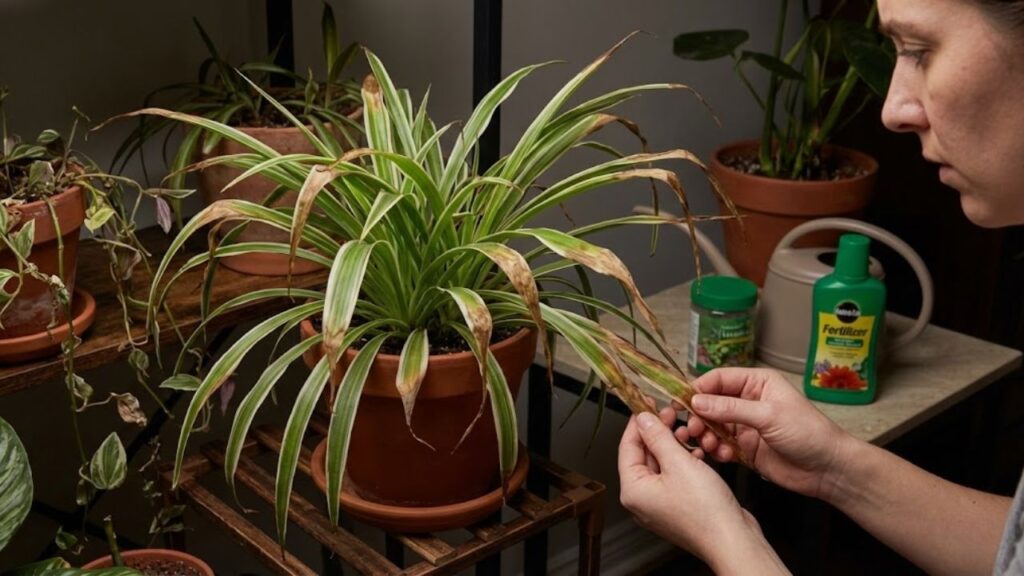
Weeks pass, the brown tips spread, and the plant looks more defeated than ever. You start wondering if you’re bad at plant care. The truth, though, is far stranger and a bit uncomfortable.
The Brown Tips Are Not About Thirst
Spider plants have earned the reputation of being “unkillable,” which often leads to ignoring their distress signals. Those tiny brown triangles at the leaf tips look like classic signs of underwatering, and the reflex is always the same: more water, more often, a quick top-up each time you walk by.
But spider plants are tougher than they appear. They can handle a missed watering, but what they struggle with is the slow build-up of stress from environmental factors being just slightly off.
Imagine a plant placed right above a radiator, in a pot without a drainage hole, watered every two days with tap water, surrounded by dry winter air and sealed windows. The soil never fully dries out. The water contains minerals and salts that build up in the pot. The air is dry, and the leaves are blasted with warm air from the heater.
From a distance, the plant appears alive, but up close, the tips are tan, then dark brown. Some leaves even snap when you touch them. It’s not dying suddenly—it’s slowly burning out.
What you see as “dry tips” is often a combination of issues: salty tap water, low humidity, stale soil, cramped roots, or ongoing stress from heat or direct sunlight. Spider plants are sensitive to fluoride and mineral buildup, which push water out of the leaf edges, leaving them dry and scorched. Too much fertilizer causes the same effect. Combine that with dry indoor air, and you’ve created the perfect recipe for crispy tips.
Water Alone Won’t Solve the Problem
When we only add more water, we aren’t addressing the underlying issue. We’re simply flooding a system that’s already out of balance.
Reset the Routine, Not Just the Watering
The first step is simple: change the water. If your tap water is hard or heavily treated, switch to filtered water, rainwater, or water that’s been left out overnight to let chlorine dissipate. Water deeply, then allow the top few centimeters of soil to dry before watering again. Think thorough, not frequent.
Then, check the pot. Always ensure there are drainage holes. If water pools on the surface or the pot feels heavy for days, the roots are suffocating in stagnant water. A light, airy potting mix will help reset things.
Next, look at the plant’s environment. Is it sitting directly above a heater, next to an AC vent, or getting direct midday sunlight? Spider plants thrive in bright, indirect light with consistent temperatures, not extreme fluctuations.
Try moving it to a bright window where sunlight is softened by a sheer curtain, and keep it away from drafts. Increase the humidity by placing a pebble tray with water beneath the plant, grouping plants together, or using a small humidifier during the winter. These small adjustments will make a big difference to those leaf tips over time.
Refresh the Roots and Soil
One part most people skip is refreshing the plant’s root system. Every year or two, gently remove the plant from its pot. You might discover a tangled mess of white roots, with little soil left. This rootbound stress shows up as dry tips. Repot into a container that’s one size larger with fresh, well-draining mix. Trim off the worst of the brown tips with clean scissors, following the natural shape of the leaf.
“When spider plants get brown tips, people think they’re failing,” says a houseplant shop owner. “But it’s usually the plant reacting to tap water, dry air, or being stuck in the same pot for years.”
Quick Tips for Spider Plant Health
- Change the water quality: Use filtered or rested water to reduce fluoride and salt stress.
- Adjust light and temperature: Provide bright, indirect light and avoid direct heat or cold blasts.
- Refresh the soil and pot: Repot every 1–2 years, ensuring a well-draining mix and a pot with drainage holes.
- Reduce fertilizer: Feed lightly during the growing season, not with every watering.
- Boost humidity: Group plants, use a pebble tray, or run a humidifier in winter to improve air moisture.
Your Plant Isn’t Judging You, It’s Teaching You
Once you stop seeing brown tips as a personal failure and start reading them as a code, your approach shifts. You stop obsessing over “Did I water it this week?” and focus on the bigger picture: the soil’s smell, how quickly it dries, how the leaves feel. A quick 10-second check when you walk past tells you more than any schedule.
We’ve all been there, standing in front of plants that seem to be surviving, not thriving. A spider plant with crispy tips isn’t just about one issue. It’s a quiet reflection of your environment: dry radiators, winter air, inconsistent watering, or frequent use of cheap fertilizers. You don’t need a perfect routine, just a more honest one.
Sometimes, the most helpful change is accepting that a few brown tips are normal, especially on older leaves. They’re not a verdict; they’re feedback.
When you share plant photos online, you’ll notice one question often asked: “What about the brown tips?” The answers are never just “water more.” They include tips about water quality, light, roots, air, and time. Spider plants don’t demand rare fertilizers or complicated rituals; they just want balance.
The next time you notice those dry, crispy tips at the edge of a leaf, resist the urge to drown the pot. Pause. Adjust the light, touch the soil, rethink the water, and give the roots room to breathe. You’re not just fixing a plant; you’re rewiring the way you care for living things in your home.
Key Takeaways
- Brown tips are multi-cause: Linked to water quality, low humidity, rootbound stress, and excess fertilizer. This helps break the cycle of overwatering and frustration.
- Change water and environment: Use filtered or rested water, adjust light, and avoid heaters and strong sun for better plant health.
- Refresh soil and roots: Repot every 1–2 years with a fresh mix, ensure drainage, and trim damaged tips to keep the plant thriving.