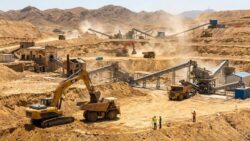
Scientists now report that one unexpected region is locking away tens of millions of tons of CO₂ annually. An area once infamous for dust storms has quietly transformed into a powerful carbon sponge.
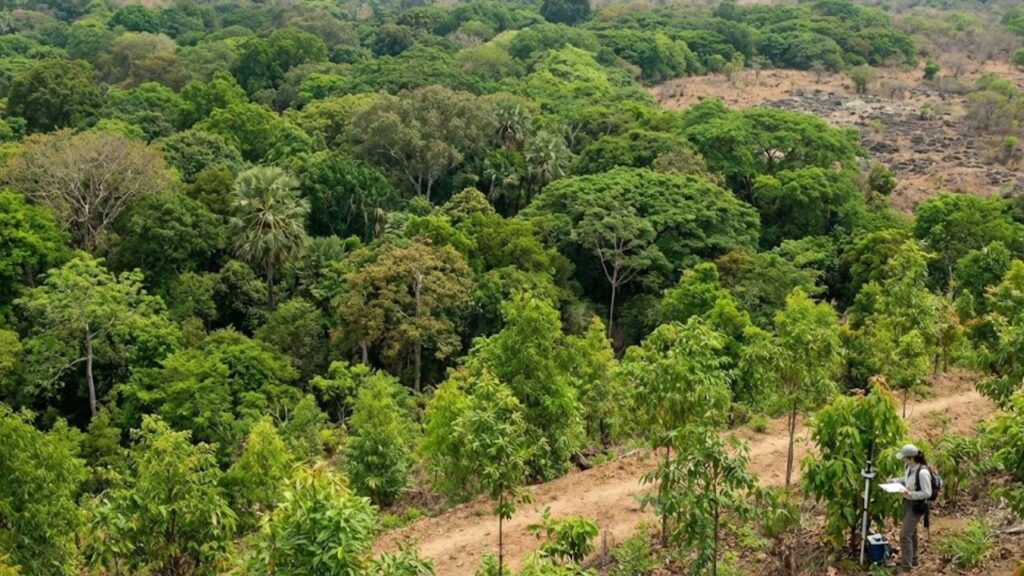
Trees may look still, but they are slow, relentless machines. Each trunk stores carbon year by year, forming thin, patient rings that act as a living record of time.
What Happens When Forests Return to Bare Land
When trees reclaim a stripped landscape, three major changes follow. The soil begins holding more organic matter. Roots bind the ground together, reducing erosion. Biodiversity returns, creating a web of life that stores carbon not just in leaves, but deep underground.
This explains why restored forests suddenly “switch on” in climate models after about 20 to 25 years. They pass a tipping point where young plantations mature into true forests that absorb more CO₂ than they release. What starts as a hopeful effort becomes a measurable climate tool.
How This Quiet Transformation Works in Real Life
Forget polished campaign images of a single child planting a sapling. Real reforestation is messy, muddy, and shared by many hands.
Foresters often describe the first five years as the most fragile. Saplings face threats from grazing animals, invasive species, and harsh conditions. Survival depends on constant care.
In successful projects, communities do far more than plant and leave. They fence land, manage grazing, select native species, and sometimes allow natural regeneration to do part of the work. It resembles tending a garden more than finishing a one-time task.
When Communities Take the Lead
Many ambitious environmental plans once faded away under competing priorities. Reforestation projects often failed the same way.
In Ethiopia’s Tigray region, local communities changed that pattern. They created “exclosures”—degraded areas where farming and woodcutting were banned. At first, these lands seemed useless, producing no crops or income.
Within a decade, the hills turned deep green. Dry springs flowed again. Women traveled shorter distances for firewood gathered from managed zones. Researchers recorded higher carbon levels in both soil and trees, and communities began earning income through carbon credit programs. What was once barren land became a measurable asset.
How Scientists Measure Carbon with Precision
Few people calculate how much CO₂ a backyard tree absorbs each day. On a global scale, however, these figures are now remarkably precise.
Remote sensing, drones, and LiDAR scans allow researchers to estimate forest carbon from above. These results are verified on the ground, where each tree is measured, tagged, and tracked over years.
As one climate scientist summarized, forests are no longer just symbols of hope. Entire valleys can now be identified as removing millions of tons of CO₂ every year.
Practices That Turn Land into Carbon Sinks
- Using diverse native species instead of monocultures
- Involving local communities as long-term stewards
- Protecting young forests from fire, grazing, and illegal logging
- Allowing natural regeneration where conditions permit
- Tracking growth with both field checks and satellite data
This steady, uncelebrated work is what transforms empty hills into lasting carbon reservoirs.
Forests Grown for People We Will Never Meet
A 25-year-old tree may feel ancient until you remember that, in forest time, it is just beginning. The greatest benefits of reforestation will belong to people not yet born.
The CO₂ captured today in Brazil’s Atlantic Forest will do more than cool nearby cities. It will influence rainfall, shield coastlines from storms, and recharge aquifers that support future harvests.
Each sapling planted in dry soil is a promise to the future.
What These Forests Really Tell Us About Climate Action
Restoring forests is not a heroic last-minute rescue. It is a slow, patient craft.
Reforestation alone cannot erase fossil fuel emissions. We cannot plant our way out of everything. Yet results from 20- to 30-year-old projects reveal something persistent and hopeful.
When people stop exhausting land and give it time and space, nature responds generously. The millions of tons of CO₂ absorbed each year are not a miracle cure. They are proof that long-term collective choices can reshape entire landscapes.
The next time you pass a stretch of young woodland or an urban forest wedged between buildings, look closer. Don’t just see green.
See a slow, invisible river of carbon leaving the air and settling into bark, roots, and soil. See future decades written into narrow rings of a trunk still thinner than your wrist.
And consider one quiet question: what kind of air do we want strangers to breathe over land we once dismissed as wasteland?
Key Takeaways
- Long-term restoration works: After about 25 years, forests absorb millions of tons of CO₂ annually, offering realistic timelines for climate planning.
- Communities matter: Projects led and protected by local residents store more carbon and last longer.
- Data replaces guesswork: Satellites, LiDAR, and field studies now measure forest carbon accurately, separating real impact from empty claims.