The plan felt foolproof. A tray of potato wedges tossed with olive oil and salt went into the oven while you wrapped up one last email. On the stove, a small pot bubbled gently with a few extra potatoes, saved for later in the week because this time, you were being prepared.
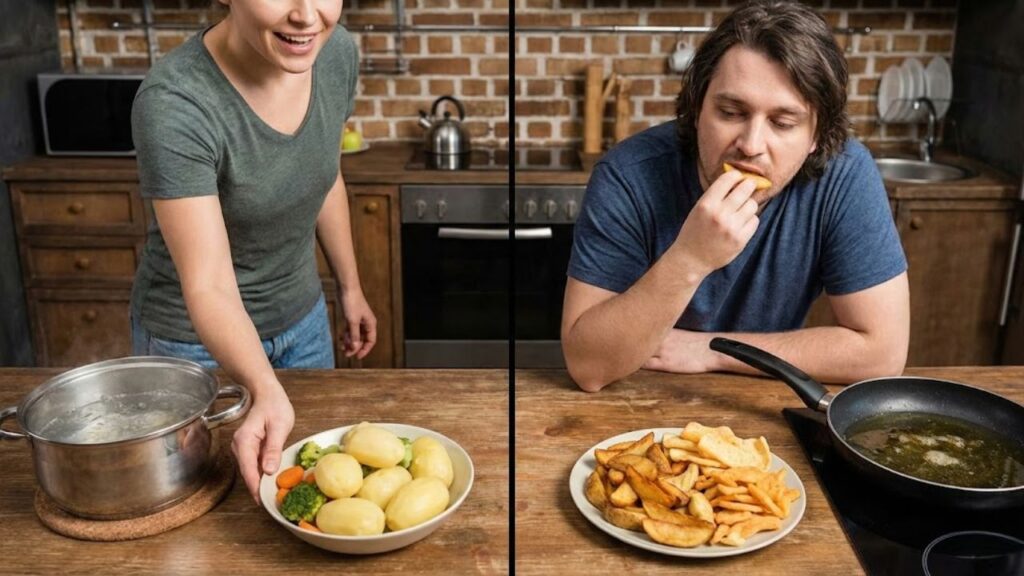
Half an hour later, they barely seemed changed. Same potatoes, same source, same supermarket bag. You finish the crisp roasted ones first, then eat the soft boiled leftovers the next day in a salad, shrugging it off with the thought that carbs are carbs.
Your body strongly disagrees.
One Food, Two Outcomes: What Cooking Quietly Alters
Stay with the potatoes for a moment. A lunch of hot, creamy mashed potatoes leaves you sinking into an afternoon slump. The next day, those same potatoes—now cold from the fridge, mixed with yogurt, lemon, and herbs—keep you satisfied without weighing you down.
The ingredient hasn’t changed. The effect has.
Your blood sugar responds in two completely different ways.
Researchers have been exploring this phenomenon for years. A small study from Oxford Brookes University compared freshly cooked potatoes with potatoes that had been cooled for 24 hours. The cooled version caused noticeably lower blood sugar spikes.
The same pattern appears with rice and pasta. Once cooked and cooled, then eaten cold or gently reheated, part of their starch acts more like fiber. Many people experience steadier energy and fewer cravings after meals that look identical on paper.
The nutrition label doesn’t change. Your body’s response does.
What’s Happening Beneath the Surface
When starchy foods such as potatoes, rice, and pasta cool after cooking, some of their starch rearranges itself. This form is known as resistant starch.
It earns its name because it resists digestion in the small intestine and travels further down to nourish gut bacteria.
When those same foods are eaten piping hot, the starch is easy to break down, leading to quicker rises in blood sugar. After cooling, part of it becomes tougher and less digestible, moving through the system more slowly.
One everyday food, two distinct chemical behaviors—all shaped by temperature and time.
How to Handle Potatoes, Rice, and Pasta at Home
The simplest adjustment is cooking ahead. Boil potatoes until just tender, drain them, and spread them out so they cool quickly. Once they reach room temperature, refrigerate them for several hours or overnight.
The next day, eat them cold in a salad or lightly reheat them in a pan with a bit of oil. The resistant starch remains, even after reheating, giving you familiar textures with a gentler blood sugar response.
The same approach works for rice and pasta. Cook them until just done, cool them quickly, and store them in the fridge. Yesterday’s rice becomes today’s fried rice or grain bowl. Leftover pasta turns into a chilled salad with vegetables and a sharp dressing.
No one does this perfectly every day. There will be nights when pasta goes straight from pot to plate because you’re exhausted and hungry.
The goal isn’t perfection. It’s having a few small tools that change how your body experiences foods you already enjoy.
As one nutritionist put it, “You don’t need to remove carbs. Just handle them with care. Cool them, pair them with protein, add color. The body responds very differently.”
Practical kitchen habits that help
- Cook starchy foods until just tender, not overly soft.
- Cool them quickly, then refrigerate for several hours or overnight.
- Eat them cold or gently reheated; most resistant starch remains.
- Pair carbs with protein such as eggs, fish, or beans.
- Add fats like olive oil or avocado and include vegetables to slow digestion.
Beyond Carbs: What Cooking Style Signals to Your Body
Once you notice this effect with potatoes, it starts showing up elsewhere. Eggs scrambled quickly in a hot pan feel different than eggs gently poached. A chicken breast grilled until firm lands differently than the same meat slowly simmered in broth.
Cooking isn’t only about taste—it’s a message to your cells.
High, dry heat creates more advanced glycation end products (AGEs), compounds associated with inflammation when they accumulate. Gentler, moist methods tend to produce fewer of them. Your palate may love the char, but your tissues are less enthusiastic.
This doesn’t mean fried foods or grilled meals disappear forever. Over time, it’s the balance between intense heat and gentler cooking that shapes how the body feels.
Many people know the feeling of finishing a meal that looked wholesome, yet leaving them bloated and restless. It’s easy to blame willpower.
Often, the issue isn’t you. It’s how the food was transformed before it reached your plate.
Small changes start to add up. Vegetables roasted at moderate heat instead of burned. One pan-fried lunch swapped for a bean stew or lentil soup. More boiling, steaming, and stewing; a bit less frying.
You begin to notice that how food is cooked affects digestion speed, blood sugar response, fullness, and gut comfort. Cooling, reheating, and choosing gentler heat become quiet acts of care.
A Subtle Power on the Plate
There’s relief in realizing you don’t need to master every nutrition chart. Paying attention to heat, timing, and preparation is often enough.
A bowl of hot white rice late at night hits one way. The same rice, cooked earlier, cooled, and mixed with vegetables and protein for lunch feels completely different. One leaves you sluggish; the other carries you through the afternoon.
You don’t need a new identity built around eating rules. You start with the foods already in your kitchen—potatoes, pasta, leftover rice—and experiment with cooling, reheating, and gentler methods.
Some days you’ll ignore everything and eat straight from the oven. Other days you’ll cook once and eat twice, letting simple science work quietly in your favor.
The labels on your food remain unchanged. Your experience may not.
Key Takeaways
- Cooling changes starch: Cooked and cooled potatoes, rice, and pasta form more resistant starch, supporting steadier blood sugar and fullness.
- Cooking method matters: High-heat, dry cooking produces more AGEs than gentle, moist methods, influencing long-term comfort.
- Small habits add up: Batch cooking, cooling foods, and pairing carbs with protein and vegetables can make everyday meals feel lighter and more satisfying.