A soft, repeating tune drifts through the air, somewhere between a lullaby and elevator jazz. Above the stall door, a small white sensor blinks like a distant star. Out in the bright aisles of a Tokyo home center, a young couple stands before a wall of toilet paper. They are not calculating cost per sheet. Instead, they scan QR codes and watch short videos about eco-fiber innovation and skin balance technology on their phones.
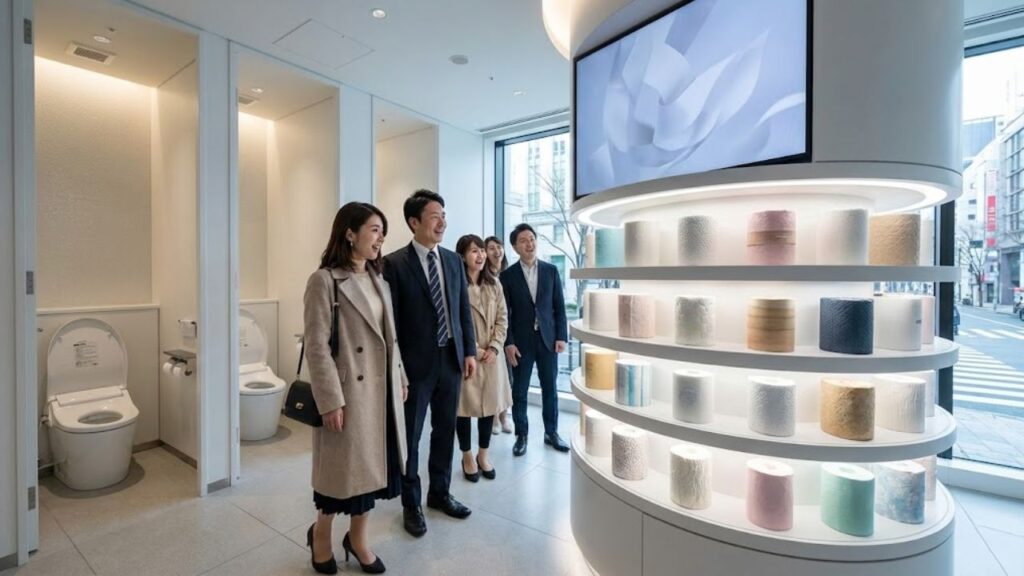
In a country already famous for high-tech bidet seats, few expected the quiet star of the bathroom to be the roll itself. Yet that is exactly what is happening. Japan is quietly redesigning toilet paper from the ground up, and once you notice it, it is impossible to ignore.
The Subtle Race to Reinvent a Paper Roll
Walk through the hygiene aisle of a typical Tokyo supermarket and it feels more like a design studio. Rolls appear taller and slimmer, some without a cardboard tube at all. Packaging makes unusual promises: 30% longer rolls, odor-absorbing cores, made without cutting trees. Muted pastel packs sit beside futuristic silver ones that resemble tech gadgets more than bathroom supplies.
The most surprising part is how people behave. Shoppers pause, squeeze the rolls, sniff them, and study the fine print as if choosing skincare. Traditional 12-roll packs are gradually edged out by mega-rolls designed to last weeks instead of days.
A Personal Choice in a Suburban Aisle
One afternoon in Saitama, just north of Tokyo, 39-year-old office worker Ryo stands stuck between two options. On one side are the thin, inexpensive rolls he grew up with. On the other is a thick, softly embossed paper labeled as being made from recycled milk cartons. He checks the price, hesitates, then scrolls through reviews on his phone.
He chooses the more expensive pack. Later, he explains that during the pandemic, toilet paper vanished from shelves, and he does not want that stress again. These rolls last longer. He also mentions his daughter’s eczema. The softer paper feels gentler on her skin, and that alone justifies the extra yen.
Why This Shift Is More Than Marketing
This change is driven by more than clever branding. It reflects the collision of aging infrastructure, climate anxiety, and lingering memories of shortages. Japan depends heavily on imported pulp and has experienced repeated toilet paper panics, from the oil shock of the 1970s to the Covid-19 era.
As a result, manufacturers have entered a quiet arms race. They design longer-lasting rolls to reduce storage needs, softer fibers for sensitive skin, and recycled materials that feel kinder to the planet. With small living spaces, bulky multi-packs simply do not fit into a typical 40-square-meter apartment. The outcome is a generation of denser, tube-less, compressed rolls that hide a small design revolution in plain sight.
From Bidets to Smarter Paper
The twist in Japan’s bathroom story is that many people use less paper than expected. High-tech bidet seats are widespread, even in some convenience stores. A warm water spray handles most of the cleaning, leaving toilet paper as a finishing touch rather than the main tool.
This changes priorities. Softness and strength matter, while bulk does not. Brands experiment with texture and density instead of sheer quantity. Some offer double-layered sheets that separate easily, letting each person choose their comfort level. Others focus on smoother edges to reduce irritation, especially for older users with delicate skin.
Living With One Shared Roll
In a small Tokyo share house, four roommates recently made an unusual agreement: a single house roll. After weeks of arguing over purchases, they settled on one higher-priced, extra-long option. Now they replace the roll every three weeks instead of every few days.
The youngest roommate, a 23-year-old design student, laughs about how serious the decision became. They even voted, using a spreadsheet. What convinced them was not only the lifespan of the roll, but also how quickly the paper dissolved in water, reducing the risk of clogs in their aging building.
Engineered for Pipes and Privacy
Behind these everyday decisions lies a complex system of plumbing standards, paper mills, and municipal rules. Japan’s sewage systems are sensitive, and overly thick paper or non-flushable wipes can cause costly blockages. Toilet paper is therefore engineered to balance strength in the hand with fragility in water.
Manufacturers obsess over fiber length, embossing patterns, and how fast sheets break apart once flushed. There is also a cultural layer. Cleanliness is tied to dignity, and bathrooms remain one of the few truly private spaces in crowded homes. When a brand mentions a subtle green tea scent or local recycled office paper, shoppers pay attention.
Borrowing This Quiet Progress at Home
You do not need a Japanese smart toilet to apply these ideas. Start by noticing the roll you usually grab. Look beyond the brand name. Check the roll length, recycled content, and whether it mentions dissolving speed or septic safety.
Try a simple experiment. Buy one standard pack and one extended or eco option, then track how long each lasts. The difference may be more revealing than any influencer review.
Eco toilet paper was once associated with stiff, grey sheets. That image is outdated. Today, many options aim for a balance between comfort, durability, and responsibility. Focusing only on softness often leads to rolls that disintegrate quickly and create hidden costs.
Smarter, Not More
Few people think daily about clogged pipes or overflowing storage spaces. Yet long-term comfort often comes from fewer roll changes, fewer blockages, and fewer plastic-wrapped packs stacked in hallways.
At a trade fair in Osaka, a senior product developer summed it up simply: the future of toilet paper is not more, it is smarter. The idea resonated because it does not demand sacrifice. It invites small adjustments.
Practical Shifts Inspired by Japan
- Choose longer rolls to reduce how often you replace them.
- Look for fast-dissolving paper if your plumbing is old or sensitive.
- Test a recycled or alternative-fiber option and note the difference.
- Keep a modest backup instead of panic buying.
- Treat toilet paper as a small monthly design choice, not a habit.
What a Simple Roll Reveals
Once you notice Japan’s toilet paper evolution, its influence appears everywhere. Smaller packaging that fits neatly under sinks. The calm of knowing a roll will last longer. A shift toward thoughtful comfort rather than excess.
Toilet paper is one of the least glamorous products in daily life, yet it touches almost everyone, every day. How we design and choose it quietly reflects what we value when no one is watching.
This change, shaped by compact apartments and advanced bathrooms, suggests a broader move from volume to durability, from impulse to planning, and from loud convenience to quiet resilience. Sometimes, all it takes is pausing at the supermarket shelf and asking a different question about what this small, everyday object should do for your home, your pipes, and your planet.