She’s at the supermarket, phone buzzing in her pocket. The screen reads “Mom,” flashing for the third time that week. She hesitates for a moment before letting it ring out, telling herself she’ll call back later. She already knows the conversation: questions disguised as criticism, stories of disappointment, and a subtle guilt trip about not visiting enough.
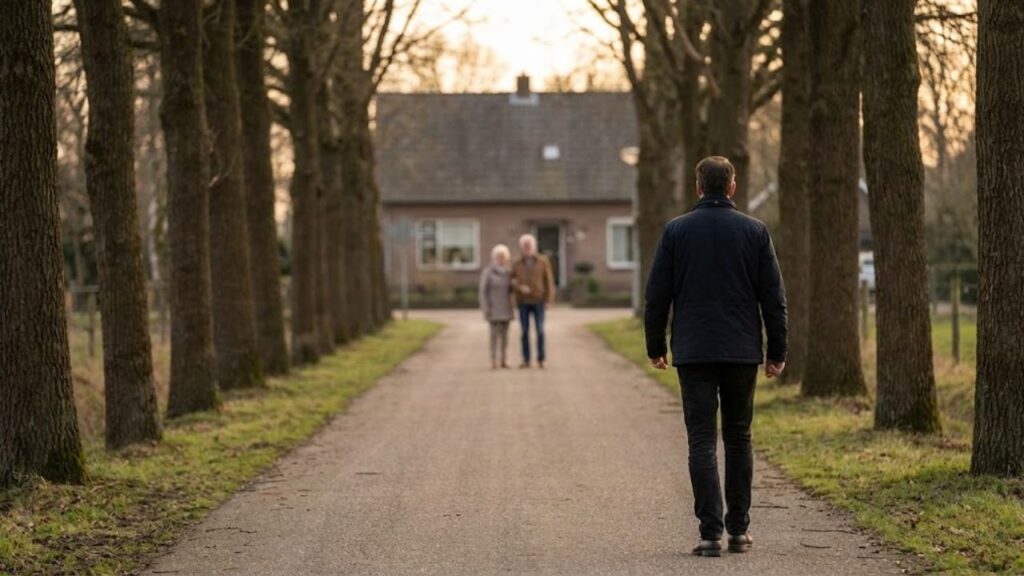
On the outside, she looks like any other adult, casually picking up oat milk and pasta. On the inside, she’s back to being a teenager, bracing for impact.
Many adults quietly pull away like this. Some relocate to another city. Others slowly stop answering calls. From the outside, it can seem cold, but the reasons often stem from childhood experiences that leave lasting emotional scars.
1. They Grew Up Parenting Their Parents
Many adults who distance themselves later were the “little adults” in the family. They took on roles that went far beyond what is typical for children: comforting a crying mother, covering for a drunken father, or solving complex financial problems they didn’t fully understand.
While other kids worried about homework, they were preoccupied with rent, the moods of their parents, and wondering who would explode next. Their childhood felt like an unpaid, 24/7 emotional job. A job that never truly ends until they step away.
Marco, for example, was 10 years old when he stood between his parents, acting as translator, therapist, and referee. By 16, he was emotionally exhausted in ways that coffee couldn’t fix. As an adult, when his father complains, “You never visit anymore,” Marco’s body reacts as if he’s still on duty.
When you’ve spent your childhood being the emotional parent, seeing your parents now can pull you right back into that unpaid role. Distance, whether physical or emotional, becomes a way to create space for yourself and break free from old patterns. It’s not about abandonment; it’s about self-preservation.
2. They Were Loved on a Tight, Unpredictable Leash
Another common pattern is experiencing love that came with conditions. One moment, affection, and the next, coldness or anger. If you grew up in an environment where you never knew which version of your parent you would encounter, distance can become a survival reflex.
For instance, Lena, at 8 years old, would bring home a drawing and be praised by her mother. But the next week, after spilling juice, the same mother would call her “useless” and give her the silent treatment. This inconsistency teaches children that love can vanish at any moment.
As an adult, Lena starts avoiding long visits and cuts calls short. The emotional rollercoaster of love that can vanish without warning feels too familiar. She’s not being cold; she’s protecting herself from a lifetime of unpredictability.
3. They Grew Up with Secrets, Shame, or “Don’t Talk About This” Rules
Some families have unspoken rules: “We don’t talk about this.” This could include addiction, violence, mental illness, or financial instability. Children in these homes learn to stay silent, invent excuses, and avoid talking about uncomfortable truths.
Take a teenage girl whose father is periodically unemployed due to drinking. She tells her friends that he “travels for work” while her mother whispers, “Don’t tell anyone.” Years later, the adult child, now seeking therapy, begins to realize that the silence was never normal.
Once they start valuing honesty, returning to family gatherings where everyone pretends nothing happened becomes unbearable. The distance isn’t just physical; it’s emotional. They can still love their family but feel they must create space to speak their truth.
4. They Learned Early That Boundaries Weren’t Allowed
Growing up in families where boundaries were not respected, these adults learn the value of saying no as an act of self-care. They might start with small boundaries: “I can’t talk every day,” or “I’m not comfortable discussing my relationships.” For someone raised in an environment where privacy was violated, these words can feel like a bombshell.
Setting boundaries often comes with guilt. They might feel selfish for turning off location sharing, skipping a call, or setting a limit. This guilt stems from a deep-seated belief that saying “no” is wrong. But healthy distance is not disrespect; it’s about maintaining a relationship without sacrificing one’s well-being.
5. They Never Felt Truly Seen for Who They Are
Some parents provided food, shelter, and education but were emotionally unavailable. These children often felt invisible, their interests dismissed, and their feelings minimized. As adults, they create space to figure out who they are outside of family expectations.
6. They Were the “Problem Child” for Asking for Basic Respect
In some families, the child who called out dysfunction became the scapegoat. The one who said, “Dad’s drinking is out of control,” or “Mom, what you said was hurtful,” was labeled as dramatic or ungrateful. By adulthood, this child has had enough of being the family’s emotional punching bag.
7. They Realized Love Without Safety Isn’t Love They Can Stay Close To
All these experiences converge on one realization: love alone isn’t enough. You can love your parents deeply and still feel unsafe in their presence. Many adults who pull away don’t hate their families; they miss them, but what they can’t tolerate anymore is feeling small, wrong, or responsible for their parents’ emotions.
The distance is their way of protecting themselves. They choose a life where their nervous system can finally breathe—something they were never allowed to do as children.
| Key point | Detail | Value for the reader |
|---|---|---|
| Parentification | Being the emotional or practical caretaker for parents as a child | Helps explain why feeling “done” or exhausted is not overreacting |
| Conditional love & secrecy | Affection linked to performance and pressure to keep family problems hidden | Normalizes the urge to step back from unhealthy family dynamics |
| Boundaries & safety | Using distance, limits, and honesty to protect emotional well‑being | Offers concrete tools to build contact that doesn’t hurt |