The moment you spot extra strands on your pillow or find hair gathering in the shower drain, something shifts. You may place your fingers on your scalp, trying to recall when your hair began to feel thinner. This quiet concern often hides from others—but not from yourself. You might blame stress, seasonal changes, a new shampoo, or tight hairstyles. These feel safer than facing the idea that something deeper could be happening.
Understanding the Messages Your Hair Sends
Hair tells a subtle story. It reflects stressful weeks, skipped meals, tight ponytails, harsh products, and sleepless nights. It also shows the effects of hormonal changes, aging, and weather shifts. Before hair fall becomes visible, the body may already be asking for nourishment and care. In our rush, we often miss these signals. While some chase instant solutions, a slower, more supportive path—using home remedies—offers a gentler way to restore balance.
Oil Treatments: Feeding Hair from the Outside
Oiling is a timeless hair ritual. Rubbing warm oil into the scalp not only conditions the hair but also improves blood flow and calms the mind. Coconut oil helps reduce protein loss, while castor oil moisturizes the scalp. Oils like almond, olive, and sesame each offer unique support. Often, a custom blend works best. When combined with regular scalp massage, these oils help strengthen roots and bring calm to daily routines.

Why Scalp Massage Shouldn’t Be Skipped
Scalp massage is just as crucial as the oil itself. Using your fingers in circular, gentle motions helps stimulate the skin and promote nutrient flow to the follicles. Start at the hairline and move slowly backward. A few minutes, several times a week, can noticeably improve scalp health. Beyond physical benefits, massage encourages relaxation, easing the hidden stress that contributes to hair fall.

Herbal Infusions for Deep Hair Nourishment
Infusing oils with herbs offers a more tailored approach. Herbs like rosemary, hibiscus, fenugreek, and curry leaves can be gently warmed with oil. Letting them steep transfers their natural compounds into the blend. Rosemary supports circulation, while hibiscus and fenugreek add strength and shine. This mindful preparation creates a personalized oil that feels both healing and grounding.
Kitchen Staples with Hair-Strengthening Power
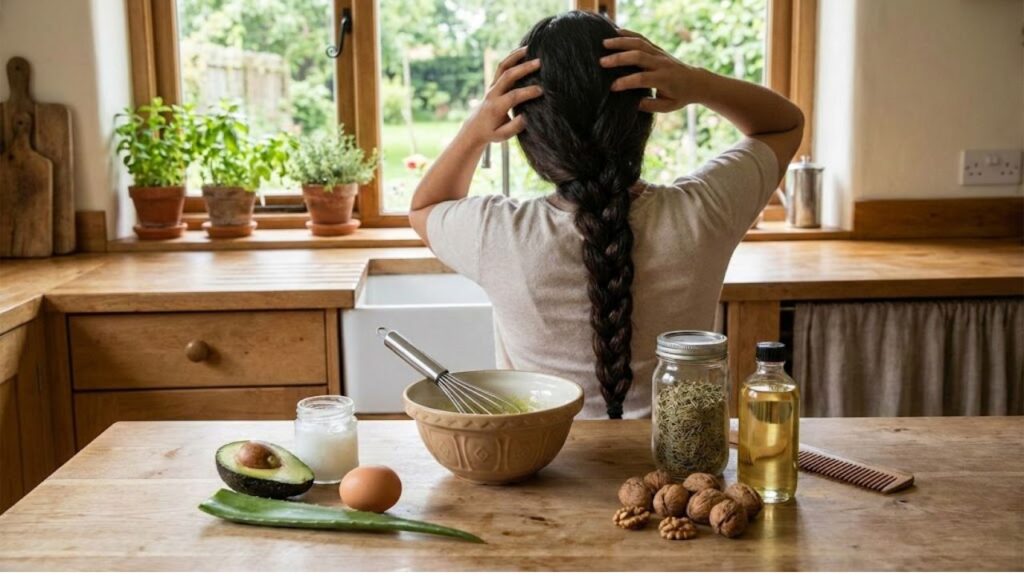
Some of the best hair treatments already exist in your kitchen. Ingredients like yogurt, aloe vera, eggs, and seeds support the scalp and reduce damage. These DIY remedies don’t offer instant results, but they promote consistent care and connection. Preparing them by hand can turn hair care into a meaningful form of self-care.
Fenugreek Seeds: Tiny but Powerful
To use fenugreek, soak the seeds overnight and blend them into a paste. Rich in proteins and plant compounds, this paste is applied to the scalp once or twice a week. Fenugreek helps minimize shedding and may improve hair thickness over time. Always apply in moderation and watch for scalp sensitivity.
Aloe Vera: Calming the Scalp Naturally
Aloe vera gel is ideal for soothing an irritated or oily scalp. It helps reduce inflammation, balances oil levels, and removes buildup from follicles. Applied for 20–30 minutes, aloe vera creates a healthier environment for growth. It can also be blended with yogurt or oils for added benefit.
Protein-Rich Hair Masks from Everyday Ingredients
Hair exposed to sun or heat often needs protein. Simple masks made with egg and plain yogurt help strengthen strands temporarily. Apply to damp hair and rinse with cool water. These masks support hair structure and shine, especially when used sparingly.

Internal Health and Its Role in Hair Fall
Hair is deeply connected to overall health. Nutritional deficiencies, hormonal imbalances, poor sleep, and chronic stress can trigger thinning. Alongside external care, internal nourishment is key. Eating foods rich in iron, protein, zinc, and healthy fats helps support long-term hair strength and growth.
The Delayed Effects of Stress on Hair
Stress or illness can lead to a delayed shedding process, where hair enters a resting phase before falling out months later. Reducing stress through gentle activity, rest, and screen breaks helps restore natural cycles. With time, lower stress levels allow the hair growth phase to return.
Everyday Habits That Preserve Hair Health
Simple habits make a big difference. Use mild shampoos, wash only when needed, and focus cleansing on the scalp. Apply conditioner to lengths, limit heat styling, and choose loose hairstyles. A smooth pillowcase can also reduce nightly breakage.
| Nutrient | Role in Hair Health | Common Daily Food Options |
|---|---|---|
| Protein | Essential for forming keratin, which gives hair its strength and structure. | Lentils, pulses, eggs, fish, paneer, tofu, mixed nuts, seeds |
| Iron | Helps carry oxygen to hair roots, supporting healthy growth cycles. | Spinach, beetroot, kidney beans, lentils, pumpkin seeds |
| Biotin & B-Complex Vitamins | Promote energy production and cell renewal in hair follicles. | Whole grains, eggs, almonds, seeds, green leafy vegetables |
| Omega-3 Fatty Acids | Maintain scalp moisture and help calm inflammation around follicles. | Flaxseeds, chia seeds, walnuts, oily fish |
| Zinc & Selenium | Assist in repairing hair tissue and protecting follicles from damage. | Seeds, nuts, whole grains, milk products, legumes |
Combing as a Mindful Ritual
How you detangle matters. Start from the ends and work upward using a wide-toothed comb. Applying oil or a leave-in product beforehand helps reduce breakage. This routine turns daily grooming into an act of attention and care.
Building a Balanced Weekly Routine
Hair care doesn’t have to be complicated. A realistic plan—such as oiling a few times weekly, using one nourishing mask, eating well, handling hair gently, and managing stress—often leads to noticeable improvements in texture, growth, and shedding within a few months.
 8-minute chair exercises after 60 strengthen hips better than squats and improve walking stability
Reconnecting with Yourself Through Hair Care
Natural remedies are about more than results. They invite patience, observation, and trust. Everyone’s hair is different, so staying aware of how yours responds is vital. These gentle practices go beyond treating hair—they help strengthen your connection with your body and well-being.