
You’re staring at the screen, eyes burning, fingers frozen over the keyboard. The coffee wore off an hour ago, but somehow you’re still forcing yourself to push through “just one more task”. Your shoulders are concrete, your jaw is locked, and your brain feels like a browser with 37 tabs open and zero RAM left. You glance at the time and realize you haven’t stood up in… what, three hours? Four?
Then you wonder why you can’t think straight, why every email feels like a mountain, why you’re snapping at people you actually like.

The truth is simple, and a bit brutal.
Your body is not designed to run without pauses.
Why your brain and body hit a wall without breaks
Watch someone on public transport first thing in the morning. Half-asleep, scrolling, headphones in, already checking work messages. They haven’t even started their day, and their nervous system is on duty. No warm-up, no pause, no breath. Just go.
Then we act surprised when, by midday, our brain feels like a foggy attic. Your body is sending signals: tension, eye strain, a random headache, that heavy tiredness that isn’t fixed by more coffee.
 Chair exercises after 60 rebuild hip strength better than squats and reduce joint irritation
Those aren’t glitches.
They’re alarms.

There’s a name for this constant push: cognitive overload. Think of a call center worker answering non-stop calls for hours, or a nurse on a double shift walking 20,000 steps without sitting down. Studies show that after around 60–90 minutes of focused effort, our performance drops sharply. Reaction time slows, mistakes creep in, creativity disappears.
One study on office workers found that those who took short, regular breaks were up to 40% more productive than those who powered through. Not smarter. Not more talented. Just pausing.
Your body isn’t lazy.
It’s obeying a biological rule.
Your brain and body run on cycles, not straight lines. There’s the ultradian rhythm: waves of energy and focus lasting about 90 minutes, followed by a natural dip. When you ignore that dip and push on, stress hormones like cortisol stay high. Over time, that chronic stress affects sleep, digestion, mood, immunity.
Muscles also need micro-pauses. Sitting too long compresses your spine, freezes your hip flexors, and tightens your neck. Blood flow slows. Oxygen to the brain drops. You feel “sluggish” and think you need motivation, when what you actually need is circulation.
You’re not weak for needing breaks.
You’re human.
How to build real pauses into a busy day
The most effective breaks are ridiculously simple. Think “reset”, not “vacation”. A helpful method is the 50–10 rule: 50 minutes of focused work, 10 minutes of real pause. During those 10 minutes, stand up, walk to the window, stretch your chest and shoulders, drink water that isn’t coffee.
If 50–10 feels impossible, start with 25–5. Set a timer, and when it rings, you stand. No negotiation. *Your body loves tiny rituals repeated over time.*
The goal isn’t discipline for the sake of it.
It’s rhythm.
People often imagine a “proper break” as a yoga class by the sea. That fantasy is nice, but it quietly kills everyday pauses. You don’t need candles and a mat; you need 90 seconds to breathe with both feet on the floor. One mini-story: a manager I spoke to started doing a 3-minute walk after every online meeting. Just three minutes down the corridor, sometimes around the parking lot.
Three months later, she reported fewer migraines, less neck pain, and a weird side-effect: she stopped dreading her calendar.

Let’s be honest: nobody really does this every single day.
But every time you do, you win a little piece of yourself back.
There are two classic mistakes with breaks. The first is using them to scroll yourself numb. That’s not a pause, that’s another form of stimulation. Your eyes and brain are still working overtime. The second is guilt: the feeling that if you’re not typing, moving, answering, you’re failing. That guilt is learned, not natural.
“Rest is not a reward for being productive. Rest is the condition that makes real productivity possible.”
- Stand-up breaks: every hour, rise from your chair, roll your shoulders, rotate your neck gently.
- Screen-free pauses: look at something far away for 20 seconds to relax your eyes.
- Micro-movements: ankle circles, wrist stretches, opening and closing your hands.
- Breathing reset: inhale for 4, exhale for 6, repeat 6–8 times.
- Boundary rituals: a short walk or stretch when you switch from work to personal time.
The quiet power of learning to stop
There is a subtle moment, right before exhaustion, when you feel yourself fading. You reread the same sentence three times. Your body leans on one hip. You sigh more. That tiny moment is the crossroads: push through, or pause. Most of us have been trained to ignore it. We power forward, collect tension, then crash at night in front of a screen, wondering why we feel so wired and so empty at the same time.
What if that moment became a signal instead of an enemy?
Imagine breaks not as lost time, but as maintenance. Like plugging your phone into a charger before it dies at 1%. You don’t wait for complete shutdown. You top up. A 5-minute stretch between tasks. A glass of water between calls. Two minutes of looking out the window instead of into another tab. These are ordinary gestures with disproportionate effects: better focus, fewer arguments, more patience with the people around you.
You might even notice that ideas come back during the pause, not during the push.
Your body will keep sending you messages until you listen: tight shoulders, clenched jaw, shallow breathing, constant fatigue, Sunday-night dread. Pauses are not a luxury for people with “less to do”. They are a survival strategy in a culture that glorifies being busy and quietly burns people out.
You don’t have to overhaul your life overnight. You just have to introduce one honest break, then another, like laying small stepping stones back to yourself.
 What psychology reveals about people who feel emotionally drained after small social interactions
The question isn’t “Do I deserve a break?”
The question is “What happens if I never allow one?”
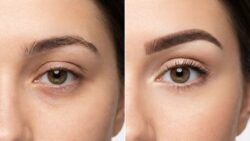 Awake Look Hack: The Subtle Eyebrow Adjustment Makeup Artists Use for Instantly Brighter Eyes
| Key point | Detail | Value for the reader |
|---|---|---|
| Regular pauses protect performance | Short breaks after 50–90 minutes of effort prevent cognitive overload | Stay sharp longer and reduce mistakes at work or study |
| Breaks need to be real, not screen-based | Moving, stretching, and looking away from devices reset the nervous system | Lower stress, less eye strain, better mood |
| Small rituals build sustainable habits | Simple practices like walk-after-meeting or 25–5 work cycles are easy to adopt | Create a rhythm of work and rest that feels humane and realistic |
FAQ:
- Question 1How often should I take a break during the day?
- Question 2What if my job doesn’t allow frequent pauses?
- Question 3Are phone scrolling breaks “bad” for me?
- Question 4Can short breaks really reduce burnout?
- Question 5How do I stop feeling guilty when I pause?
